


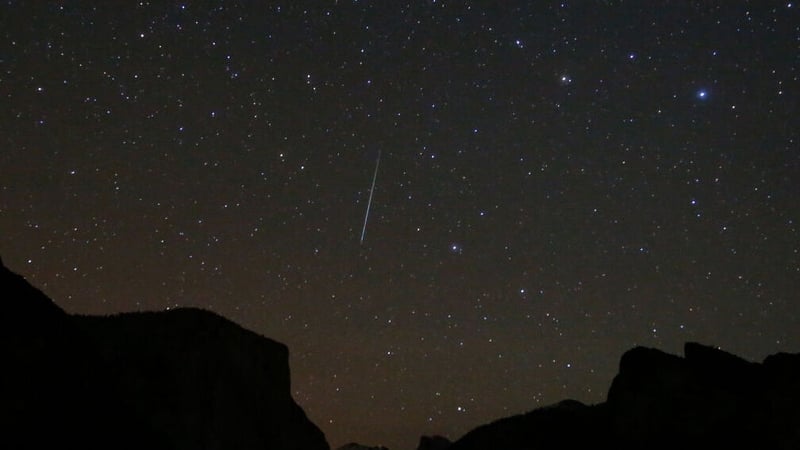
A meteor shower is expected to light up Irish skies tonight, with up to 20 times more shooting stars than normal.
The geminid meteor shower will reach its peak activity tonight and tomorrow night, according to Astronomy Ireland.
"With the full moon in the sky the fainter meteors will be drowned out but this, the best meteor shower of the year, is known for producing many bright fireballs," David Moore, editor of Astronomy Ireland Magazine, said.
"In past decades the Perseid meteor shower in August was the best but this has declined somewhat in recent years to leave the geminids reigning supreme.
"This is also good news for the public because that August shower cannot be well seen until 11pm but the geminids begins as soon as it gets dark, around 5pm and runs until dawn," he said.
People in rural Ireland are likely to get the "most spectacular views possible", but city dwellers will still be treaty to plenty of action as the geminids are known for producing bright fireballs, Astronomy Ireland said.
Speaking on RTÉ's News at One, Education Officer in the Blackrock Castle Observatory, Frances McCarthy, advised how to get the best view of the meteor shower.
We need your consent to load this rte-player contentWe use rte-player to manage extra content that can set cookies on your device and collect data about your activity. Please review their details and accept them to load the content.Manage Preferences
She said: "Go out as soon as it's dark. There is a very nearly full moon tonight, and that’s going to add a wash of light to the sky.
"So look away from the moon because these shooting stars can appear anywhere in the sky," she said.
Ms McCarthy also recommended not to use binoculars if hoping to see some shooting stars.
She said: "Best to use your eyeballs. Don’t use your binoculars, because they narrow the field of view.
"These shooting stars can appear anywhere, last for a couple of seconds streaking across the sky, so if you’re focused on a small patch of the sky, you’ll miss the one that’s happening just next to it.
"Be comfortable, be warm, plan to go out for at least half an hour. Your eyes will adapt to the dark and you will see the fainter ones more clearly.
"With the moon, it’s going to be the bright ones that are visible anyways."
The shower began on 4 December, however, it is now set to peak.
The geminids are caused by tiny pieces of space debris, bits of dust that fell off a small extinct comet or asteroid called Phaethon that goes around the sun every one and a half years.
"It has probably been around the sun thousands of times and has spat out dust particles that have now spread all around its orbit," said Mr Moore.
