
Parents are being urged to engage with their children about internet safety.
It comes following the publication of the national reporting centre Hotline.ie's latest annual report, which showed a dramatic rise in the amount of child sexual abuse material reported to the online platform last year.
Images or videos that children appeared to have taken themselves on smartphone cameras or webcams, known as self-generated material, rose by 280%.
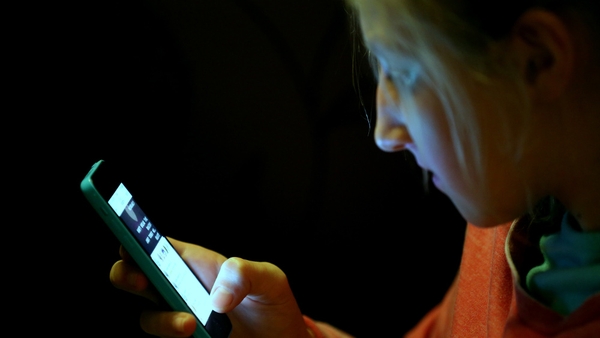
CEO of Hotline.ie Mick Moran said children under 12 - mostly under 10 years - have devices that are connected to the Internet 24/7 with very high-quality cameras, with the capability to take an image, share and publish it.
He said that in some cases, the child is in "a love relationship" with a stranger online, and they exchange images that are child sexual abuse material, despite being self-generated.
In other cases, he said the child is exploited or coerced into taking the material, and thirdly, he said it can be experimentation by the child.
"Even benign images shared by a child can be AI treated to become CSAM (Child Sexual Abuse Material).
"So, all of these things feed into this increase, but more importantly is the fact that we're seeing these images being produced, by kids themselves. Like, is there a linkage there to the fact that these preteen children, so children under 12, mostly under 10, have devices in their hands?"
He said to combat the problem, the starting point was with the children themselves, and by extension their parents.
"Kids have to be online. The Internet is a force for good overall, but like all other aspects of society, there's badness (online)...if you give the child 24-hour unfettered high broadband access to the Internet, you're giving the Internet 24-hour high broadband access to your child", he said.
He implored parents to engage with their children, talk to them, and use resources such as Web Wise, the ISPC website or Cyber Safe Kids for direction.
"Unfortunately, there are people in our communities - the global community - who have a sexual interest in children. So, child sexual abuse material is floating around out there on the Internet. It's being exchanged, it's being published, and these people are downloading it, and they are distributing it, and they are sharing it amongst themselves.", he said.
The Hotline CEO described the 2023 annual report as just the tip of the iceberg "of what's actually happening out there".
He added that when a report is made to Hotline.ie it moves quickly to get it taken down.
Over 40,500 reports relating to suspected illegal content online were made to Hotline.ie last year.
Members of the public can contact the centre to report concerns regarding illegal content online.
The core of Hotline's work relates to the removal of child sexual abuse images and videos from the internet.
Overall, there were 40,543 reports made to Hotline.ie in 2023, which was a 30% rise on the previous year.
A total of 29,044 were assessed as child sexual abuse material and were referred to law enforcement and actioned for removal by Hotline.ie.
The amount of Child Sexual Abuse Material (CSAM) identified increased by 110% last year compared to 2022, which the report says is in line with reported global trends.

A total of 4,322 of the CSAM reports to Hotline.ie involved self-generated CSAM, which are images or videos that a child appears to have taken themselves.
They can either be a product of consensual sharing to other children or the result of coercion by adults.
57% of the material displayed pre-teen children and 43% were in their early teens, 97% were female.
The report says it "highlights a significant issue in children being sexually exploited after sending images or videos".
Evidence indicated that adults had groomed or coerced children into sexual acts on video and recorded them.
According to the report, there is often a clear financial aspect to the sharing of this material, with screenshots from the videos used to promote the material while the actual video is locked behind private payment.
We need your consent to load this rte-player contentWe use rte-player to manage extra content that can set cookies on your device and collect data about your activity. Please review their details and accept them to load the content.Manage Preferences
Computer generated images
One-in-ten CSAM reports in 2023 were found to contain computer generated images, which is material depicting children engaged in explicit sexual activity created using digital art tools.
This can range from simple "hand-drawn" style cartoons to AI-generated imagery featuring photorealistic children. It also refers to material that has been digitally altered in some manner, such as face swapping or clothes removal through an app.

While this type of material decreased last year by 44% compared to 2022, Hotline.ie analysts have noted that the imagery has become increasingly realistic and "nearly impossible to distinguish from real imagery".
It has expressed "real concern" over the use of AI to digitally edit photos and generate images.
Image sharing platforms
60% of images were shared on services that allow users to upload images where there are unique URLs that can be shared or embedded at other Internet locations e.g. in websites.
17% of images were shared through blogs, search results and general websites with no discerning features, 11% were shared via a message or image board, 6% were shared through a web-service directly displaying video content without the need to download it in order to play it. 1% of images were shared through social media platforms.

A senior content analyst with Hotline.ie pointed out in the report that CSAM is being distributed through semi-private platforms like messaging apps, where users can join hidden groups.
"Access is often gained through links shared in forums or on social media. Once inside these groups, the content can spread rapidly.
"Because these spaces are more closed off, they make it harder for the public to accidentally come across the material, which means we receive fewer reports about this type of distribution."
Hosting patterns
In 2023, CSAM was traced to 56 different countries which is 12 more than 2022 and the greatest number on record according to the report.
The research suggests that this could be indicative of a wider distribution of CSAM or due to the greater number of confirmed CSAM cases reported to Hotline.ie.
Nineteen of the 56 were countries in the European Union.
These accounted for nearly a third of all confirmed CSAM, 22% of which was traced to image-hosting services operating in Slovakia.
There were 21 incidents of confirmed CSAM hosted in Ireland, with an average removal time of less than a day from the time that Hotline.ie received the report.
The number of confirmed cases of CSAM hosted in Ireland remains low year to year, with a drop from 34 incidents in 2022 according to the report.
However, it does note that distribution patterns are "only a snapshot in time" - indicative of where the CSAM was hosted on the internet and not an indication of the level of CSAM production, consumption, or commercialisation within any one jurisdiction.
Intimate image abuse
People who have experienced Intimate Image Abuse (IIA) can also report to Hotline.ie.
Last week, the Department of Justice announced that there had been almost 100 prosecutions since the introduction of Coco's Law in 2021, which criminalises sharing or threatening to share intimate images without consent.
In 2023, Hotline.ie received 915 reports under the suspicion of Intimate Image Abuse.
Of these, 760 were assessed and classified as IIA in accordance with the Harassment, Harmful Communications and Related Offences Act 2020.
It was an increase from 689 reports confirmed as intimate image abuse in 2022.
A total of 470 of the reports were from people who had their intimate images shared without their consent and wanted them removed.
92% of these had been shared in public online spaces where anyone could see their images, the remaining 8% had been shared without consent through private messenger either peer to peer or in group chats.

Of all reports that were publicly shared, 95% were successfully taken down, a slight decrease from the 96% removal rate in the previous year.
None of the content that remained was hosted on Irish services which means it was hosted in countries with different legal frameworks, many of which do not have laws prohibiting the non-consensual sharing of intimate images.
Despite this, Hotline.ie has said that it continues to seek the removal of the remaining 5%.
In 2023, 198 intimate image abuse reports were referred to Garda National Protective Services Bureau, nearly four times the amount as the previous year.
63% of reporters sought to have their reports referred to the Gardaí, a significant increase from 11% in 2022.
Hotline.ie says this is likely due to the increase in sexual extortion scams, because in cases where content had been shared publicly, only 17% of reporters wanted it forwarded to gardaí.
The Department of Justice has also pointed to public awareness campaigns around Coco's Law as a factor in more people reporting to Hotline.ie.
Racism and xenophobia
Last year, Hotline received 128 reports of suspected racism or xenophobia.
37% were found to be related to hate speech, with specific focuses on antisemitism, misogyny, and anti-immigration rhetoric.
Five reports were determined to potentially meet the threshold for illegality under the Prohibition of Incitement to Hatred Act 1989.
In cases where hate speech or other racist or xenophobic related activity is identified and the material does not meet the threshold for illegality set out in Irish law, Hotline.ie alerts the responsible platform or website owner to it, because these could still be in breach of community guidelines or rules in place.
Financial scamming
Hotline.ie also received 414 suspected financial scam reports last year, 21% of which were assessed as relating to online scams targeting Irish residents.
68% related to phishing attempts purported to be Irish financial institutions, An Post or the Irish Revenue.
16% were fraudulent loan websites which falsely claimed to be regulated by the Central Bank of Ireland.
15% meanwhile consisted of online shopping scams that used cloned versions of websites of legitimate businesses and the offer of heavily discounted products to entice people into spending money for goods they would never receive.
Hotline.ie actioned and removed 89 websites attempting to scam Irish residents.