
One driver was arrested seven times for intoxicated driving last year, with 184 deaths on the road during 2023.
According to the annual report of the Medical Bureau of Road Safety (MBRS), which forensically tests driver samples, 265 drivers were arrested for intoxicated driving more than once.
The report finds alcohol and drugs continue to play a major contributory factor in road traffic collisions.
Some offenders were as young as 13 and as old as 90.
In figures included in the bureau's 2023 annual report, they show that two drivers were arrested five times by gardaí on suspicion of driving under the influence of an intoxicant while six drivers were arrested four times and 22 drivers arrested three times during the 12-month period.
The report states that "the level of recidivism detected remains significant with 243 drivers arrested twice in 2023".
According to the report, alcohol remained the most frequently detected intoxicant in drivers.
"These figures have sadly changed very little over the past 10 years. Alcohol intoxicated driving thus remains a very significant danger on Irish roads with many drivers driving when several times over the legal limits for the different categories of driver, including the lower limits set for the specified drivers (learner, novice and professional or heavy vehicle driver)," it added.
Apart from alcohol, the three most commonly detected intoxicants in 2023 were cannabis, cocaine and benzodiazepines.
We need your consent to load this rte-player contentWe use rte-player to manage extra content that can set cookies on your device and collect data about your activity. Please review their details and accept them to load the content.Manage Preferences
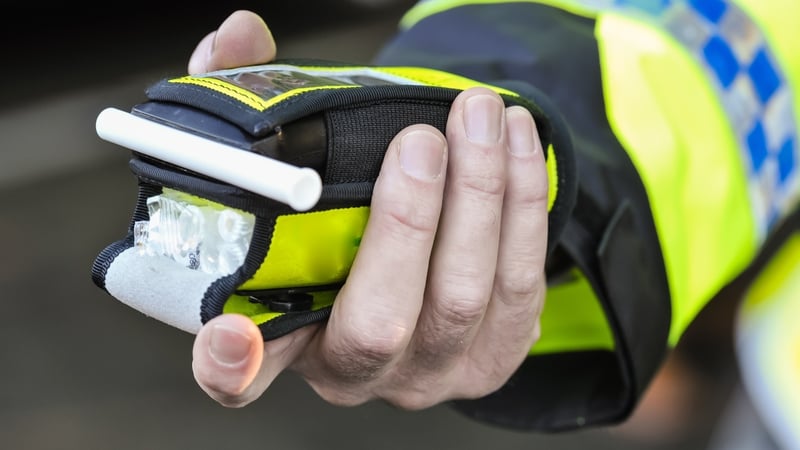
MBRS Director, Professor Denis Cusack, said: "Garda enforcement and detection are prerequisites for reducing this stark danger on the roads and the bureau's testing, approval and supply of scientific equipment to the gardaí is an essential component of this public duty.
"The frequent finding of combinations of drugs and drugs with alcohol remains of enormous concern," he added.
"The drug intoxicant driver landscape is always changing, and the Bureau is committed to keeping abreast of new impairing drugs as they become evident in drivers and to keeping up with technology that will enhance the gardaí’s ability to detect impairment and intoxicant use in drivers," he said.
Speaking on RTÉ's Morning Ireland, Prof Cusack said despite the numerous campaigns about drink driving it is still a big issue and is something that has to be looked at.
He said that one thing which is being worked on is for cars to have alcohol interlock devices.
"That is, if the person, the driver, has alcohol, the car will not start and already we've approved in the Medical Bureau of Road Safety, two of these devices.
"We're looking at another three, which we hope to approve shortly," he said.
The MBRS noted "a major achievement" in 2023 was in relation to the scientific assessment programme of Alcohol Ignition Interlock devices.
It is planned that the approval of a number of devices will be completed in 2024.
The system when installed in a motor vehicle will prevent it from starting if the driver tests positive for alcohol and is already in place on a voluntary basis in several bus and truck fleets in the country.
We need your consent to load this rte-player contentWe use rte-player to manage extra content that can set cookies on your device and collect data about your activity. Please review their details and accept them to load the content.Manage Preferences
Representives of those who died on Irish roads have described the findings as disturbing.
Founder and President of the Irish Road Victims Association (IRVA) Donna Price said: "We’re very concerned as families who are bereaved, having lost loved ones ourselves on the roads through intoxicated driving.
"There is still that cohort of drivers who simply don't care and will continue to flout the law. So, we really feel that these figures are the tip of the iceberg, that many more are taking chances and driving while intoxicated, and for those we have to have effective deterrents in place, even while disqualified drivers are still continuing to drive."
Ms Price said that more drastic measures, such as Alcohol Ignition Interlock devices, confiscating vehicles and having effective fines, may be needed to get the message through.
"So that in order to get the return of their vehicle, a large fine will have to be paid, and then maybe people will take heed of the rules of the road, because they're there for all of our safety," she said.
Ms Price added that driving whilst intoxicated was a danger to everyone and not a victimless crime.
"Enforcement for us is absolutely key, and we understand that the gardaí can't be everywhere, but we need to have more rigorous enforcement of the road traffic legislation so that if people do take a chance, they will meet a checkpoint on their journey more often than not, and then that these penalties will be imposed, because at the moment, you would have to be caught, say, four times to accumulate 12 penalty points in order to lose your license."
People, she said, needed to be deterred from taking that chance.
Gardaí 'maximising activity against most risky drivers'
An Garda Síochána said that it continues to "maximise" its "activity against the most risky drivers".
In a statement, it said, however, that by their nature, recidivists will continue to commit offences even while they are disqualified or being prosecuted.
In some cases, they have significant addiction issues, the force added.
It also said that, where appropriate, vehicles can be detained under the Road Traffic Act.
Additional reporting Eleanor Burnhill