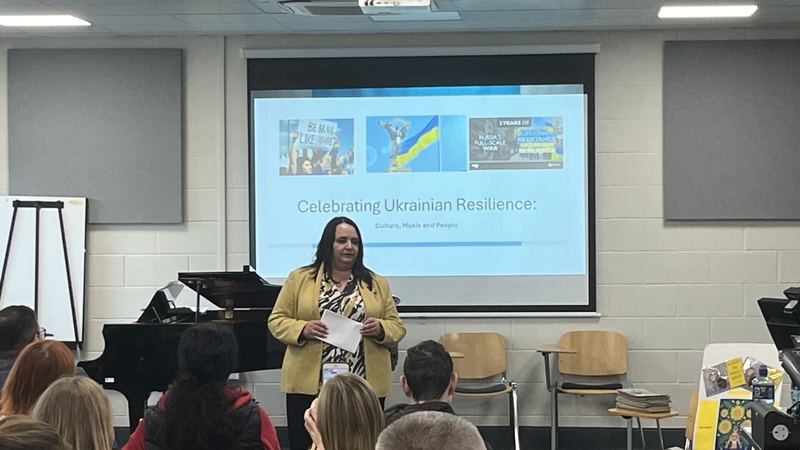

The Ukrainian Ambassador has said she is worried that vulnerable compatriots will be forced to return to Ukraine, as a result of planned reductions to welfare payments for those living in State provided accommodation here.
Layrsa Gerasko said she had particular concerns about how the Government plans would impact elderly people, mothers with small children and those with special needs.
She said it was very difficult for such refugees to find work and that a weekly payment of €38.80 would make it impossible for them to survive and stay here.
The reduced payments will apply to Ukrainians who do not work and live in what is termed 'State-provided serviced accommodation', such as a hotel where meals are provided.
Last December, the Government reduced payments to new arrivals - from March - from €232 a week to €38.80 and the lower payment will become the baseline for all Ukrainians in such circumstances.
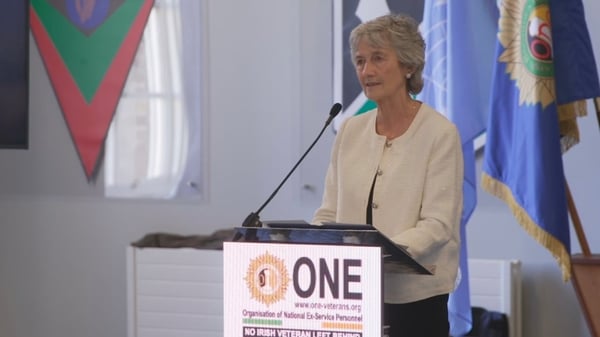
Speaking in Co Galway this afternoon, Ms Gerasko said she was seeking a meeting with Government representatives, to get more clarity on the manner in which the plans would be implemented.
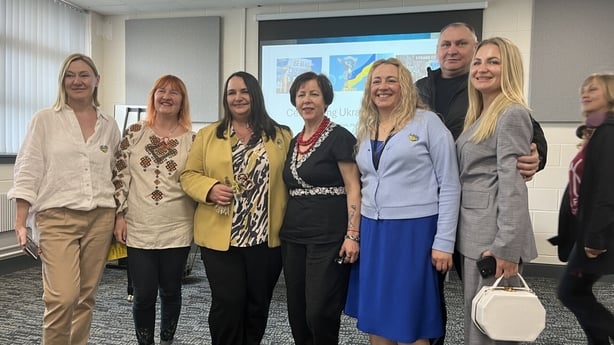
She said she learned of the proposals through media reports yesterday and that the Ukrainian Embassy in Dublin had been inundated with messages from Ukrainians living in Ireland, who were concerned and uncertain about how the measures would effect them.
Ms Gerasko said her country was very grateful to Irish people for the support they had shown since the Russian invasion in 2022.
The ambassador said that she felt the majority of people here still wanted to assist those fleeing the war.
Some six million Ukrainians are estimated to have left the country over the last two years, with a further 10 million internally displaced.
The Ambassador said those figures showed the scale of the humanitarian crisis that had resulted from the Russian invasion.
She told a gathering of staff and students at the University of Galway that Ukraine was fighting for its own security and on behalf of other European countries, with shared values.
Ms Gerasko said she had hope and belief that her country would prevail.
But she said people needed to be mindful of the ongoing threat posed by Russia, not just relating to its invasion of Ukraine but in a wider, "hybrid war", through the spread of propaganda and disinformation.
We need your consent to load this rte-player contentWe use rte-player to manage extra content that can set cookies on your device and collect data about your activity. Please review their details and accept them to load the content.Manage Preferences
Minister for Finance Michael McGrath defended the Government's decision, saying it is important that the State ensures the overall system remains sustainable.
Speaking on RTÉ's Morning Ireland, Mr McGrath said the inconsistencies of payments to refugees cannot continue.
He said the change is necessary to ensure everyone is treated fairly and that everyone will continue to receive the most important and basic needs - State-provided accommodation, food and other services.
In addition there will be adult and child payments and child benefit, he said.
"We have a situation where people who arrived since March are in a very different system and getting a very different level of support. So the change that was decided yesterday by Cabinet relates to people who came from Ukraine prior to the change in March, who were in state supported and serviced accommodation," the minister said.
He also denied the assertion that that the Government is pandering to anti-migrant groups.
"I don't accept that. I think if you look at what the State has done since February of 2022 the State, the country, our people, our communities have been welcoming, have been generous," he said.
"I believe that that will continue over the period ahead, but we also have to ensure that our system is sustainable and that we are fair to everyone and that we don't have an arbitrary cut off point and depending on which side of that cut-off point, Ukrainians falls the level of support is different in multiples.
"I think that would be unfair and we are addressing that with the change we made yesterday. It will be done in a compassionate way and it will be implemented over a three-month period."
He said there will be a lead in period of twelve weeks before changes take effect and all changes will be implemented in a humane and compassionate manner.
Read More
Ukrainians in Co Galway say changes to supports adding to concerns
"We have endless compassion but we have to ensure that what we do is sustainable in the long term - that's where the State is coming from," Minister for Enterprise, Trade and Employment Peter Burke has said.
"We need to provide the maximum support that we can over the longest horizon that we can."
As Russian aggression continues in Ukraine, the Government must ensure that supports remain sustainable for Ukrainians who come here, Mr Burke said.
Speaking on RTÉ's Today with Claire Byrne, he said Ukrainians who will experience cuts to payments are in State provided accommodation and have shelter and food.
"They're getting laundry services and other services provided by the State ... so it's not that the State is pulling the rug completely from under them."
Plans for reception centres will come before Cabinet as soon as possible, Mr Burke added.
The CEO of the Immigrant Council of Ireland said the decision has caused panic in the Ukrainian community.
Speaking on RTÉ's Morning Ireland, ICC Chief Executive Brian Killoran said the Ukrainian community is being destabilised despite its efforts to integrate in Ireland and become self sufficient and accused the Government of targeting refugees rather than dealing with bigger, harder problem of housing.
"It seems that rather than deal with the bigger overarching problem of housing, the hard problem of housing, the Government is taking aim at the softer target of the refugees themselves. And that's deeply problematic. We have to look at this from the lens of human beings that need support."
We need your consent to load this rte-player contentWe use rte-player to manage extra content that can set cookies on your device and collect data about your activity. Please review their details and accept them to load the content.Manage Preferences
Mr Killoran said direct provision payments are essentially poverty level payments and that bringing everyone down to that level is not the answer, as it risks raising poverty levels further.
"Rather than try and bring equality to the system by raising all ships, we are going beyond even a median level. We're going the lowest supports that we can provide. So I don't think bringing it down to that level is effectively the answer ... this disproportionately risks impacting women, children, the elderly."
Mr Killoran said it is not known how the new measures will play out until greater detail is available.
He praised the emergency response to the numbers of refugees arriving from Ukraine, but said medium- to long-term supports are needed to support the people who have arrived.
"We're kind of piling problems here on problems that are coming into the next weeks and months, rather than building solutions that actually allow for a normalisation of this, the normalisation of the situation and a soft landing, essentially, for people who have come from a very traumatic situation."
According to the latest report issued by the Department of Integration there were 46,981 Ukrainians living in State-provided accommodation, such as hotels and guesthouses, as of 5 May.
Figures also show that 521 Ukrainians who arrived in Ireland since 14 March are living in designated accommodation sites, and are in receipt of reduced financial supports of €38.80 per week.