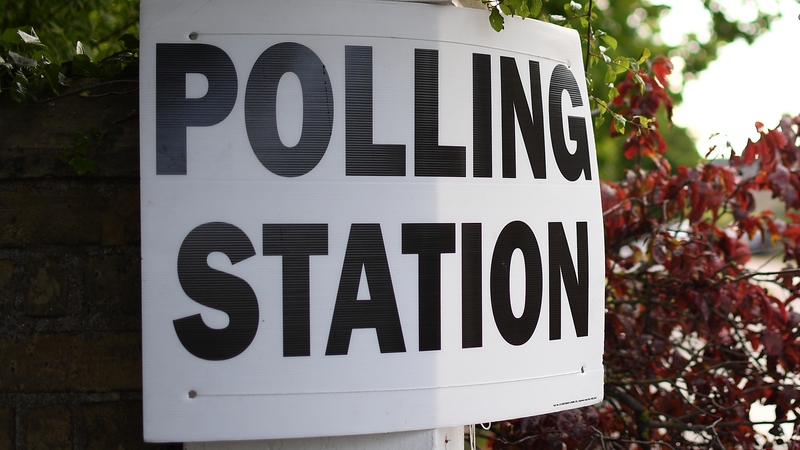

Voters in Northern Ireland are going to the polls in local council elections today, with more than 800 candidates competing for 462 seats in 11 areas.
The election comes less than a week after a Catholic priest at the funeral of journalist Lyra McKee received a standing ovation when he asked why it had taken her death to bring politicians together.
More than 1.3 million people, a record number, are eligible to vote in the elections.
The DUP has the largest number of candidates with 172, followed by Sinn Féin with 155, the Ulster Unionists with 117, the SDLP with 85 and the Alliance Party with 84.
It will be the first electoral test for Peadar Tóibín's Aontú Party since he left Sinn Féin last year because of its change of policy on abortion - the party is fielding 16 candidates.
With talks aimed at restoring the Stormont Assembly due to start on Tuesday, the DUP and Sinn Féin will be keen to secure top spot to strengthen their negotiating hand.
In the last council elections in 2014 both parties could claim to have won for different reasons.
Sinn Féin finished top of the poll in terms of first preference votes cast, with 155,573, which was 24.1% of the total.
The DUP was second in terms of first preferences with 144,918 votes, or 23.1%.
However, when it came to the number of seats won, the positions were reserved.
The DUP received a much higher proportion of transfers and secured 130 seats.
Sinn Féin finished on 105 seats.
One of the big stories of the election is the decision by the DUP, which opposes the introduction of same-sex marriage in Northern Ireland, to field its first openly gay politician.
Alison Bennington is standing as a candidate in the Antrim and Newtownabbey Borough Council area.
Sinn Féin's candidates include the party's former West Tyrone MP Barry McElduff, who was forced to resign his seat after posing with a loaf of bread on his head on the anniversary of the Kingsmill massacre.
He apologised and said he never intended to hurt the families of ten Protestant men shot dead in the IRA attack in 1976.
The former MP is seeking election to Fermanagh and Omagh District Council.
As well as the contest for first place between the two largest parties, there will be much focus on the internal battles within nationalism and unionism.
Both unionist parties are pro-Brexit, while both nationalist parties are firmly in the Remain camp.
The Ulster Unionist Party, once the dominant force in Northern Ireland politics, will hope to at least retain the 88 seats won in the 2014 election.
Its candidates include its former South Antrim MP Danny Kinahan, an former British Army officer.
Any loss of votes and seats to the DUP would undoubtedly undermine the position of party leader Robin Swann.
Likewise the SDLP, which recently entered into a partnership with Fianna Fáil, will hope to at least retain its 66 seats.
Any loss in its share of vote, or number of seats, would raise questions about the wisdom of that relationship.
Its competitors for seats on Belfast City Council include three former party members who quit because of its stance on abortion and are now standing as independents.
The Alliance Party, which is also Remain on the Brexit question, will hope to build on the 32 seats it secured five years ago.
The Independent candidates include Sorcha McAnespy, a former Sinn Féin member who announced in October that she was to be Fianna Fáil's first ever candidate in a Northern Ireland election.
When Fianna Fáil said that was not the case, the sitting councillor opted to run as an Independent.
Although she still describes herself as a Fianna Fáil National Executive member, the party has endorsed her SDLP rivals in the fight for seats on Fermanagh and Omagh District Council.
Another candidate is the veteran Derry civil rights campaigner and former Stormont Assembly member Eamon McCann of People Before Profit.
Aontú's 16 candidates include the father and a brother of RTÉ GAA pundit and barrister Joe Brolly.
His father, Francie, is a former Sinn Féin Assembly member.
Another Sinn Féin Assembly member, Gerry McHugh, is also a candidate for the party.
While the votes cast today will elect 462 councillors, they will also have a bearing on the talks aimed at restoring the Stormont Assembly.
The DUP and Sinn Féin are both confident they will gain seats.
If that is the case, the question is - will they view that as a mandate to compromise, or an endorsement of their refusal to do so for the past two years?
The Irish and British governments will both hope it is the former.