
Victims' campaigners in Northern Ireland suffered a blow this week when the UK Supreme Court ruled in favour of the British government in a major case that will impact on how the legacy of the Troubles is dealt with.
It ruled unanimously that elements of the UK's 2023 Legacy Act did not diminish victims' rights being diminished.
That overturned earlier judgements by Northern Ireland’s High Court and Court of Appeal - rulings that had been welcomed by a range of campaign groups and greeted with dismay by the British Government.
In a reversal, the Northern Ireland Office (NIO) welcomed the latest court ruling while many victims' groups, Amnesty International and nationalist parties Sinn Féin and the SDLP criticised it.
Introduced by the previous Conservative government, the 2023 Legacy Act ended all Troubles-related police investigations and inquests.
It offered conditional immunity to perpetrators who agreed to co-operate with the new legacy body, the Independent Commission for Reconciliation and Information Recovery (ICRIR).
The Labour government made a manifesto commitment to repeal the act and has introduced a new legacy bill in parliament, with MPs already having voted to repeal the conditional immunity provision and remove restrictions on future compensation claims.
But despite that move, the Northern Ireland Office appealed the earlier court rulings.
The appeal was opposed by four Troubles' victims - Martina Dillon, John Mcevoy, Brigid Hughes and Lynda Mcmanus.
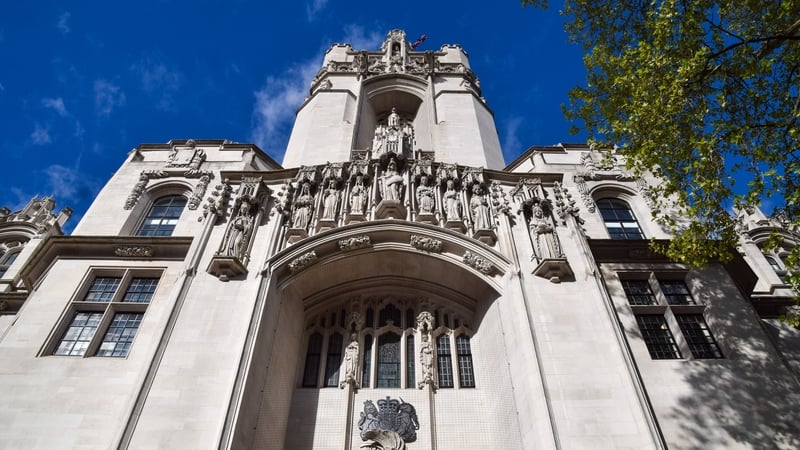
In a 77-page judgment issued on Thursday, five Supreme Court judges said the victims had been "unable to establish that the 2023 act led to a diminution of rights".
Northern Ireland's High Court and Court of Appeal had both previously ruled against the UK government.
They ruled that parts of the Legacy Act, including the ICRIR, were incompatible with human rights and undermined the rights of victims in breach of the Windsor Framework, which is the post-Brexit deal reached after the UK left the EU.
The Court of Appeal had ruled that the Northern Ireland Secretary of State had too much veto power over the disclosure of sensitive information by ICRIR to relatives of the bereaved.
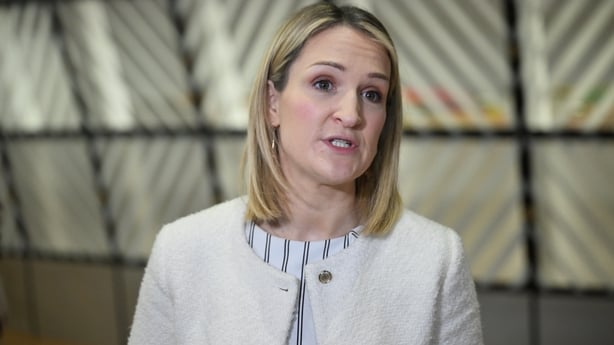
Just two months ago, Minister for Foreign Affairs Helen McEntee said ICRIR was not human rights compliant after it emerged that gardaí rejected requests from the commission for information.
Many victims' groups and survivors of the Troubles have refused to engage with the commission.
But in their ruling, the Supreme Court judges said the Secretary of State's power to decide whether disclosure on information would pose a risk to national security was "not unrestrained, nor is it the final say".
They added: "The Secretary of State's powers do not mean that the commission will lack independence in disclosing sensitive information to the next of kin, victims and the public."
In a statement, the NIO welcomed the ruling.
"We welcome the clarity provided by the Supreme Court, which has confirmed that the ICRIR is fully equipped to deliver human rights-compliant investigations and reaffirms the government's position on the interpretation of Article 2 of the Windsor Framework," it said.
Solicitor Gavin Booth of Phoenix Law, which represented the victims who opposed the appeal, described the outcome as "disappointing".
He said it had left victims and families "in a state of flux" and suggested the case could now proceed to the European Court of Human Rights.
While all of Northern Ireland's main political parties were united in opposition to previous legislative attempts to address the legacy of the Troubles, there is a nationalist and unionist split in the response to the Supreme Court ruling.
Stormont's First Minister and deputy leader of Sinn Féin Michelle O’Neill said legacy processes must command victims’ confidence and comply with human rights obligations.
"I think that the British government have demonstrated that they are prioritising the needs of British state forces over the needs of victims and I think that is cruel, to be quite blunt about it," she said.
SDLP leader Claire Hanna said the judgement does not remove the concerns consistently raised by victims and survivors, particularly around disclosure.
"The SDLP has been clear that until these issues are properly addressed, any new legacy mechanism will continue to see only partial participation and will fail to comply to command the confidence of most victims and survivors," she added.
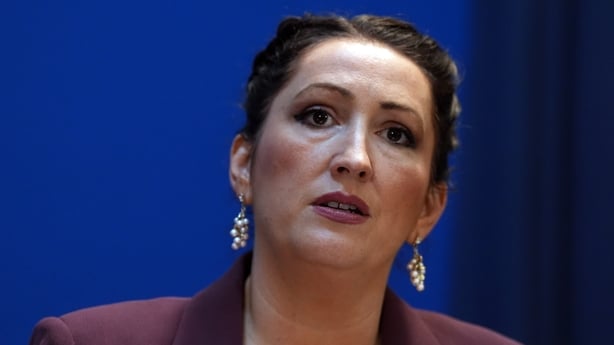
Amnesty International UK’s Northern Ireland deputy director Gráinne Teggart called the ruling a "bitter blow to victims" and a "tipping point for truth and transparency".
Deputy First Minister Emma Little-Pengelly of the DUP welcomed the judgment, arguing that some had sought "an expansionist interpretation" of Article 2 that could have required Northern Ireland law to dynamically align with EU law.
"That would have had all kinds of consequences much further than this very specific issue in this case, so I think it’s the right decision," she said.
The Ulster Unionist Party described the ruling as "a significant constitutional correction".
An inter-state case by the Government against the UK challenging legislation to deal with the legacy of the Troubles remains active.
The Taoiseach said he trusts the British government to honour commitments to change legislation to deal with the legacy of the Troubles.
Speaking during a visit to Belfast on Thursday, Micheál Martin said there was "very strong confidence and mutual trust" between the UK and Irish Government.
He said there was "no basis" to suggest that the UK government will renege on its commitments.
"We've worked in a very collaborative, constructive way with the British government in respect of the joint framework on legacy and a lot of progress has been made," he said.
"In fairness, they have fulfilled their commitments to date and we also are fulfilling our commitments," he added.
While the Supreme Court ruling has been welcomed by the British government and unionist parties, in practical terms it could prove to be a moot point.
Those victims' groups opposed to engagement with the ICRIR will not change their stance because of a court ruling.
The more likely response is further legal action.