


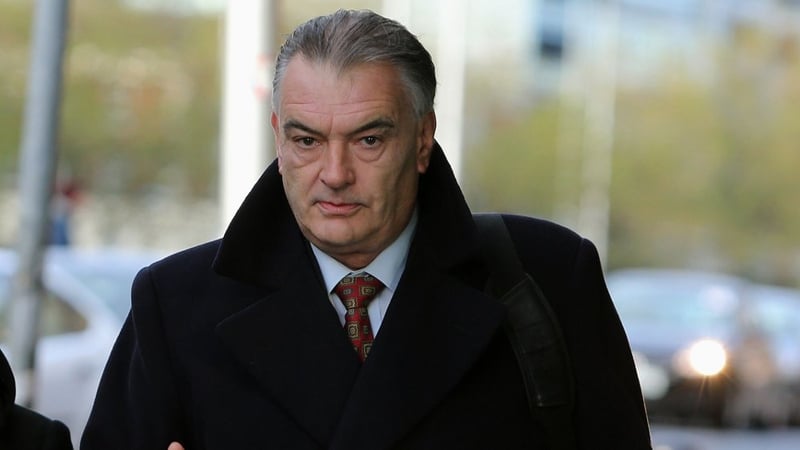
A retired detective garda who interviewed Ian Bailey after his arrest in February 1997 has denied Mr Bailey was told he could not go home on his release from custody.
Mr Bailey is taking a case against An Garda Síochána and the State in the High Court for wrongful arrest over the murder of Sophie Toscan du Plantier in west Cork.
The Court heard detective garda Gerard Dillon was brought in from another division to interview Mr Bailey on the day of his arrest. He also gave Mr Bailey a lift home on his release.
Mr Dillon said he did not hear anyone tell Mr Bailey that he could not go home because there was a lynch mob waiting for him, or that his partner Jules Thomas did not want to see him.
He agreed that another detective had asked Mr Bailey to sign notes before he left the car on his release. However, he said there was no continued interrogation in the car.
Mr Dillon said he was later told during an internal garda inquiry that Mr Bailey had complained that he was told he was not getting out of the car until he signed the notes.
He was also told by the Garda Ombudsman Commission that no complaint had been made against him.
It was put to him that the dual arrest of Mr Bailey and his partner Ms Thomas was choreographed to enhance the effect on Mr Bailey.
Mr Dillon said he had no part in the decision to make the arrests. He said he was based in Galway and was available to national units for interviewing suspects when required.
It was put to him by Ronan Munro, counsel for Mr Bailey, that there were plenty of local gardaí familiar with the case who could have conducted the interviews.
Mr Dillon said he just did what he was told. He said he was called to Cork the evening before Mr Bailey's arrest and was shown the file before he interviewed him the following day.
The court also heard there was no requirement for authorisation to take a prisoner's clothing while in custody.
The court has heard that Marie Farrell was never given any assurances that she would not have to come to court in relation to her alleged sightings of Mr Bailey.
Retired detective superintendent Ted Murphy said it would have been ridiculous to give such assurances.
He said he was keenly aware that Mrs Farrell's sighting of Mr Bailey at Ceal Fada Bridge had to be corroborated.
For that reason they needed to confirm who she was with on 23 December 1996 when she claimed to have seen him.
He said he met Mrs Farrell three times in 12 days, five months into the investigation.
"It was time to put up or shut up," he said.
But Mrs Farrell continued to ask for more time and after the third meeting he decided it was pointless.
She had already given gardaí a false name at that stage.
Mr Murphy said he was aware Mrs Farrell said she had a violent husband and was worried about custody of her children and that was her reluctance to say where she was on 23 December 1996 when she claimed to have seen Mr Bailey in the early hours of the morning.
She later withdrew the claim and said she felt pressurised by some gardaí to identify Mr Bailey as the man she had seen.
