New laws granting paid leave after miscarriage have been welcomed as a significant step for bereaved parents in Northern Ireland.
Campaigners say the change will give families vital time to grieve and begin to shift workplace attitudes.
On a sunny afternoon in June 2021, a white butterfly continuously circled Selina Casey as she sat in the garden of her Co Antrim home reading a book about baby loss.
It was four months after the death of her third son through miscarriage.
When she went into the kitchen to get a cup of coffee, the butterfly followed her and then resumed its circular journey when she returned to her seat.
Intrigued by its constant presence and still struggling to cope with the grief of the loss, she wondered if there was any symbolism.
"I think we as a people look for signs and meaning," she says.
A quick internet search revealed that until the 17th century in Ireland it was considered unlucky and illegal to kill a white butterfly because they were traditionally viewed as the souls of departed children.
Three years later, in June 2024, the qualified psychotherapist launched an organisation to help women cope with the loss of children as a result of miscarriage. The name was inspired by that encounter in her garden: The White Butterfly Foundation.

"I wanted the name to be non-clinical, to be something soft and sensitive and it just made sense," Selina explains.
"I now have myself and seven other therapists working here and I think we've tapped into a real gap in services here in Northern Ireland."
The charity just outside the Co Antrim village of Portglenone is currently providing counselling services to more than 100 women and last year provided over 1,000 therapy sessions.
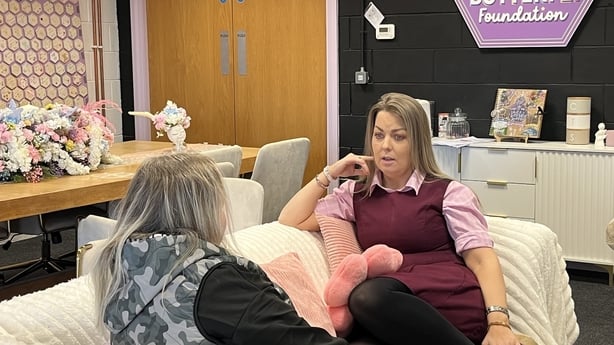
The small office is decorated in bright pastel colours to help those seeking counselling feel at ease, and two large boards display dozens of hand-crafted ceramic tiles, with each paying tribute to a lost baby.
New miscarriage leave rights
Selina is among those who have welcomed landmark legislation to provide two weeks of leave for a woman and her partner following a miscarriage.
The new regulations build on the Parental Bereavement Leave and Pay Act passed by the Stormont Assembly in 2022. That legislation gave working parents the right to two weeks of paid leave following the death of a child under 18, or a stillbirth after 24 weeks of pregnancy.
Parents will now be entitled to the paid leave for a miscarriage from the first day of their employment in any job.
It can be taken as one continuous period, or two separate weeks, within 56 weeks of miscarriage, and parents do not have to provide any medical evidence, the only requirement is that they inform their employer what happened.
The leave for a woman and her partner will be paid at the statutory level of just more than £194 (€223) per week, or 90% of weekly pay if that is lower.
In the Republic, parents are currently entitled to two weeks' paid bereavement leave following a stillbirth after at least 24 weeks of pregnancy. That also remains the case in the rest of the UK.
"We should have been doing this a long time ago, it's such a welcome step for this community," Selina says.
"This provision of two weeks' leave for bereaved parents protects them in the workplace. A lot of the people that we would work with here are, unfortunately, parents who've experienced recurrent pregnancy loss and some people can end up being disciplined for that number of periods of sick leave. So having this in place, I think, is crucial.
"I think what happens whenever somebody experiences a miscarriage is that society almost dictates that you just get on with it, you get up and you get on with it, and for many, many years, that has been the way.
"But it's not okay for people to experience a miscarriage or a loss and go back to work the next day. I know many parents that I've supported who have actually gone to work the same day, have gone back to their work, and the mental impact of that is shocking.
"I had a phone call the other day from a lady who lost her son 38 years ago, and she never had an opportunity to process that grief, because the expectation was, you get up and you get on with it, and you try again."
Selina also believes the statutory entitlement to leave for the partner of the mother is crucial and will help relationships.

"Couples who suffer a miscarriage are trying to process what has happened, a baby who has been longed for, a baby who they have been planning for," she says.
"What happens if they can't spend time together is that the grief will become misaligned, that they will start to possibly feel differently about each other, or maybe one partner feels that the other partner is moving on quicker. It's crucial that parents come together at a time like this and try and process it together."
The new legal rights will provide immediate help for the estimated 9,000 parents in Northern Ireland affected by miscarriages each year.
The annual cost of the initiative is expected to be around £3.5m (€4m).
Partners, grief and workplace support
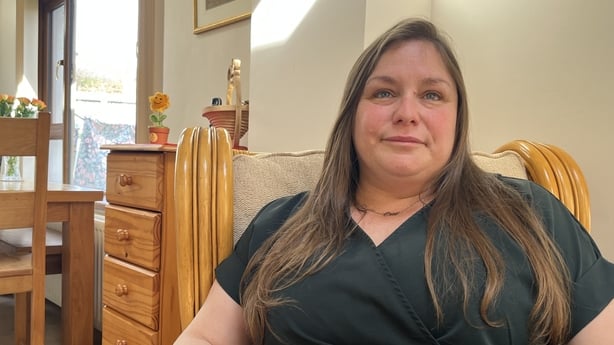
The move has also been welcomed by Erin Sharkey, a volunteer with the Miscarriage Association.
The sub primary school teacher from Antrim suffered four miscarriages before giving birth to two sons and a daughter.
Her boss at the time was very supportive, but Erin says she felt that many expected her to return to work as soon as possible without understanding the depth of loss.
She says her trauma was compounded by the fact that her wife Rachel was not entitled to take any time off to help her cope with the loss of children they had both been looking forward to welcoming into the world.
"I didn't know anybody else whose partner had taken time off and she had to go into work and leave me at home, obviously in such emotional turmoil," she says.
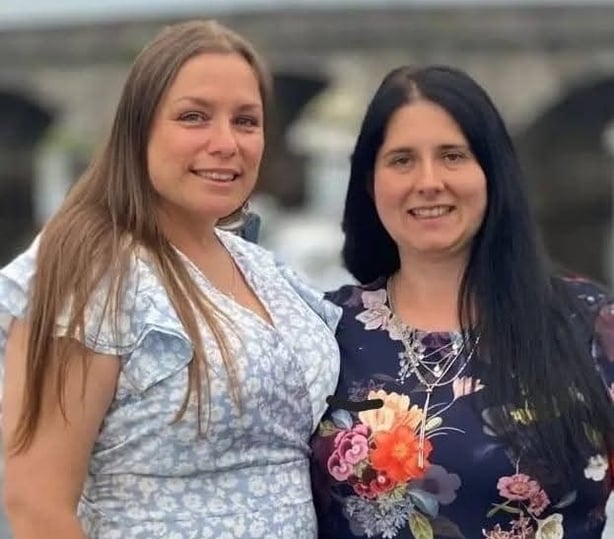
"And she was in emotional turmoil, it was her loss as well, we were grieving together. The sadness affected both of us, and she just had to go back to work where people would ask her, how's Erin? You know, people didn't say to her, are you okay Rachel?
"It affects both partners and it affects your relationship as well. So it's really, really important that the partners get to take that time off too, and not just as a support for the woman who's physically losing, but because the partners deserve to have time to process their loss and to try and come to terms with it as well.
"If she had been at home with me for two weeks it would have reduced my trauma significantly."
Selina Casey says discussions are now taking place about bespoke counselling for men who lose their children due to miscarriage.
"I think there's a lot of room for work whenever it comes to fathers because they are very, very often forgotten about in this scenario," she says.
"We need to get it right but I don't know what the right thing is for them. So if there's any daddies out there or indeed birthing partners who can give me any kind of answers around that, I'd be very welcome to having those conversations."