
National hospital waiting lists increased by over 86,300 patients last year, new figures show.
At the end of December, there were 894,369 patients waiting to be seen at an outpatient clinic, or for an operation in the country's hospitals.
It compares with the waiting list figure of 808,061 in December 2024.
The data is from the National Treatment Purchase Fund.
There are currently 107,181 patients waiting for an inpatient, or day case procedure nationally. Of these, 7,540 adults and 510 children have been waiting 18 months or more, which is significantly in breach of the Sláintecare targets.
The maximum waiting times target set out in the 2017 Sláintecare Report were 10 weeks for an outpatient appointment, and 12 weeks for an inpatient or day case procedure.
The increases have been seen in every area, inpatient and day cases, outpatient appointments, and people waiting for a gastrointestinal check.
Excluded from the 894,369-patient total are 42,033 patients listed as "suspended".
These are patients who are temporarily unfit, or unable to attend due to clinical or personal/social reasons.
The suspension category also includes patients who are being treated through various insourcing or outsourcing initiatives, meaning they are on other lists to be treated using waiting list funding in private or public hospitals.
The latest figures show there were 611,987 patients on the outpatient waiting list in December, waiting to be seen by a consultant at a clinic for the first time for assessment.
The hospitals with the longest adult and child waiting lists are: Galway University Hospital with over 12,600 patients waiting; Beaumont Hospital with over 11,000 waiting and the Mater Hospital with 10,350 waiting.
The hospital with the longest list in the specialty of ophthalmology is the Mater with 3,193 patients waiting.
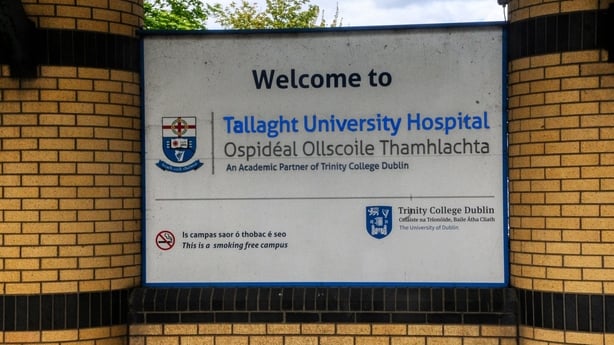
In orthopaedics, Tallaght University Hospital has 2,423 patients on its waiting list.
There are 2,644 patients waiting for plastic surgery at Beaumont Hospital and 2,292 waiting for pain relief at the South Infirmary University Hospital in Cork.
At Children's Health Ireland (CHI), there are 1,682 patients waiting for paediatric respiratory medicine, 496 waiting for paediatric orthopaedics, 487 for paediatric (ear, nose and throat treatment) and 436 waiting for paediatric surgery.
There are 215 patients at CHI on the spinal surgery waiting list, including for scoliosis surgery. This represents a small reduction on the November waiting list.
Stephen McMahon of the Irish Patients' Association said that waiting beyond 12 months for care is associated with worsening health, higher emergency risk and poorer outcomes.
He said that when prolonged delay becomes routine, harm becomes invisible.
Mr McMahon also added that large geographic variations create a postcode lottery of risk, which is incompatible with equitable access to care.

He said the figures show that while some progress was made in children's services, adult inpatient delays worsened significantly, particularly for those waiting more than 12 months.
In response to the latest figures, the Department of Health said that waiting time, rather than total waiting list numbers, is a more important metric in assessing the performance of the health service.
It said that reducing waiting times brings several benefits, including mitigating the risk of a patient's condition worsening.
The department said that there were around 58% or 164,000 fewer patients waiting over 12 months, since September 2021.
It added that in the same period there was an improvement of 46% or 5.6 months in the "weighted average wait time" that patients across lists have been waiting.
However, the department added that notwithstanding the focus on waiting times, changes in waiting list volumes continue to be important indicators of waiting list performance.
It said that increases in waiting list volumes continued through most of last year, stabilising towards the end of the year.
The Department of Health is working with the HSE and the National Treatment Purchase Fund to finalise the Waiting List Action Plan for 2026.
We need your consent to load this rte-player contentWe use rte-player to manage extra content that can set cookies on your device and collect data about your activity. Please review their details and accept them to load the content.Manage Preferences
Minister was right to criticise hospital waiting times
HSE CEO Bernard Gloster has said Minister for Health, Jennifer Carroll MacNeill, was right to criticise overcrowding in regional hospitals.
Ms Carroll MacNeill told RTÉ's News at One last week that certain regional hospitals needed to work on patient flow in order to reduce waiting times.
Speaking on RTÉ’s Six One News, Mr Gloster said that the Minister had to call it as she saw it, and that her comments were based on information given to her by him.
"The Minister's assessment is based on the information I gave her, what she said was absolutely 100% correct," he said.
"She recognises fully the improvements in hospitals like Cork and Galway but she has to call what she sees.
"Coming into the start of this year, in the case of those two hospitals unfortunately, the level of discharging activity and attention to patient flow was not what it should have been.
"Thankfully that's now improving but it's going to take us some time to recover."
Watch: Six One interview with HSE CEO Bernard Gloster
We need your consent to load this rte-player contentWe use rte-player to manage extra content that can set cookies on your device and collect data about your activity. Please review their details and accept them to load the content.Manage Preferences
Waiting time is 'critical'
Mr Gloster said that there were two factors contributing to high waiting list numbers - the amount of people waiting and the amount of time that they are waiting for.
"It's the time waiting that's critical," he said.
"What I want to say to people this evening, that stark as those numbers are, 82% of people who were on waiting lists at the start of January 2025 were not on them at the end of December 2025. That's how fast the turnaround is.
"The focus has been on reducing long waiters and increasing the amount of people who are being met within the Sláintecare timeframe.
"There has been a slip in the 12-to-24-month piece. That's not something we're proud of, that's something we own, but that's something we have all of the mechanisms to deal with going into this year."
7,500 adults and over 500 children were waiting more than 18 months for inpatient and day case procedures, something that Mr Gloster says is being dealt with.
"When I started to focus on these waiting lists, the amount of people waiting over 48 months, over 24 months was very significant," he said.
"We've reduced those by 20% and 30% each. We have maintained and slightly increased the amount of people in the Sláintecare timeframe.
"About 34% of people are now in a 10-12 week waiting window. That is not where we want to be, it’s about 50%.
"But I really think it's important for people to understand when we talk about huge numbers like hundreds of thousands of people, they are not the same people at the end of the year as at the start of the year in the majority of cases.
"I think it's going to be some way off, but I do think there's a very good opportunity this year to get closer to that 50%," he added.
'Reform' of how money is spent
Mr Gloster said that there will be a change in how money invested to reduce waiting times will be spent.
€420 million was invested last year to tackle the issue.
"Many people this year criticised the Minister and indeed myself for making an intervention to reduce what we call third-party insourcing, which was not an appropriate or sustainable use of that money," he said.
"All of that money is now being used and repeated this year, but in a much more reformed way of approaching waiting lists. I absolutely believe we'll get well ahead of the target with whatever waiting list we have today.
"More than 82% of the people on that waiting list today will be seen, treated and gone off that list by the end of this year, I'm absolutely 100% confident in that.
"Time is what we're focused on, not the number."
Mr Gloster said that demand on emergency departments has gone up to an extra 700 people a day waiting, which is contributing heavily to those waiting on trolleys.
"Over the whole of 2025, 200 extra people a day roughly were turning up in emergency departments and we still reduced trolleys by a minimum of 10%," he said.
"In the last 10 days compared to the same 10 days last year, demand has gone up by 700 people extra a day attending our departments.
"Our hospitals are working exceptionally hard, and in many cases we're seeing the benefits of reform, but in many hospitals we're still seeing very unacceptable numbers, and we're working very, very hard to reduce that," he said.