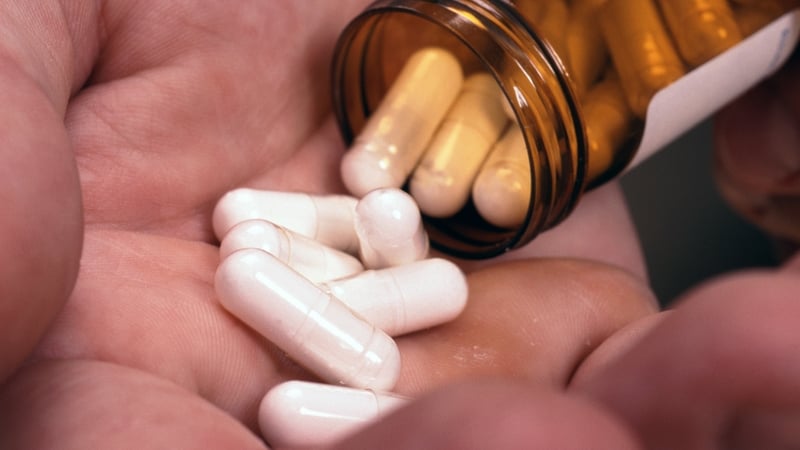

A new report has said that the number of antibiotics prescribed by GPs could be halved if doctors used a special test in their surgery, to find out whether patients have a bacterial or viral illness.
Currently around 2.4 million prescriptions are issued for respiratory tract infections in Ireland each year.
We need your consent to load this rte-player contentWe use rte-player to manage extra content that can set cookies on your device and collect data about your activity. Please review their details and accept them to load the content.Manage Preferences
The Health Information and Quality Authority said this could be halved if GPs used C-reactive protein point-of-care testing (CRP POCT).
The technology checks a patient's blood to see if they have a bacterial infection, which would require an antibiotic.
It would results in major savings for the health service in prescriptions and drugs not being issued, as well as reducing the risk of antibiotic resistance.
The HIQA report has recommended that Minister for Health Simon Harris consider rolling out a pilot programme for the technology in family doctor practices.
It said that Ireland has a high rate of antibiotic prescribing and inappropriate prescribing can lead to antimicrobial resistance, causing illness and death from bacterial infections.
HIQA said that the introduction of the system could affect family doctor practices through longer consultation times.
The cost of the programme nationally would depend on how it was implemented considering the equipment, training and GP fee costs.
The five-year cost of testing is put at between €1m and €5m.
But if GPs were to be paid per test, that five-year cost could rise by between €8m and €54m, the report says.