


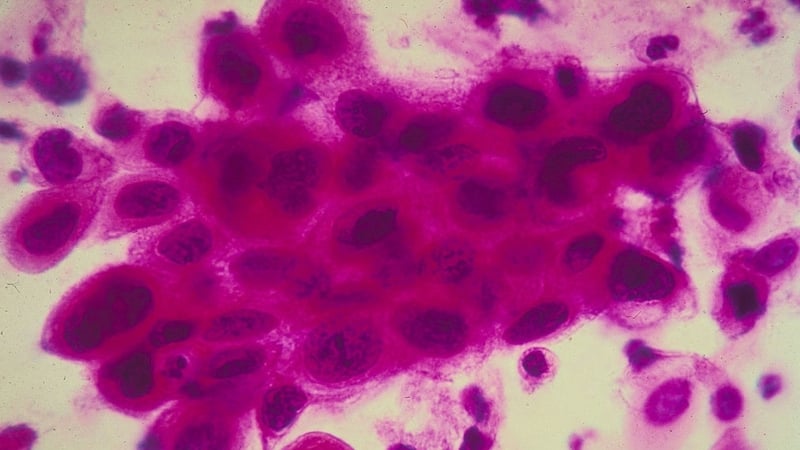
Spinning molecules driven by light could be used as armour-piercing missiles to kill cancer cells, new research suggests.
Scientists say another application for the tiny "nanomachines" might be to deliver therapeutic medicines.
In laboratory tests, researchers showed how the molecules can be activated by ultraviolet light to spin up to three million times a second and drill through cell membranes.
The "motor" is a paddle-like chain of atoms that can be prompted to move in one direction, causing the molecule to rotate at high speed.
Dr James Tour, a member of the international team from Rice University in Houston, US, said: "These nanomachines are so small that we could park 50,000 of them across the diameter of a human hair, yet they have the targeting and actuating components combined in that diminutive package to make molecular machines a reality for treating disease."
The scientists, whose work is reported in the journal Nature, created several different light-activated motorised molecules designed to home in on specific cells.
They found that the nanomachines needed to spin at two-to-three million times per second to overcome nearby obstacles and outpace natural Brownian motion, the erratic movement of microscopic particles suspended in fluid.
The molecules could be used either to tunnel into cells carrying therapeutic agents, or to act as killer weapons that blast open tumour membranes.
One test involved live human prostate cancer cells.
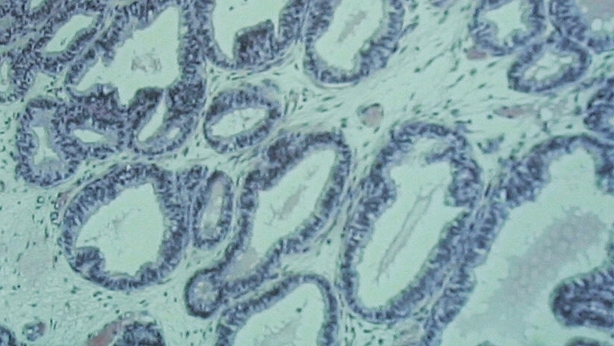
The nanomachines took one-to-three minutes to break through their outer membranes and kill them.
British co-researcher Dr Robert Pal, from the University of Durham, said: "Once developed, this approach could provide a potential step change in non-invasive cancer treatment and greatly improve survival rates and patient welfare globally."
Without an ultraviolet trigger, the motor molecules located target cells but then remained harmlessly on their surfaces. When triggered, the molecules rapidly drilled through the cell membranes.
