
EU member states have held off imposing immediate retaliatory trade measures against the United States, including the use of the EU's toughest response weapon, known as the Anti Coercion Instrument (ACI), according to an EU diplomat.
The decision not to use the ACI, or to immediately reinstate some €93 billion in retaliatory tariffs against the Trump administration, which were suspended last summer to allow for the completion of the EU-US trade deal, was taken during an emergency meeting of EU ambassadors in Brussels.
"At present, there is no question of deploying the ACI or any other trade instrument against the US," said the diplomat.
"The EU's €93 billion in rebalancing measures have been suspended until 6 February.
"The EU will only decide after 1 February whether to extend that suspension."
The diplomat said that ambassadors reaffirmed their "unequivocal" support for Denmark and Greenland, adding that "territorial sovereignty and integrity are non-negotiable, and the security of the Arctic region is a shared transatlantic interest".
The diplomat said member states would seek dialogue and a diplomatic solution, starting at the World Economic Forum in Davos this week, where US President Donald Trump will address delegates on Wednesday.
Our Europe Editor Tony Connelly and Washington Correspondent Sean Whelan have the latest
There will also be an extraordinary EU summit in Brussels on Thursday.
European "weakness" necessitates US control of Greenland for global stability, US Treasury Secretary Scott Bessent said even as some politicans sounded alarms about the Trump administration's effort to acquire the Arctic territory held by Denmark.
Speaking on NBC's "Meet the Press" program, Mr Bessent said taking ownership of Greenland is crucial in a geopolitical chess match with Russia and China.
He made the remarks a day after US President Donald Trump vowed to implement tariffs on European Union members opposed to a US acquisition, including Denmark, which has long been one of Washington's staunchest allies
"We are the strongest country in the world," Mr Bessent said. "Europeans project weakness. US projects strength."
As tensions with the EU escalated, Mr Bessent said he believed European leaders would ultimately "come around" to the idea of US control of Greenland.
"I believe that the Europeans will understand that this is best for Greenland, best for Europe, and best for the United States," he said.
The US Treasury chief said he had not recently discussed with Mr Trump whether he is still considering using emergency powers to justify using force to take Greenland.
But doing so would be "ridiculous" because there is no emergency in Greenland, said Senator Rand Paul, a Kentucky Republican who chairs the US Senate Homeland Security Committee.
"The idea by the secretary that, oh, this is to prevent an emergency - now we're declaring emergencies to prevent emergencies?" Mr Paul, who has long been a vocal opponent of aggressive US efforts overseas, said.
Meanwhile, EU member states have held off imposing immediate retaliatory trade measures against the United States, including the use of the EU's toughest response weapon, known as the Anti Coercion Instrument (ACI), according to an EU diplomat.
The decision not to use the ACI, or to immediately reinstate some €93 billion in retaliatory tariffs against the Trump administration, which were suspended last summer to allow for the completion of the EU-US trade deal, was taken during an emergency meeting of EU ambassadors in Brussels.
"At present, there is no question of deploying the ACI or any other trade instrument against the US," said the diplomat.
"The EU's €93 billion in rebalancing measures have been suspended until 6 February. The EU will only decide after 1 February whether to extend that suspension."
Trump's tariff threats 'risk dangerous downward spiral'
European leaders have warned that transatlantic ties were at risk.
Several European countries - including Denmark, of which Greenland is an autonomous territory - emphasised they "stand united" against Mr Trump's vow yesterday to hit them with tariffs of up to 25% unless Greenland is ceded to the United States.
"Tariff threats undermine transatlantic relations and risk a dangerous downward spiral," Britain, Denmark, Finland, France, Germany, the Netherlands, Norway and Sweden warned in a joint statement.
The European Union, which clinched a deal with Washington in July for most EU exports to face a 15% US levy, has called an extraordinary meeting of its ambassadors in Brussels.
France's President Emmanuel Macron will ask the EU to activate a never-before-used "anti-coercion instrument" against the United States if Mr Trump makes good on his tariff threat, Mr Macron's aides said.
The bloc's weapon - dubbed its trade "bazooka" - allows for curbing imports of goods and services into the EU, a market of 27 countries with a combined population of 450 million.
Mr Trump has repeatedly expressed his desire to seize Greenland since returning to the White House for a second term.
His rhetoric towards that goal has hardened since he ordered a military operation against Venezuela early this month to capture its leader, Nicolas Maduro.
Mr Trump and his administration have argued that Greenland coming under US rule would serve American "national security".
He and his aides have also argued that Denmark - although a NATO ally - would be unable to defend Greenland should Russia or China ever seek to invade.
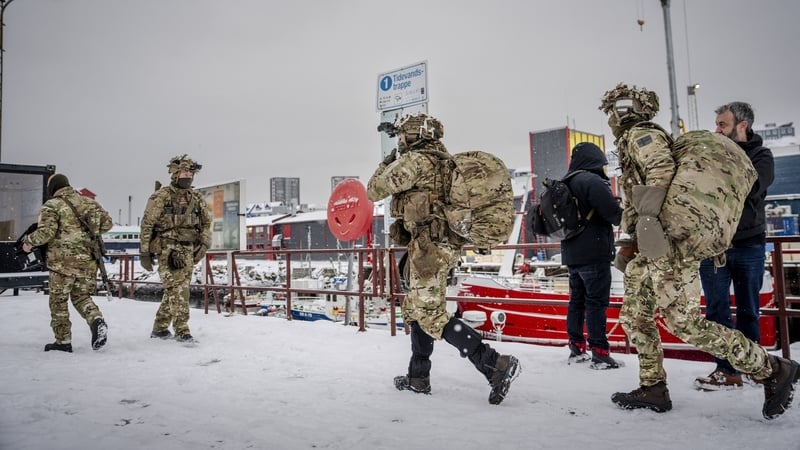
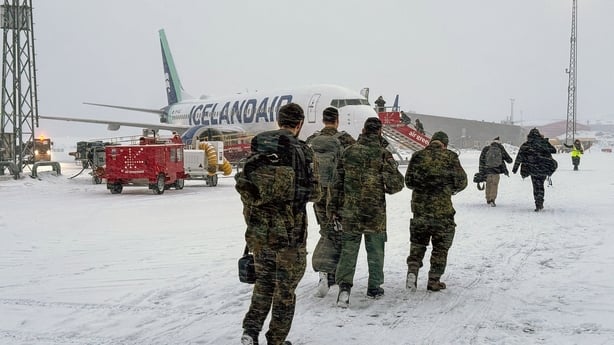
Denmark and several of its European NATO allies responded by recently sending small numbers of military personnel to Greenland for an exercise, to which the United States was also invited.
Some German soldiers were seen boarding a flight today to leave Greenland after completing a recon mission.
The Danish defence forces will continue their increased presence around Greenland.
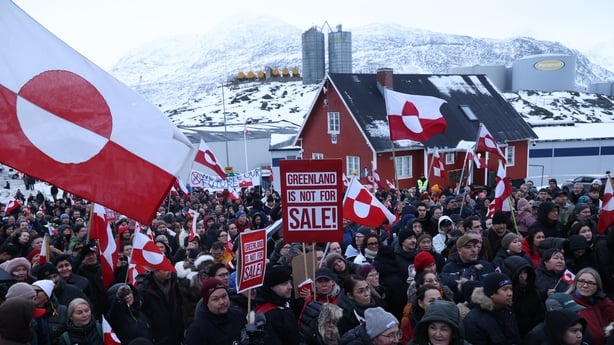
And yesterday, thousands of people in Greenland and in Denmark held protests to declare that they did not want the Arctic island to fall under US control.
"Make America Go Away" read the wording on caps worn by many of the protesters, riffing on Trump's "Make America Great Again" slogan.
Mr Trump responded with a threat to slap goods coming into the US from Britain, Denmark, Norway, Sweden, France, Germany, the Netherlands, and Finland with 10% tariffs starting 1 February.
Read more:
Hitting a point of no return in Trump's Greenland quest
Taoiseach 'against knee-jerk reaction' to tariff threat
Live: Updates as they happen
The tariffs would rise to 25% from 1 June "until such time as a Deal is reached for the Complete and Total purchase of Greenland", Mr Trump wrote on his social media platform, Truth Social.
Even Mr Trump's European allies baulked at the threat.
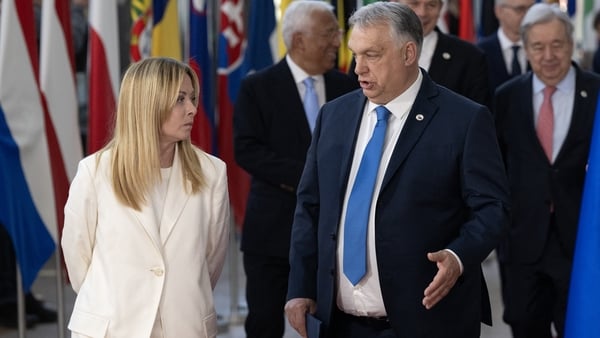
Italy's far-right Prime Minister Giorgia Meloni called the threatened tariffs a "mistake".
"I believe that imposing new sanctions today would be a mistake," she told journalists during a trip to Seoul, adding that "I spoke to Donald Trump a few hours ago and told him what I think".
Dutch Foreign Minister David van Weel meanwhile called Trump's threat an "inexplicable" form of "blackmail".
British Prime Minister Keir Starmer was planning to discuss the situation with Mr Trump "at the earliest opportunity", UK culture minister Lisa Nandy told the BBC, calling the president's tariff threat "wrong".
"We believe it's deeply unhelpful, and we believe it's counterproductive, and the prime minister has not shied away from making that clear," she said.
Our position on Greenland is very clear – it is part of the Kingdom of Denmark and its future is a matter for the Greenlanders and the Danes.
— Keir Starmer (@Keir_Starmer) January 17, 2026
We have also made clear that Arctic Security matters for the whole of NATO and allies should all do more together to address the threat…
Trade war fear
France's Agricultural Minister Annie Genevard warned that tariffs would hurt Washington, too.
"In this escalation of tariffs, (President Trump) has a lot to lose as well, as do his own farmers and industrialists," she told broadcasters Europe 1 and CNews.
Norway, targeted by Mr Trump's tariffs threat but, like Britain, not an EU member, said it was not currently looking at retaliation against US goods.
"I think one needs to stop and think so that a trade war can be averted that would lead to a downward spiral. Nobody would win," Norwegian Prime Minister Jonas Gahr Store told NRK television.
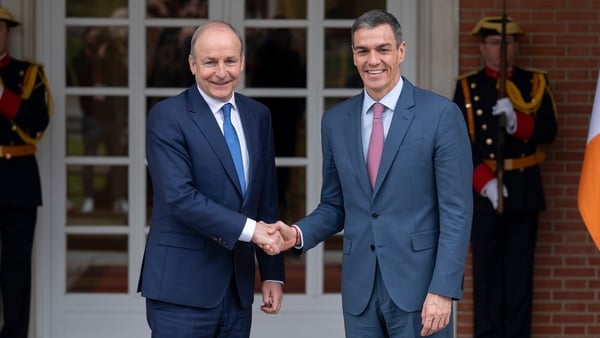
Meanwhile, Taoiseach Micheál Martin said he was "against a knee-jerk reaction" in terms of the European Parliament possibly not ratifying the EU-US trade deal.
More: Why Europe has drawn a line in the snow in Greenland
Watch: Greenlanders condemn Trump's tariff threats
Speaking on RTÉ's This Week, the Taoiseach said that Europe has a trade agreement with the US, one that was entered into in good faith.
"That should be the framework that governs trade between our two countries, and every effort should be made to ensure that it remains the framework that underpins trade between Europe and the United States.
"Any deviation from that or any trade war that essentially would flow from the collapse of such a deal would be very damaging to everybody in the world," Mr Martin said.
If the tariffs are levied, the EU will retaliate and both Europe and the US will suffer, he added.
"Dialogue has to happen to prevent that from occurring," Mr Martin said.
Faced with the increased pressure over Greenland, Denmark's Foreign Minister Lars Løkke Rasmussen announced he would visit fellow NATO members Norway, Britain and Sweden in the coming days to discuss the alliance's Arctic security policy.
Additional reporting: AFP