


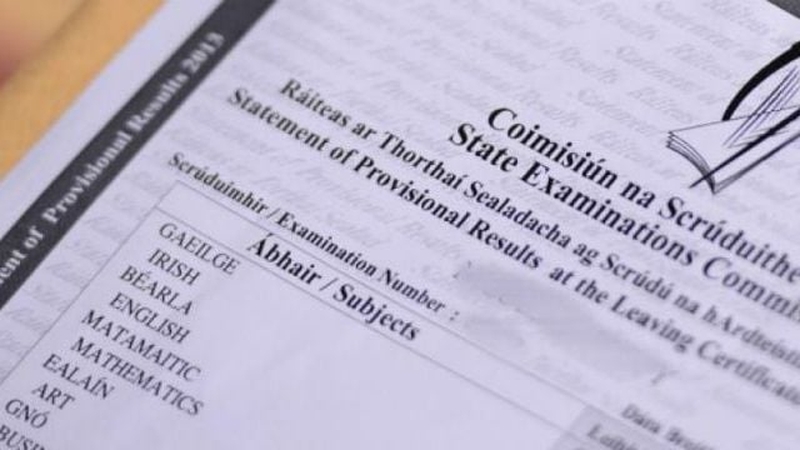
Minister for Education Norma Foley has said she followed best international practice in announcing a reform of the Leaving Cert system as a teachers' union warned that the "omens are not good" for proposed assessment changes.
The plan - announced in late March - envisages a significant reduction in reliance on final examinations, and the introduction of teacher-based assessment at Senior Cycle.
Speaking on RTE's This Week, General Secretary of the Association of Secondary Teachers of Ireland Kieran Christie said: "Teachers assessing their own pupils for State certification purposes has long been something that the ASTI has had a policy to resist.
"We do not think it's a good idea, it’s much more important that the system is perceived to be entirely above reproach and that’s why we want externally based assessment.
"Certainly the omens aren't good on the issue of assessing our own students because we have had a long standing policy of opposition towards it."
General Secretary of the Teachers' Union of Ireland Michael Gillespie said: "The big thing for us will be State certification and correcting our own students."
He said certification by the State Exams Commission "has given the Leaving Cert, which is a high stakes exam, a huge amount of validity".
Mr Gillespie also said that although there are a lot of measures to welcome in the Leaving Cert reform, "pay is still a significant factor for teachers".
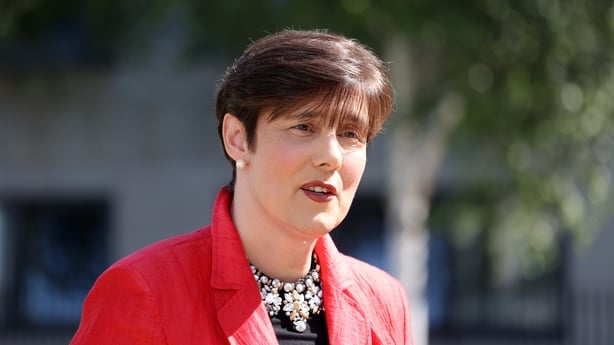
Speaking on the same programme, Minister Foley said grades offered to Leaving Cert students will be a State-certified grade even if marks are given by teachers.
She said there had been "considerable consultation" about reform that spanned five years.
She said she had "followed best international practice, following calls from a variety of voices including the United Nations on the Rights of the Child, the Ombudsman for Children, Children's Rights Alliance, many within the teaching profession, parents, students and wider society.
"The next step was for a minister to make policy, which I did."
Ms Foley also said October will be "significant" for teacher pay rises this year.
She said that new entrant pay has gradually increased from €30,702 in 2012 to €38,192 in October.
Asked about how many Ukrainian refugee children will need to attend schools here, Minister Foley said it was difficult to quantify .
A survey taken last week had reported over 2,000 new pupils at primary and 1,800 at post primary.
"It's very difficult to quantify at this point how many students will come but we do know that almost one third [of people arriving here from Ukraine] are children."
Ms Foley said there had been "significant work" to support them with more than 260 schools successful in obtaining additional hours and posts.
"It's about supporting all of our students at a very difficult and traumatic time in the world," she added.
