Richard Downes explores the coastal village of Howth in north Co Dublin, revealing its hidden wilderness, local walking paths, and the stories of fishermen who settled there from the 1950s.
In RTÉ's Nationwide, he also tells of the mystery of the ancient bells of St Mary's Abbey, lost in the 1700s and recently refurbished for public display in the National Museum, after being donated by the Gaisford-St Lawrence family.
Howth is a curious place. It's a suburb of Dublin, yet it has hundreds of acres of wilderness. It is a town that feels sometimes like a rural village. It has more restaurants than probably any place its size in Ireland. It has more fish shops than anywhere else in the country - a suburb, town, fishing centre, food mecca and wild place on the doorstep of the capital.
Howth is also a vibrant community with voluntary groups and societies working hard to maintain and develop the peninsula for themselves and the thousands of visitors that arrive all year round. That’s the glue that holds it all together.
'History of the bells is the history of Howth'
When the Gaisford-St Lawrence family were selling their castle and lands in Howth in 2019, there was general alarm across the peninsula.
The family had resided in the castle and demesne for more than 800 years. What would happen to this unique feature of Howth?
Would there be widespread development that would ruin the demesne? But for Lorcan Blake of the Howth Peninsula Heritage Society, there was only one question: what will happen now to the bells?
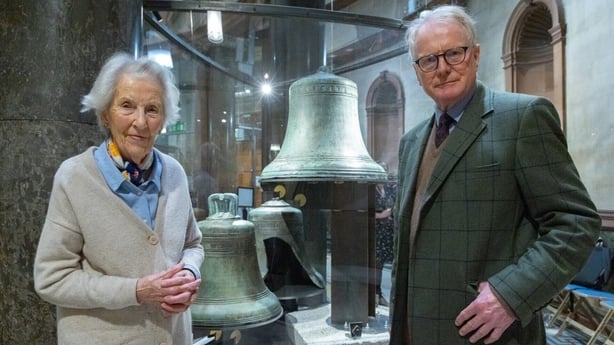
These are the bells of St Mary’s collegiate church in Howth town, affectionately known as the 'Abbey'. The three bells were installed in the church in the 1400s.
The church fell into disrepair as a result of the dissolution of the monasteries. The priests who ran the 'College' of Howth were chased away and the church fell into ruin.
The bells were retrieved and taken up to the castle for safekeeping. Howth fell silent.
"The history of the bells is the history of Howth. Socially and spiritually, they were the magnetic centre for the people of Howth. It is wonderful that they have been conserved for all generations to appreciate," according to Lorcan Blake.
The Gaisford-St Lawrence family donated the bells to the nation and they are now in the entrance rotunda of the National Museum, a short DART ride away for Howth residents to inspect and available for the whole nation to see in pride of place in this national institution.
Hundreds of acres of wilderness
Howth and Sutton form the peninsula and there are around 10,000 residents. So it is something of a surprise for visitors to find hundreds of acres of wilderness on the peninsula.
At the heart of this is the SAAO, the Special Area Amenity Order, which designates huge areas to be off limits for development, roughly 1,350 acres.
It is no exaggeration to describe the "bog of frogs" trail as a true wilderness experience. The "cliff walk" is similarly virtually empty of housing and development. Likewise, the "east mountain" walk.
The Howth Pathways group are a vital resource. They do the hard and often overlooked work of keeping the dozens of pathways open for locals and visitors alike.
Dougal Cousins is a member of the group. In his typically self-deprecating way, he says that the group is just one of many in Howth contributing to what is a strong, vibrant community.
"It’s a modest contribution, but there are many other people doing things in Howth that make an enormous impact on the community," he said. Keeping the paths open so people can wander and get lost in nature is a gift to the community and the region.
Fishing 'was a way of life'
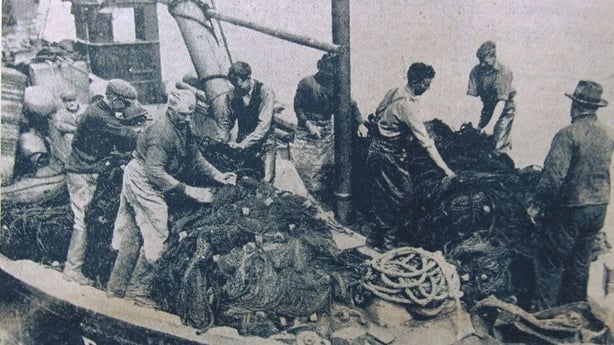
Sean Doran’s family arrived in Howth in the early 1950s as part of a surge in the commercial fishing effort after World War II.
Sean's family came from Wexford while others arrived from Castletownbere in Co Cork, na hOileáin Árainn, Co na Gaillimhe, and a myriad of other ports, primarily in the west of Ireland.
They were drawn by the prospect of good fishing out of Howth, which has better weather than the west and, at the time, good fishing stocks in the Irish Sea and in the south.
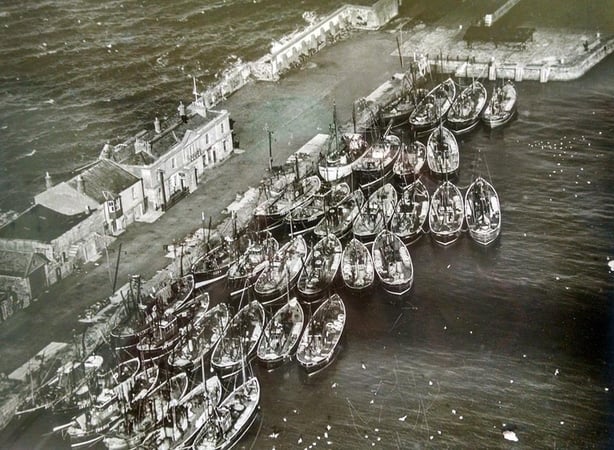
Sean remembers waiting for school to end so he could rush down to the harbour to get small jobs on the boats that were filling up the harbour in the 1960s and 1970s.
"When I was a kid, every kid, once school was out, they were running down to the pier to get an odd job on the boats. It was great," he said.
Evelyn Sugrue met her husband John after he arrived in Howth as part of a fishing crew from Kerry in the 1960s.
"I met my husband when I was 17. He came from Valentia Island. He came up on a fishing boat. I got engaged when I was 18 and got married when I was 19," she said.
The rhythm of life was the rhythm of the fishing industry. John went out early in the morning.
In the summer, Evelyn would go down to the beach all day with the children, return to their home in the fishing cottages in the town, clean the kids up and head down to the harbour to welcome John home.
"It was a way of life. The boats would come in around six or seven o'clock. When my kids were small, you'd dress them up and bring them down to meet their father," she said.
Philip O'Neill arrived in Howth from Cork as a fisherman in the 1960s with a ferocious appetite for work. He found skippers willing to work hard and boats that were embracing new technology.
"It was a great time. I couldn't wait to get out on the sea. We worked hard and made money and set ourselves up," he said.
Inevitably, the draw to return to Co Cork resurfaced late in his career, but for Philip, now retired, his whole adult life has been spent in Howth and it was too much of an upheaval to think about going back to his home county. "I’m here for good now and that's fine," he says.
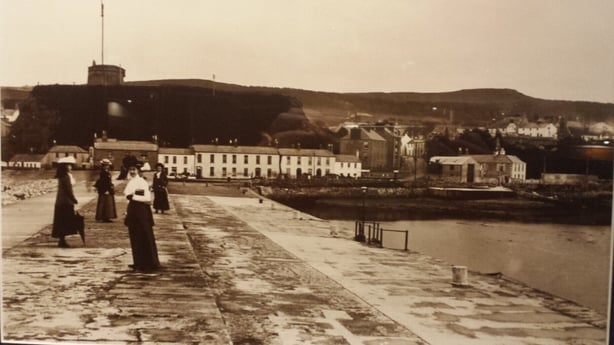
It was replicated all through the 1950s and 1960s as fishermen from the west found a home in Howth and married local young women, stayed and became part of the fabric of life in this north Dublin town.
That is all now a distant memory, as the fishing in Howth is not what it was. A combination of low stocks, Brexit and changes in policy has undermined the fishing industry here.
There are enormous challenges for Howth, as housing pressure has brought about large scale housing schemes that have proved unpopular with the locals, with more in the pipeline.
But the town is more than a thousand years old and has braved war, invasion; collapse and rebuilding. It is a resilient and forward-looking place that has so much to offer the resident and the visitor alike.
The story of Howth will feature on Nationwide on Friday 13 March on RTÉ One at 7pm.