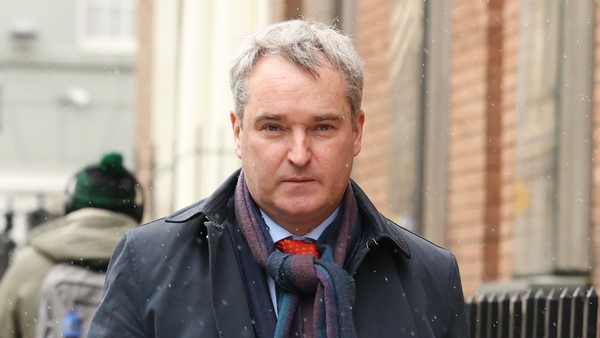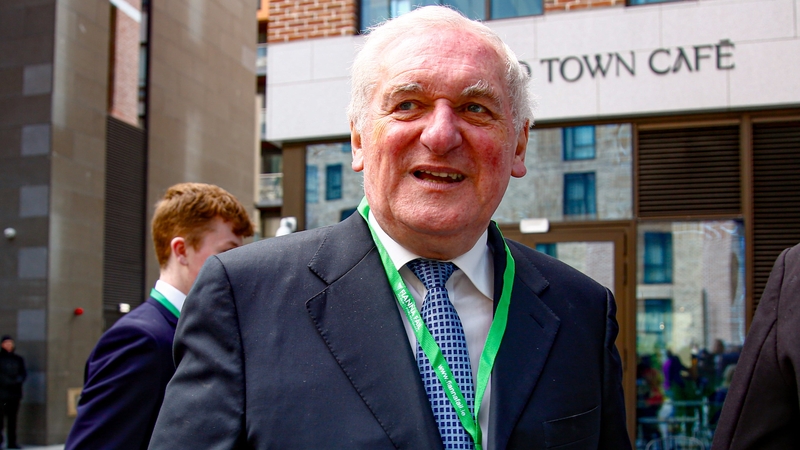

Former taoiseach Bertie Ahern has said that a directly elected mayor for Dublin is a "stupid" idea and has not been thought out properly.
Mr Ahern, who is also a former Lord Mayor of Dublin, said the capital would be better served by being able to apply a local tax and by the appointment of a government Minister for the Greater Dublin Area.
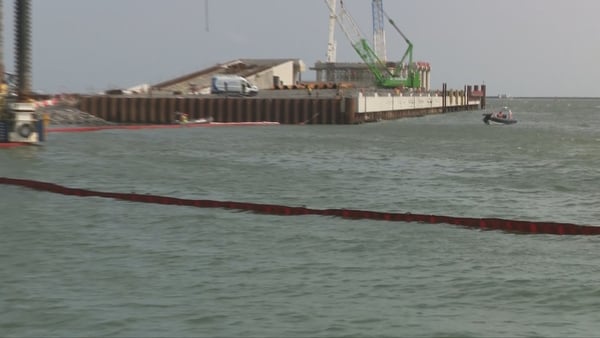
He was speaking at a debate organised by the Urban Land Institute about the issue of a directly elected mayor for the capital which was held in Dublin's IFSC.
He said the debate had been going on for more than two decades and that when he was in office he did his best to delay any implementation of the idea.
"This hasn't been thought out. It hasn't been thought out in 20 years," Mr Ahern said.
"I think it's a stupid idea. I hope I'm long gone before anyone implements it. Improve what we have, but for God's sake don't bring in a directly elected mayor."
He said that while out canvassing for the Local and European Elections, not one person raised the issue of a directly elected mayor with him and that he believes the Irish political system is too centralised for it to be effective.
Mr Ahern also said that Limerick "made a mistake" in voting for a directly elected mayor.
"I don't see how it would work quite honestly. Let's be honest but the idea of the guards or the schools being run by the city council. And child minding? Jesus, the poor kids. So I don't get any of this stuff. I wish Limerick well. They made a mistake, I just don't see it as being a good idea."
He said that people were critical of the capital but that a lot has been achieved since he was first elected and that Dublin was "doing something right".
"It's a great city and sometimes we can be a bit hard on ourselves," Mr Ahern said.
"When I was first elected, this [the IFSC] was a derelict site and this area had an 84% unemployment rate.
"Temple Bar was going to be a bus station and we started trying to change Dublin. The population was less than half what it is today. People were leaving this country.
"We were emigrating more than the labour market was growing. Now we have a fantastic city. My point is that we must be doing something right."
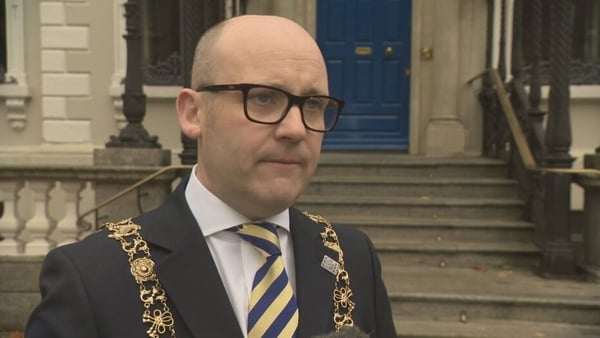
Speaking at the same event, Dublin City Council Chief Executive, Richard Shakespeare, said a directly elected mayor would achieve nothing without power and money and that if local government was given greater power, it might be more effective.
"It's a fundamentally good idea. But if you're going to have referendum or a plebiscite, people have to know what they're voting for," Mr Shakespeare said.
"The early steps of going down that route would be to empower the current system more. We have limited powers. And whatever people think the limited power of councillors is, myself and my colleagues throughout the country have very limited powers.
"If you're appropriately empowered, be it me or a directly elected mayor, that's around borrowing, having the full use of the property tax. Without money and resources you will achieve nothing."
Fingal County Council CEO, AnnMarie Farrelly, said that most of the powers that are spoken about being transferred to a directly elected mayor are ones the councils currently do not have and that comparing Dublin to other places was not possible because of its combined budget of €2.1 billion.
"The scale of what's proposed is much bigger than what's proposed for Limerick city and council. The scale of a Dublin’s city and council mayor is a different thing," she said.
Stephen Brown of Dublin Chamber, said that they would support having a directly elected mayor to act as a strategic leader for the city.
"What our members wanted was a city that works. A big frustration for our members has been the bottlenecks in local and national government," he said.
"We want to have one person to go and speak to, that's why we would favour a mayor or a Minister at cabinet level."
Kevin Slocombe, Chief of Staff of the former Mayor of Bristol, told the debate about how a directly elected mayor had been introduced in Bristol in 2011 and removed eight years later due to what he said was bad communication during a campaign on the issue.
He said during his time in office the mayor had responsibility for lots of things including including power, transport, housing, social care and climate and he felt that the role had been effective.
"What was brought to the role was soft power and soft power was essential to it. We were able to engage more with the government. More money came from the private sector," Mr Slocombe said.
"What the mayor was good at was bringing the city together. People saw him as he city leader. He was transparent and recognisable. That power and ability to bring people together was, in a funny way, the biggest thing he achieved.
"Cities have to modernise their type of government. Governments don't plan cities. Cities plan cities. Cities need to grow up and recognise that they have to face the challenges because government wont do it."