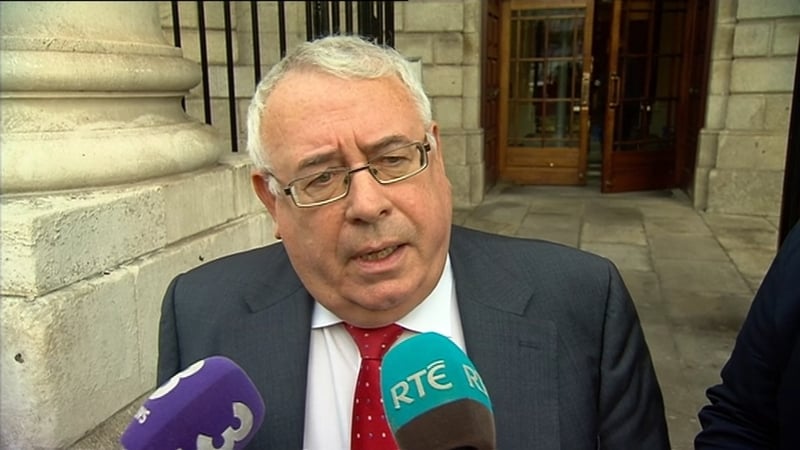

Former Labour Party TD Joe Costello has begun an action for damages against RTÉ, over the way the broadcaster defended a defamation case against it.
The case arises from comments made during a live debate on the Saturday with Claire Byrne radio show on RTÉ Radio One in October 2015.
Mr Costello says RTÉ blamed him for the defamation of former Sinn Féin councillor Nicky Kehoe during the programme and made him the "fall guy" in the legal proceedings taken by Mr Kehoe, without any notice to him and without giving him a chance to respond.
Mr Costello is also seeking a declaration that a section of legislation governing civil liability is unconstitutional if it does not require such notice to be given.
RTÉ and the State deny Mr Costello's claims. RTÉ says it was not obliged to join Mr Costello to the defamation action and was not obliged to notify him about the case.
The State says Mr Costello’s constitutional rights were not breached but if they were interfered with, this was done in a proportionate manner to do justice between the parties in the defamation action.
It also says Mr Costello’s rights were not affected because the jury’s decision in the defamation case was "legally sterile" and did not oblige him to pay any money to Mr Kehoe.
During the broadcast, the court heard Mr Costello claimed a member of the IRA army council was directing Sinn Féin councillors on Dublin City Council on how to vote. He added that "all the little heads swivel around" when a decision has to be made.
Sinn Féin TD Eoin Ó Broin named Nicky Kehoe as the person to whom Mr Costello was referring. Mr Ó Broin described the comments as outrageous and bizarre.
Nicky Kehoe sued RTÉ for defamation, saying the broadcast damaged his personal and professional reputation. He said he was ashamed of his past activities in the IRA, had reformed while in prison and had left his paramilitary past behind.
The jury found in favour of Mr Kehoe and decided he should be awarded €10,000 in damages. But it found that RTÉ was only 35% responsible for the defamation and that Mr Costello, who was not part of the case, was 65% responsible.
Mr Costello says he was used by RTÉ as a fall guy and portrayed as "the villain of the piece".
His lawyers told the court he was never given any notice by RTÉ of its intention to plead that he was a "concurrent wrongdoer".
He says he had some texts, emails and phone calls with the producer of the programme in February and April 2016, and had briefly met her by chance in June that year, but he claims all he was told was there was a "threat" of legal proceedings.
RTÉ claims the producer, Kay Sheehy, told Mr Costello in June 2016 that Mr Kehoe had begun proceedings.
RTÉ delivered its defence to the defamation action in November 2016.
Mr Costello says the first he knew about the fact that Mr Kehoe had actually issued proceedings was when he saw media reports of the case while it was being heard before a jury in February 2018.
Mr Costello’s senior counsel, Eileen Barrington, said he was "very taken aback" when he saw the result of the case and issued a statement expressing his disappointment.
She said the case was about the simple proposition that RTÉ should not have taken the course it took and that if it wanted to put the blame on Mr Costello, the broadcaster should have notified him of that fact.
Ms Barrington also told the court Mr Costello was not happy that the presenter of the programme, Claire Byrne, had described him in court as "going doolally" during the broadcast. She said if he had known RTÉ was going to turn around and blame him, he would have sought legal advice.
Ms Barrington said to say someone was a "wrongdoer" and a "defamer" had a clear and obvious effect on someone’s reputation and good name.
She said that although Mr Costello was not required to pay any monetary compensation, he had suffered the "ignominy" of a formal finding against him and his political reputation had been damaged.
Ms Barrington told the court that RTÉ’s position appeared to be both that it had informed Mr Costello about the case but also that there was no obligation on it to tell him about it.
Mr Costello is seeking damages from RTÉ alleging breaches of his constitutional rights to fair procedures and to his good name and reputation.
He is also seeking a declaration that a section of legislation governing liability and contributory negligence operated in an unconstitutional manner in this case.
Ms Barrington said if the court found the legislation did not require someone who is accused of contributory negligence to be notified, then they would be seeking a declaration that the legislation was unconstitutional.
The case before Ms Justice Siobhán Stack is expected to last around three days.