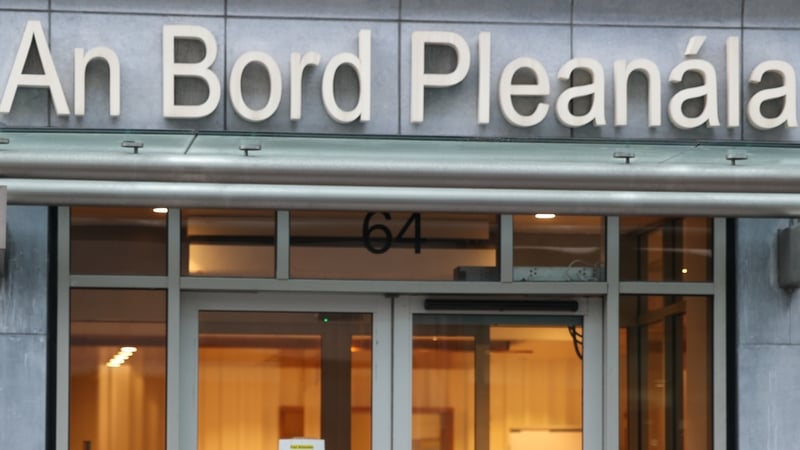

In a judgment which took around half an hour to deliver, Judge James McNulty went into considerable detail to explain why he was sentencing former deputy chairman of An Bord Pleanála Paul Hyde to jail, rather than dealing with the case by way of a fine or a community service order.
The maximum penalty Hyde faced on each of the two counts to which he pleaded guilty was six months in jail, and/or a fine of up to €5,000.
Judge McNulty said neither a fine nor a community service order would adequately reflect the gravity of the offences.
He identified what he described as one "serious aggravating factor".
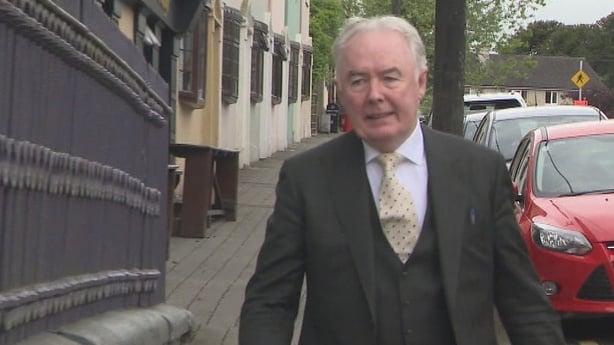
He said Hyde's position made it incumbent on him to lead by example, in compliance with his statutory obligations.
"The accused was in a position of both leadership and authority in An Bord Pleanála," Judge McNulty said.
"(He) had significant power and influence within the planning system. For example, like other board members, the accused had the power to overrule decisions of county council planners and, indeed, An Bord Pleanála's own inspectors and to grant or refuse planning permission.
"Filing an annual declaration was easy, but it was essential that it be accurate.
"If those who are in leadership and authority are lax and careless and non-compliant, what will those in the ranks do? They will be lax and careless too, almost as if compliance was an option."
Judge McNulty explained why a custodial sentence was warranted in this case.
"Given the seriousness of the offence and the high level of culpability on the part of the accused, neither a fine nor community service would adequately reflect the gravity of the offences," he said.
"This Court views these offences as very serious. Given the history and purposes for which the declaration was required, that the accused was a professional in the field, and that he had been made well aware of his disclosure obligations, the court considers that the level of culpability of the accused is very high.
"The Court is also mindful of the general deterrence objective in sentencing, which aims to deter all others from committing offences of this kind."
Judge McNulty also spoke about the breach of trust that had occurred.
"The court acknowledges, as counsel has pointed out, that there is no suggestion that the accused derived any benefit or made any gain from it," Judge McNulty said.
"Nonetheless, in all the circumstances, the offences are still serious offences and, sadly, they involve a breach of trust, namely a breach of the trust that was reposed in him [Paul Hyde] when he was appointed to serve as a member of An Bord Pleanála in 2014. To serve the citizens of Ireland is a privilege. To serve the citizens of Ireland in a position of trust comes with responsibilities, chief among them being to promote the common good and to protect and, if necessary, defend the public interest.
"What makes these offences so serious," Judge McNulty explained, "is that the work of An Bord Pleanála is quasi-judicial in nature, and at the high end of quasi-judicial. It is the appeal forum for citizens who may be dissatisfied, for whatever reasons, with the decisions of local planning authorities nationwide. In addition to that vast and vital function, An Bord Pleanála is also the decision maker, first and last, in a range of important matters such as high-volume strategic housing developments and major infrastructure. So, An Bord Pleanála has an enormous power in the land and, consequently, in the lives and fortunes of citizens and communities.
Judge McNulty traced the public interest background to declarations of interest and the specific Irish contest. This context, he said, led to the enactment of legislation which created the offences to which Hyde had pleaded guilty.
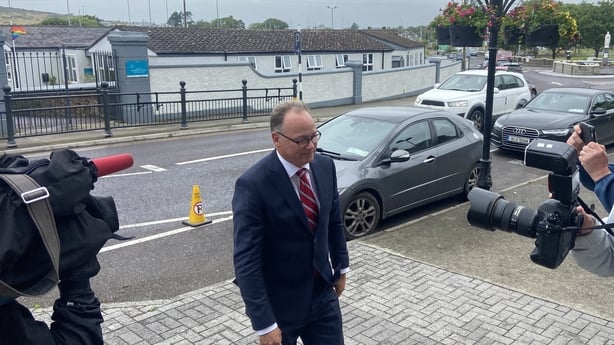
He also referred to the Planning Tribunal, which sat from 1997 and concluded with recommendations in 2012.
"Openness, transparency and accountability in governance, together with independence, impartiality and integrity among decision makers, are among the important pillars on which a modern democracy and a prosperous economy are built and maintained," he said.
"Upon his appointment to ABP in 2014, the accused signed an agreement, dated September, 14, 2014, which set out in detail the terms and conditions and duties of his employment with An Bord Pleanála.
"This included, at paragraph 13, specific notification of his obligations under Section 147 and Section 148 of the Planning and Development Act 2000, and of the requirement of a declaration of interests from him, and of full compliance by him with those statutory provisions.
"The purpose and the importance of a declaration of interest by the member is abundantly clear, and the accused cannot have been unaware of both.
Judge McNulty said the court measured the offence to be in the mid-range, attracting a sentence of three months in jail on each count. That was increased to four months by the aggravating factor which he identified.
On Tuesday, Judge McNulty heard extensive arguments in mitigation on Hyde's behalf, put forward by his barrister Paula McCarthy.
She said he was a 50-year old man of good character with no previous convictions. She said Hyde had indicated that there would be a plea of guilty at an early stage, saving the State the expense of a trial.
She also submitted that he hadn't gained financially from the false or misleading declarations of interest which he made.
Taking those mitigating factors into account, Judge McNulty said Hyde was entitled to "the fullest discount, namely 50 per cent".
He therefore imposed a jail sentence of two months on each charge, with the sentences to be served concurrently.
Hyde was freed once his legal team filed a notice of appeal moments later.
It's expected the appeal with be heard at the circuit court in three to six months.
Judge McNulty concluded his judgement by saying he wished to address some remarks to all who work in the planning area:
"Only one corrupt planner was exposed in the Planning Tribunal," he said. He was a senior planner but he was very corrupt and, unfortunately, he attracted others.
Planners at all levels from county councils to An Bord Pleanála should be reassured, and not alarmed, to hear the ethical nature of their work revisited, their statutory duties emphasised, and the consequences of breach clarified.
"It should be clear that ethical standards in public life matter," Judge McNulty said. "Statutory obligations requiring disclosure of interests, created in the public interest, for the public interest, require strict compliance and careful attention."