
A boy who attempted to murder a young woman almost two years ago, when he was 15 years old, has been sentenced to 11 years in detention, but with a review of that sentence to take place in January 2023.
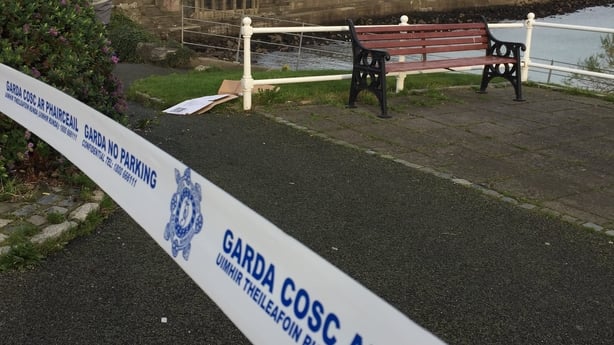
The boy, who is now 17, pleaded guilty to the attempted murder of 25-year-old Stephanie Ng in Dún Laoghaire two days before Christmas 2017.
He strangled her and cut her throat while she was unconscious and left her "for dead" on the seafront near the disused baths.
She managed to struggle to higher ground and alert a passerby.
Mr Justice Michael White said the boy acted with cold calculation and without empathy.
The boy's mother apologised to the young woman in court last month and said the boy took full responsibility for his actions.
She described the efforts the family had made to get psychiatric care for her son, who had been unwell since the age of 13.
She also said he was hearing voices and seeing images in his head and was on a strong dose of Prozac, which had made him very agitated.
She said her son was tortured by what he had done.
In his ruling, Mr Justice White outlined the factors he had taken into account and the legislation governing the detention of children.
He noted that the 2001 Children Act failed to legislate specifically for children convicted of murder, or attempted murder.
But he said he was clear about the principles he had to apply.
Mr Justice White said the aggravating circumstances were the nature of the crime and its impact on Ms Ng.
This was a crime of the utmost seriousness, he said.
The boy had made contact with Ms Ng on social media, for the purpose of causing harm.
There was planning, premeditation and a determined strategy when he met her to entice her to an isolated place.
He acted with cold calculation and without empathy in carrying out the violent act.
The judge said the two serious wounds to Ms Ng's neck were likely inflicted when she was unconscious from strangulation.
She was left for dead, and there was no attempt to seek assistance after these violent acts.
He said the impact on Ms Ng was life-changing and would be with her for the rest of her life.
The judge said the boy had pleaded guilty at an early stage and had no previous convictions.
He was attended to by a loving family, felt remorse for what he had done and his behaviour in custody had been exemplary.
But he said the case was complicated by the boy's youth and mental illness.
There was no doubt, he said, that the boy had been suffering from serious mental illness in the period leading up to the crime.
However, he said the court had been hampered in properly exploring this matter because the boy's parents had not consented to make the notes of the treating psychiatrist, Professor Harry Kennedy, available to the court.
The absence of these notes, left the court uneasy about the impact of the mental illness on his violent behaviour.
The court had ordered a report from a forensic psychiatrist, Dr Richard Church, who had a consultation with the boy in July this year.
Mr Justice White noted Dr Church's comments that the boy's style of engagement with him was "guarded and measured" and he got the firm impression that he could have said a great deal more but chose not to.
The doctor concluded that the boy was making a great effort to present himself in the best possible way as open, truthful and remorseful but was unconvincing.
The judge said he could not deal definitively with the impact of the Prozac the boy was taking, as no expert evidence was put forward on this issue.
He said he took the view that the boy's youth and mental illness was a very substantial mitigating factor.
He noted that the protection of the public was a factor that the court could take into account in sentencing, but the court had no power to impose a period of preventative detention to protect the public.
Mr Justice White said the headline sentence for this offence would be life in prison.
He said if he had the option, he would have dealt with the offence by partly suspending some of the sentence and making the boy subject to close supervision in the community by probation and psychiatric authorities.
But he said it was not open to the court under the law to suspend part of a period of detention.
He said he would impose a sentence of 11 years in detention with a review after five years backdated to December 2017, when the boy was first arrested.
The review period is to begin on 1 January 2023.
The judge also agreed with defence counsel, Niall Nolan, that the protection of the boy's identity as provided for in the Children Act, applied to him for life.