


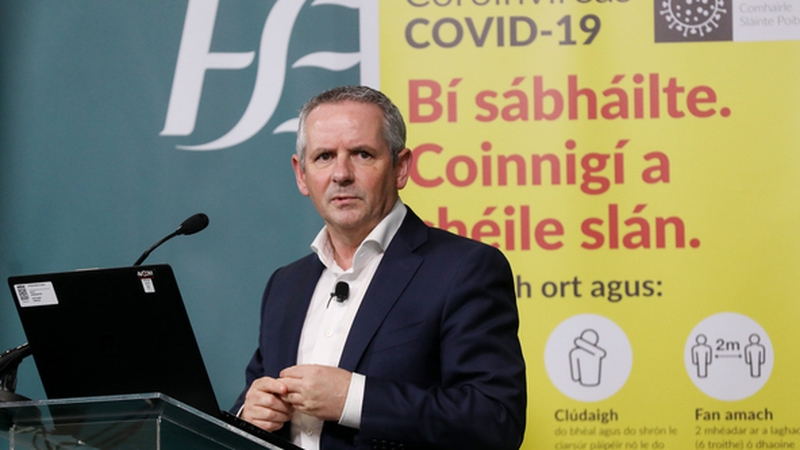
CEO of the Health Service Executive Paul Reid has said a "sad milestone" was reached yesterday with the news that over 2,000 people have died from Covid-19 in Ireland.
Speaking at the HSE's weekly Covid-19 update, Mr Reid said this is a "sad reminder to us all of the toll that the virus has taken on many families and communities".
He said he wanted to recognise the role of healthcare workers, and how they are the key link in people's last days to their families.
He paid tribute to them for the "relentless process" they are involved in and to the sacrifices they and their families are making.
According to the latest HSE figures there are 290 people being treated in hospital for Covid-19, with 33 people in ICU.
The reproductive number of the virus is between 0.7 and 0.9, unchanged from two weeks ago.
Speaking at the HSE weekly briefing Dr Colm Henry says the R number is now between 0.7 and 0.9. | Read more on coronavirus here https://t.co/Qz7cTkADCl pic.twitter.com/1rlPM37cro
— RTÉ News (@rtenews) November 19, 2020
65% of hospitalised cases are spread across seven hospitals; Letterkenny University Hospital, University Hospital Limerick, Tallaght University Hospital, St James's Hospital, St Vincent's University Hospital, Our Lady of Lourdes Hospital in Drogheda and Beaumont Hospital.
Paul Reid said there are outbreaks in all seven of these hospitals "to various degrees".
He said of the 5,700 new cases notified between 3 and 16 November, 384 of those have been hospitalised.
Chief Operations Officer with the HSE Anne O'Connor said attendances and admissions to hospital increased by 5.3% this week, adding that they have seen a continued rise in people attending hospital over the past few weeks.
Ms O'Connor said there were 173 people on hospital trolleys yesterday.
She said as of yesterday there was 26 people and 96 health workers isolating in Citywest in Dublin.
She said there are currently 105 outbreaks in nursing homes saying most of them are being managed very well but added that they would be concerned about 10 of those outbreaks.
HSE Clinical Lead for Covid-19 Dr Colm Henry said outbreaks are a reminder of how virulent the virus is, particularly in healthcare settings.
Speaking at the same briefing Dr Henry said Iceland and Finland are the only countries with a lower 14-day incidence rate than Ireland.
He said there have been 41,000 cases of Covid-19 since 1 August, with 2,826 of those have been among health care workers, or 6.8%.
"Trends have stalled", Paul Reid said, but he added that he wanted to "recognise the need for all of us to encourage the public to sustain the pace for the next phase given what has been achieved to date."
Mr Reid appealed to people to "galvanise" the achievements made to date in the suppression of Covid-19 in Ireland.
"We need to get the pace going again."
He said it was "important not to demonise any particular group or area of society."
"We often highlight exceptions and social media is good or bad at that."
Mr Reid thanked businesses for the changes they have made to their work practices and said they "have taken a huge hit".
He said while the Government will decide what the "next phase will look like and what level restrictions exist" he said some key principles "will have to continue".
Mr Reid said these include avoiding large crowds, keeping social distance, wearing masks, continuing to reduce social contacts and hand hygiene and cough etiquette.
He said the Covid-19 vaccine taskforce will meet for the first time next Monday and said it would "set out the governance structure, the manner in which the chair expects it to operate, the roles and responsibilities of those involved".
Mr Reid said the first role of the taskforce will be to develop a strategy and implementation plan for the role out of vaccines, "which obviously has to be done at an accelerated pace".
He said a tender had been issued for submissions in relation to antigen testing.
Mr Reid also said the infection levels among schoolchildren are stable and have not changed hugely. The figures are broken down into pre-school, primary, post-primary and special education.
At pre-school it is 5%, primary 2.7%, post-primary 2.2% and special education he did not have the figure off the top of his head, Mr Reid commented.
Colm Henry added that the school-age population as a proportion of the overall cases have changed very little since before the schools opened.
He said the experience in this country to date is that the community transmission when it is high presents far more threat to schools than schools do to the community, and that is in line with the ECDC assessment of the impact of opening schools.
Additional reporting Tommy Meskill
