


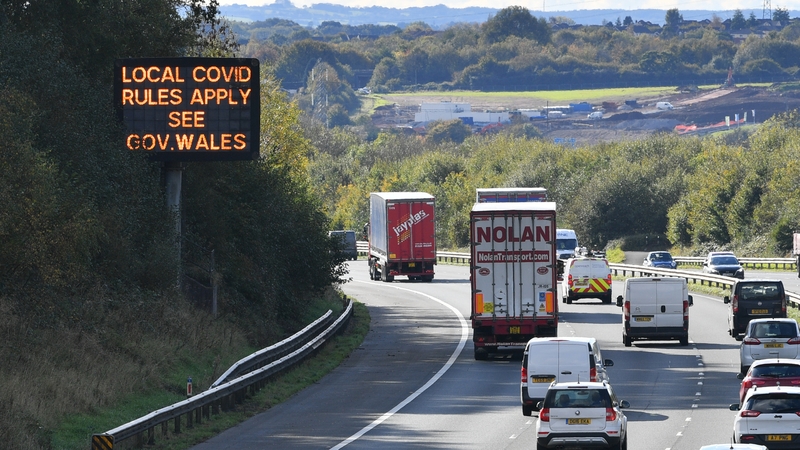
The Welsh government has announced that it intends to ban people living in areas with high rates of Covid-19 infections in the rest of the UK from entering the country, in a bid to prevent the spread of the disease.
Under plans being prepared by the devolved administration, those living in areas of England, Scotland and Northern Ireland with high infection levels will be barred, First Minister Mark Drakeford said.
"We are preparing to take this action to prevent people who live in areas where there are higher Covid infection rates across the UK from travelling to Wales and bringing the virus with them," he said.
The Welsh government said it intended the ban to come into force on Friday at 6pm.
Earlier this week, British Prime Minister Boris Johnson announced a three-tier system of local restrictions for parts of England, with the Liverpool area, where infections have been soaring, becoming the first to be placed in the highest category, requiring pubs and other businesses to shut.
The Welsh government said its decision came after Mr Johnson did not respond to Mr Drakeford's request to make advisory travel guidance in English coronavirus hotspots mandatory.
"Much of Wales is now subject to local restriction measures because levels of the virus have risen and people living in those areas are not able to travel beyond their county boundary without a reasonable excuse," Mr Drakeford said.
Meanwhile, Scotland's First Minister Nicola Sturgeon has advised Scots against travelling to high-risk areas of England as she singled out Blackpool as "associated with a large and growing number of Covid cases in Scotland".
She warned Celtic and Rangers fans should not travel to the Lancashire town to watch the match between both sides in pubs on Saturday.
Ms Sturgeon added those who have not already booked a trip to the area should not now do so.
She also said she backs Mr Drakeford's call for the UK government to introduce travel restrictions to prevent movement of people from areas of high prevalence into other UK nations.
She said she will be writing to Mr Johnson to "seek urgent talks" on the issue.
The UK reported 19,724 new cases of Covid-19 today, a rise of 2,490 from the day before, according to government data.
Other parts of Europe have also imposed new restrictions to try to stall a second coronavirus wave while hopes for vaccines have suffered a blow with the suspension of two clinical trials in the United States.
US pharmaceutical firm Eli Lilly said it had suspended the Phase 3 trial of its antibody treatment over an unspecified incident, the second in less than 24 hours after Johnson & Johnson ran into a similar problem.
In Europe, the Netherlands imposed a "partial lockdown" with all bars, cafes and restaurants to close, and made face masks mandatory in all indoor spaces for people aged over 13.
Bars and restaurants are to be closed across Spain's northeastern Catalonia region for 15 days.
"The measures will come into force overnight Thursday to Friday and will remain in place for an initial 15 days," said the region's interim regional leader Pere Aragones, describing the measure as "painful but necessary".
The French government has declared a public health state of emergency, giving officials greater powers to impose new measures to contain the spread of Covid-19
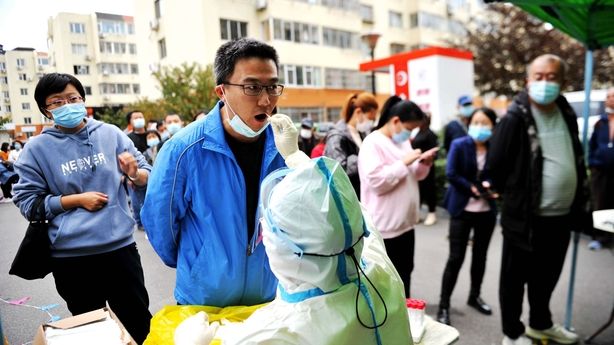
China - where Covid-19 first emerged late last year - has launched a drive to test all residents of Qingdao after a handful of cases were detected on Sunday.
More than four million samples had been collected and 1.9 million results returned as of yesterday afternoon, Qingdao authorities said, adding that no new cases had been found beyond already confirmed infections.
Chinese officials intend to test the entire city - around 9.4 million people - by tomorrow.
Meanwhile, Russia reported its highest number of daily virus deaths, at 244, and a record number of new cases at almost 14,000.
Italy imposed new, tougher rules to control a resurgence, including an end to parties, amateur football matches and snacking at bars at night.
Polish Prime Minister Mateusz Morawiecki became the latest high-profile figure to go into quarantine after coming into contact with an infected person.
Elsewhere, Portugal's football federation said star striker Cristiano Ronaldo had tested positive for the virus.
In opposition to lockdowns and social distancing, some politicians have proposed letting the coronavirus circulate in the population to build up "herd immunity" - where so much of the population has been infected there are insufficient new victims for the virus to jump to.
But the World Health Organization has dismissed such plans as "ethically problematic" and requiring mass vaccinations to work.
Furthermore, study published in The Lancet Infectious Diseases journal indicated that exposure to the virus may not guarantee future immunity - and the second infection could come with even more severe symptoms.
Despite the vaccine testing setbacks, which health experts say is normal as testing scales up massively in its later stages, the World Bank approved $12 billion for developing countries to finance the purchase and distribution of vaccines, tests and treatment.
The financing "aims to support vaccination of up to a billion people," the bank said.
The announcement came as Oxfam warned of "Covid famines" in the wake of the pandemic and said the international community's response to global food insecurity was "dangerously inadequate."
For its part, the International Monetary Fund said that while the recession triggered by the pandemic was less severe than initially feared, the global GDP will still contract 4.4%.
"The ascent out of this calamity is likely to be long, uneven, and highly uncertain," IMF chief economist Gita Gopinath said.
In the United States, President Donald Trump has returned to the campaign trail three weeks before the 3 November election, after being hospitalised with Covid-19. He held a new rally with supporters in the battleground state of Pennsylvanian late yesterday.
