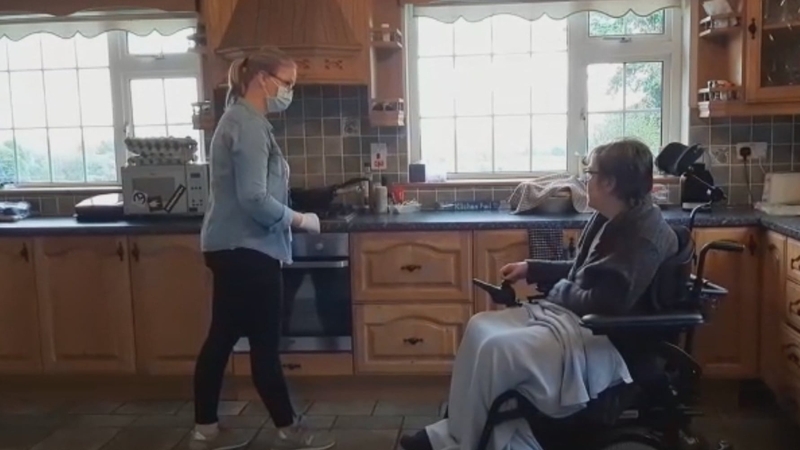

Each day, three times a day Marta Cullen travels to Valerie Hayden's house in an isolated townland in Co Wexford.
Valerie has Muliple Sclerosis and is in a wheelchair full time. Her autoimmune system is not robust so she has stayed at home since the outbreak of Covid 19.
She is vulnerable to illness so home care assistance is not just invaluable, it is necessary.
In the morning Marta helps Valerie out of the bed and prepares her for the day. She returns at lunchtime and again in the evening.
It is a tough job and it is difficult to social distance, but they are managing.
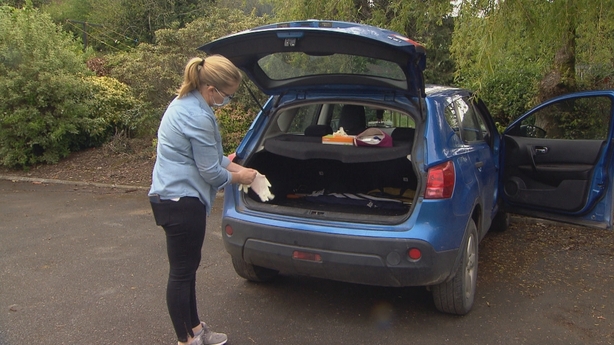
Since Covid-19, the biggest change in Marta's routine has been wearing a mask. She already wore gloves prior to the pandemic.
She describes Covid-19 as "scary" because she is anxious about Valerie being safe, as well as her own family.
There are more than 10,000 carers like Marta working in private home care settings.
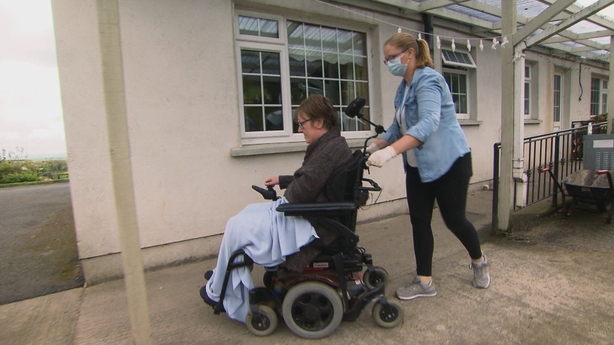
What is remarkable is that there have been just 58 Covid positive cases out of 20,000 clients.
The head of Home and Community Care Ireland, Joseph Musgrave, says the wider restrictions in the community have helped.
Unlike nursing homes there is also a reduced number of carers going into home care settings.
But could the low Covid-19 positive numbers be down to a lack of testing? We are about to find out.
It was agreed at a meeting with the Minister for Health, Simon Harris, this week that testing for home carers and home care clients will be scaled up.
It was also agreed that the HSE would provide more stability on the pay policy for cancelled hours, which currently represent 20% of hours normally serviced by HCCI members.
The HSE said it would give the sector more notice of the pay position to facilitate planning and to maximise home care provision.
Also this week care staff whose clients are self-isolating will be made available to support the nursing home sector.
It means the HSE has to prioritise, which in turn means a number of clients with lower priority needs may have their home support service temporarily ceased or reduced.
In these cases, each client is contacted to advise of the assessment and decision.
The HSE says clients will be kept under review should individual circumstances change.
Legislation for a statutory home care scheme is due to be delivered next year.
Mr Musgrave believes that in light of Covid-19, more people will want to be cared for at home. He says on that basis the statutory home care scheme is more urgent than ever.
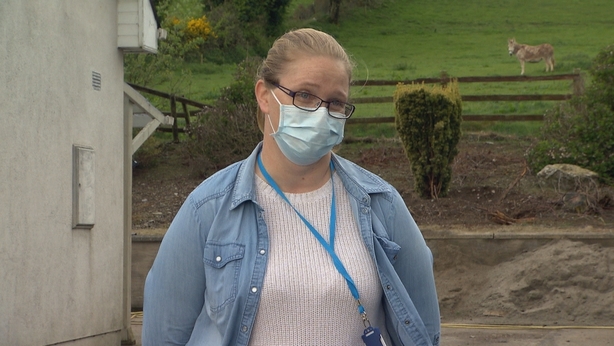
In the meantime Marta remains committed to Valerie's care.
"These people need us," she says, before she puts on her mask and returns to the house.