


Lockdowns and stringent measures in place in Italy for the past two weeks should lead soon to a stabilisation in its coronavirus epidemic, but vigilant follow-up will be required, a senior official of the World Health Organization (WHO) said today.
The death toll from the outbreak of coronavirus in Italy climbed by 812 to 11,591, the Civil Protection Agency said today, reversing two days of declines in the daily rate.
However, the number of new cases rose by just 4,050, the lowest amount since 17 March, hitting a total 101,739 from a previous 97,689.
Italy has registered more deaths than anywhere else in the world and accounts for more than a third of all global fatalities from the virus.
We need your consent to load this rte-player contentWe use rte-player to manage extra content that can set cookies on your device and collect data about your activity. Please review their details and accept them to load the content.Manage Preferences
In Wuhan, the Chinese city where the virus emerged in December and which is now reopening after two months of lockdown, authorities have maintained physical distancing measures and continue to search for cases, Dr Mike Ryan, WHO's top emergencies expert, said.
"What we are likely to see, if you imagine the lockdown and stringent measures in Italy are now in place 2-3 weeks ... we should start to see stabilisation because the cases we see today really reflect exposures two weeks ago," he told journalists at a virtual briefing in Geneva.
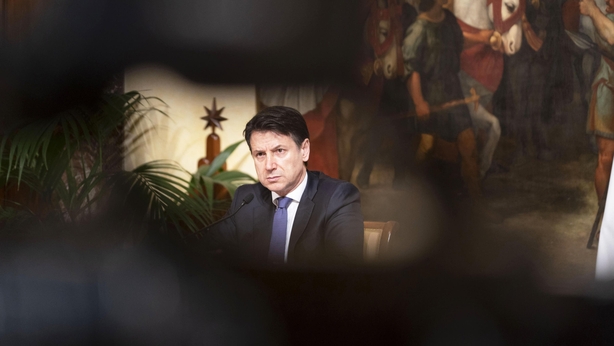
Meanwhile, Prime Minister Giuseppe Conte's government has prepared Italians for a "very long" lockdown that would only be lifted gradually despite its economic hardship and traumatic impact on daily lives.
The message from ministers and health officials last night came as Italy's world-topping death toll rose by 756 - well below Friday's record of 969 - and the rate of coronavirus infections slowed to under 6% for the first time.
Yet the government appeared more focused on the nearing 3 April deadline to lift a national lockdown that had never been tried by a Western democracy - and has since been replicated across Europe and the United States.
"The measures expiring on 3 April will inevitably be extended," Regional Affairs Minister Francesco Boccia told Italy's Sky TG24 television.
"I think that, at the moment, talking about re-opening is inappropriate and irresponsible.
"We all want to go back to normal. But we will have to do it by turning on one switch at a time."
Italy is effectively sacrificing almost all forms of business activity to fight the pandemic that first emerged in China last year.
Deputy Finance Minister Laura Castelli said that the government's initial €25 billion rescue package for affected families and companies might have to be quadrupled in size.
"In my opinion, at least €100 billion will be needed," Ms Castelli told the La Stampa daily.
'Even stricter'
Officials have brushed aside various data suggesting that death rates and infection rates were slowing and that Italy might have already lived through the worst.
"We are in the midst of a pandemic," Health Minster Roberto Speranza told reporters.
"It would be a mistake to let our guard down."
Government medical adviser Luca Richeldi warned that data pointing to a slowdown "are a reason for us to be even stricter.
"We are in a very long battle," said Mr Richeldi. "Through our behaviour, we save lives."
Ministers are expected to decide on the length of an extension in the coming days.
Mr Conte has the right to keep the lockdown - in full or in part - until the existing state of medical emergency expires on 31 July.
But there is nothing preventing his government from declaring a new one should restrictions be needed into the second half of the year.
Mr Conte has indicated that he would like to see most measures lifted by June.
Discontent
Yet the strains on Italian society imposed by measures that might have seemed unimaginable just weeks ago are gradually starting to show.
The starkest example came when armed police began guarding entrances to supermarkets in Sicily after reports of looting by people who could no longer afford food.
Newspaper stories about growing discontent in one of Italy's least-developed regions appeared to be at least partially behind Mr Conte's decision to make another TV appeal to the nation on Saturday.
Mr Conte used it to announce a food voucher programme that will cost the government another €400m.
"We know that many suffer but the state is there," Mr Conte said.
But this is only a stop-gap measure designed to help families cover grocery costs of between €25 and €50 on a one-time basis.
Projections from several global banks and think-tanks in the past week point to Italy's economic output shrinking by 7% this year.
Those numbers are based on the assumption that the lockdown will not be extended far beyond April.
