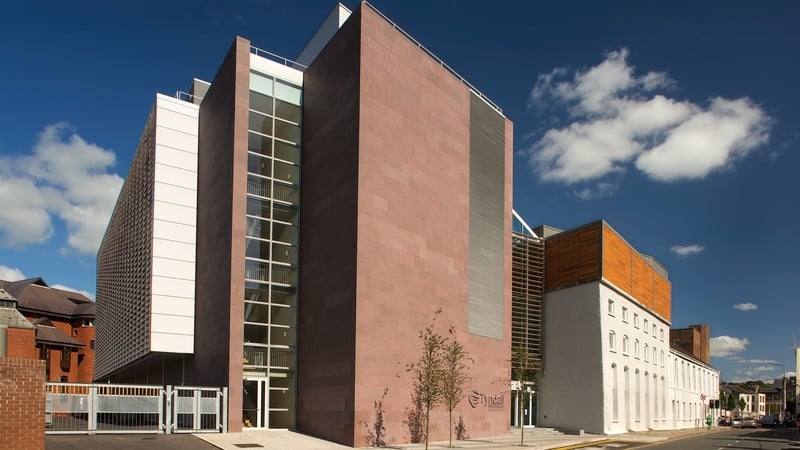

Tyndall National Institute, the technology research centre headquartered in Cork city, has said it wants to spin out ten new indigenous companies over the next five years and grow its workforce by 30%.
The targets are included in Tyndall's new five-year strategy that will be officially launched by Taoiseach Micheál Martin today.
The institute has said its new strategy entitled 'Tyndall 2030' will set out a "clear roadmap" to position Ireland at the "forefront of the global semiconductor landscape".
Tyndall has said semiconductors enable all forms of modern technology and are "critical to everything from household appliances to medical devices, from AI agents to sustainable energy systems".
By 2030, it plans to grow its annual income to over €80m and expand its workforce by more than 30% to over 750 employees.
The institute has said its new strategy "strengthens its commercialisation" with ten new spinouts and the scaling up of over 30 Irish SMEs by improving their access to infrastructure, expertise, and global networks.
Professor William Scanlon, CEO of Tyndall National Institute, said: "Tyndall 2030 is about translating world-class research into real-world impact. We are investing in both our people and our infrastructure to expand the footprint of Tyndall as a national asset, one that connects ideas, accelerates innovation, and delivers measurable economic value."
The Taoiseach will launch Tyndall's new strategy at an event that is due to be held at the institute this afternoon.
It will also be attended by the Minister for Further and Higher Education, Research, Innovation and Science, James Lawless.
Speaking ahead of the launch, the Taoiseach said Tyndall's new strategy strengthens the country's reputation as a hub for innovation.
Mr Martin said: "Tyndall, along with Ireland's national semiconductor strategy, Silicon Island, is ensuring that Ireland remains a global leader in the technologies that underpin everything from climate action to AI datacentres.
"This strategy confirms Ireland's position in semiconductor innovation, both in Europe and globally," the Taoiseach added.
Meanwhile, Minister Lawless said 'Tyndall 2030' sets out an "ambitious vision" to strengthen Ireland's research and innovation capability.
He said: "Building advanced skills and deep expertise is central to this ambition and is a core priority of my department.
"That commitment is being matched with action, including through the recently launched INSPIRE investment programme, which is transforming research infrastructure and talent across the higher education sector and represents a landmark investment in Ireland’s long‑term competitiveness.
"Tyndall's success as a national institute is rooted in strong partnerships and sustained strategic investment, and these same principles underpin the INSPIRE programme.
"Together, they will help drive Ireland's economic resilience and global competitiveness, while delivering real progress on national priorities such as climate action, digitalisation, and health and wellbeing," Minister Lawless said.