
Journalists had gathered at the Department of Finance today expecting a 'doom and gloom' Spring Economic Forecast that warned of the geopolitical threats to growth.
But the headline figure from the briefing proved to be the opposite of gloom, with the data revealing a projected general government surplus this year of €9.2bn, up from the €5.1bn surplus that was forecast on Budget Day last year.
There were some warnings, particularly with regards to the Iran conflict.
However even in the "severe" scenario of oil hitting $150 a barrel, the economy would continue to grow, albeit at a slower pace.
So where did the extra €4bn of a projected surplus come from?
There is of course our old friend corporation tax which is continuing to perform better than expected.
The impact of US President Donald Trump's tariffs was not as severe as first feared.
There was in increased investment in data centres linked to the boom in artificial intelligence.
There is more revenue in the social insurance fund and there has been less spending by bodies outside of central government departments such as local authorities.
It all means a bigger surplus which means bigger pressures on the Government to spend.
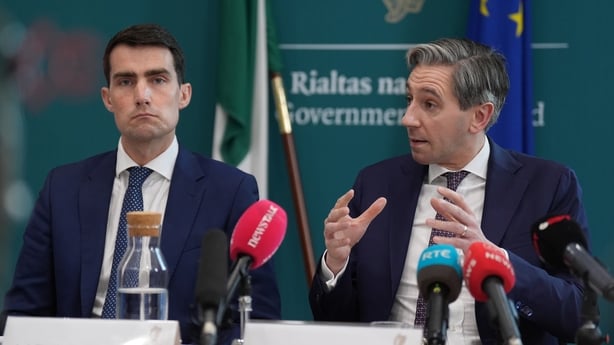
The Opposition has ramped up calls to use this money to help those struggling with the cost of living.
Tánaiste and Minister for Finance Simon Harris said he is still planning an income tax package in the Budget and he has not ruled out energy credits.
However he also highlighted the importance of restraint.
The Department of Finance is forecasting an Exchequer deficit of €1.2bn for 2026 linked to commitments of transfers into the Government's "rainy day" funds - the Future Ireland Fund and Infrastructure, Climate and Nature Fund.
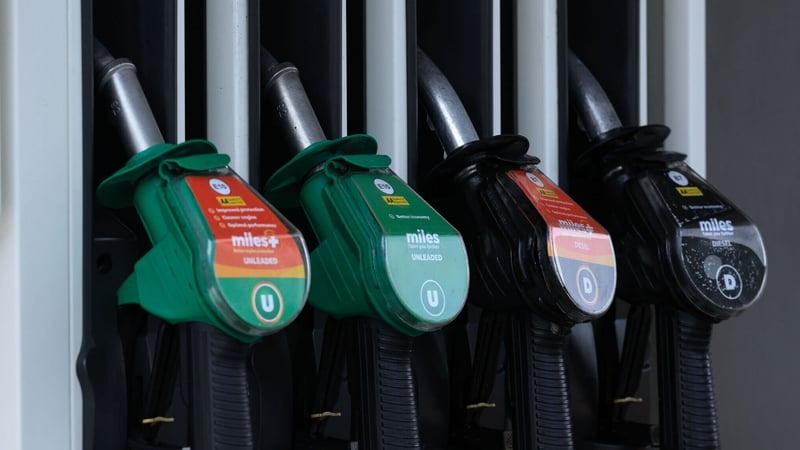
The current conflict in Iran may not have hit the Government's coffers but it is most certainly being felt by households in the form of higher prices.
While the "worst case scenarios" outlined in today's forecast may not spark a major slowdown, other shocks could be around the corner.
Over the coming months, the Government will warn of the need for restraint and of the "dark winter" that lies ahead but the sun was certainly shining on the Department of Finance today as officials delivered an outlook that was far brighter than most had expected.