
The process of buying a home in Ireland leads to overbidding and creates delays after sales are agreed, causing stress for purchasers, a new study from the Economic and Social Research Institute (ESRI) has found.
The research showed that while half of buyers expected a visible online bidding system would be fairer, it resulted in more inflated prices than any other process.
It also found participants in open auctions were more likely to exceed their original budget and bid higher than they thought the property was worth.
The ESRI conducted the research by using a nationally representative survey of 800 adults who completed a controlled auction experiment.
Watch: 'Should the process of buying a home be reformed?'
It also used a detailed survey of buyers and sellers' experiences and expectations.
The ESRI said its findings also showed "significant gaps in people’s knowledge of rights and responsibilities".
While more than two-thirds knew it was illegal for a seller to accept multiple deposits for the same property, only one in five knew that agents could legally continue to market a property after it goes "sale agreed".
We need your consent to load this rte-player contentWe use rte-player to manage extra content that can set cookies on your device and collect data about your activity. Please review their details and accept them to load the content.Manage Preferences
The study also found most people did not know that a buyer can pull out of a sale without penalty before contracts are signed.
The study said that 63% of people who previously bought a property had experienced "one stressful hurdle".
But this rose to 80% for those who purchased in the last three years.
The most common issues encountered by buyers were delays.
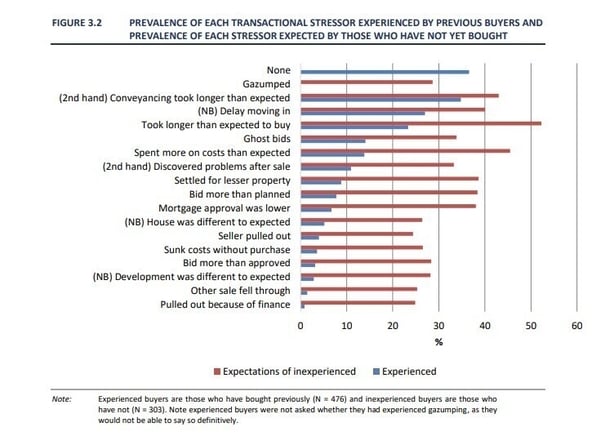
The study found one third of second-hand buyers experienced a delay in conveyancing and over a quarter of newbuild buyers experienced a hold-up moving in.
The ESRI said other problems experienced by buyers included finding issues after the sale, sellers pulling out and spending more on additional costs than expected.
It added that conveyancing delays were also the most common stressful problem for sellers.
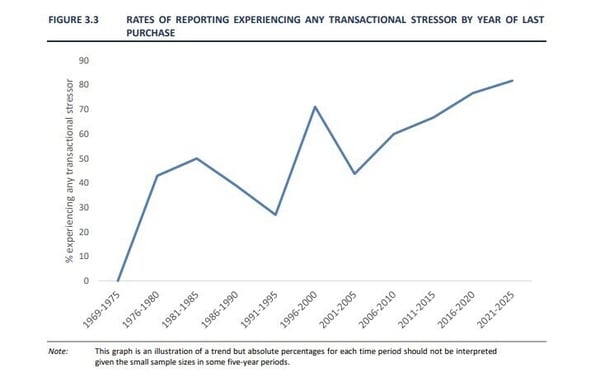
"The findings show that people are navigating a system they may not fully understand and increasingly experiencing stress, especially delays to conveyancing," said Dr Deirdre Robertson, Senior Research Officer at the ESRI.
"Our findings also suggest that the most commonly used bidding systems encourage people to overbid, inflating prices."
Speaking on RTÉ's Morning Ireland, Dr Robertson said: "We think from behavioural science there's something called auction fever, which is where when people are in an auction, it's like a competition and people have a drive to essentially win it. Part of that might be linked to, for example, something called loss aversion, which is where losses hit much harder than gains do.
"So, it's possible that every time somebody reaches the top and they're the top bidder, and then they're constantly being outbid, it's like a mini loss every time, which then drives them to bid more.
"So that's the theory behind it that we think why these auctions drive prices."