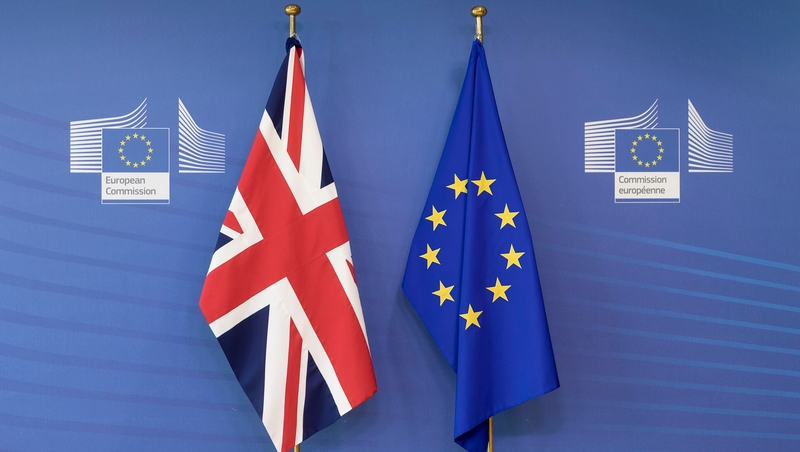

EU member states have been told by the European Commission that the UK government under Boris Johnson has reneged on London's commitment to protecting the all-Ireland economy and north-south cooperation as enshrined in the Joint Report between London and Brussels in December 2017.
Officials were this afternoon told that London was moving from a position where the aim had been to have "frictionless" trade on the island of Ireland, to merely having trade that was "as frictionless as possible".
This was in effect a minimalist commitment to what Theresa May had signed up to in the Joint Report, and which was later fleshed out as a legal protocol in the Withdrawal Agreement.
During a 90-minute briefing by a senior official from the European Commission Task Force, member states were also warned that the UK was now resisting the ambition of having a "legally operable" solution for the island of Ireland in the event of a renegotiated Withdrawal Agreement.
Instead, it was pushing for what one the senior figure described as "aspirational" measures to avoid a hard border.
The stark briefing comes amid deepening evidence that the UK has still to bring forward "concrete" proposals on how they believe the Irish backstop might be replaced.
"The one message that came back very forcefully from the meeting was that there are no concrete proposals," says one EU source.
"Nothing has been put on the table, not even really a proper sketch or hint of a plan. We're waiting. But for the moment there is zilch."
However, the UK government's retreat from the commitments of the Joint Report, which gave rise to the backstop, was what set "alarm bells ringing" during the briefing, according to the source.
Brexit coordinators from member states were told, according to one source, that the UK "didn’t seem aligned on the objectives of the backstop, especially on the all-island economy, that they were only focusing on no hard border, and basically they were reneging on the fact that May had considered conceding on that".
"It’s moving from a frictionless border to as little friction as possible," says the source, "which is not the same thing".
The European Commission regards any undermining of the all-island economy as both damaging to the Northern Ireland economy, and against the spirit and letter of Paragraph 49 of the Joint Report, which sets out to safeguard all-Ireland trade, as well as no hard border and protecting meaningful north-south cooperation.
The briefing heard that the UK understood this would be the outcome of Brexit unless specific steps were adopted, the source told RTÉ News.
Meanwhile, 22 Northern Ireland civic organisations have written to Nancy Pelosi, the Speaker of the US House of Representatives, urging members of Congress to protect the Good Friday Agreement in any post-Brexit US-UK trading relationship.
The letter warns that "future trade and security deals that the UK has with the EU and other countries could destabilise the conditions crucial to outworking of the 1998 Agreement".
"These threats may not come about immediately, nor would they be intentional, but they would contribute to an environment in which sustaining peace becomes more difficult over time."
The letter adds: "Therefore, we are asking Congress to scrutinise any future trade deal with the UK very carefully, to ensure full compliance with the 1998 Agreement.
"We urge Congress to satisfy itself that the truly transformational foundations for peace and prosperity here, which were laid with the indispensable aid of the United States, are not undermined in any manner by decisions to be taken in Congress."
The letter is signed by a range of civil liberty groups, community organisations, trade unionists and representatives of businesses across Northern Ireland.
Brian Gormally, Director of the Committee on the Administration of Justice said: "Our letter sets out the main conditions for peace which must be protected through the process of the UK's withdrawal from the EU and its future trade agreements."