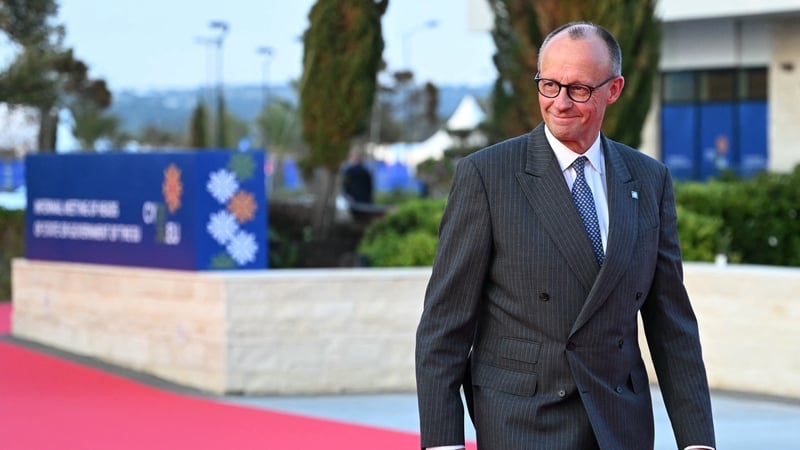

German Chancellor Friedrich Merz had unusually strong words for his American ally this week.
The US clearly had no strategy for the Iran war, he said bluntly.
"The problem with conflicts like this is always you don't just have to get in," he said, speaking during a meeting with German students, "you have to get out again".
"We saw that very painfully in Afghanistan for 20 years - we saw it in Iraq," he went on.
Refusing to pull any punches, he said that the entire country of the USA was being "humiliated" by Iran’s state leadership "especially by these so-called Revolutionary Guards", he said, over the negotiations - or lack thereof - as American envoys kept flying to Pakistan and coming back empty-handed.
Well, all that certainly drew the ire of the American president who fired off an angry Truth Social post, complete with his own style of capitalisation, saying the German leader did not know what he was talking about.
"The Chancellor of Germany, Friedrich Merz, thinks it's OK for Iran to have a Nuclear Weapon," he wrote.
"If Iran had a Nuclear Weapon, the whole World would be held hostage," he added.
"I am doing something with Iran, right now, that other Nations, or Presidents, should have done long ago," he wrote, adding "no wonder Germany is doing so poorly, both Economically, and otherwise!"
In another social media post Mr Trump weighed the possibility of withdrawing American troops from Germany in apparent retaliation for the remarks.
There has been a permanent US military presence in the country since the Allied defeat of Nazi Germany at the end of World War II.
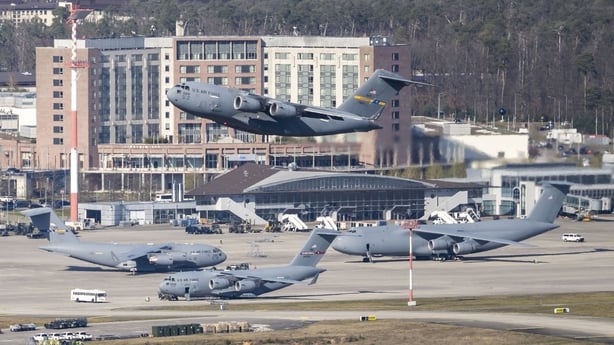
It hosts around 36,000 American troops, the headquarters of European (EUCOM) and African (AFRICOM) central command, providing logistics, intelligence and medical support for US military operations across both continents.
"The United States is studying and reviewing the possible reduction of Troops in Germany, with a determination to be made over the next short period of time," the American president wrote.
It’s surprising for the German and American administrations to find themselves at loggerheads.
After all, Chancellor Merz has been one of the biggest supporters of US policy on Israel.
And it was also certainly something of a volte face.
Because last June when Israel first bombed Iran, Mr Merz declared that Israel was doing the "dirty work" for the rest of world.
But while the row between Berlin and Washington simmers away, it prompts a question.
Is Mr Merz right about the US being "humiliated" by Iran?
Not if you listen to members of the US administration, especially Mr Trump himself and his Secretary of Defence/War Pete Hegseth, according to whom, everything is ticking along nicely.
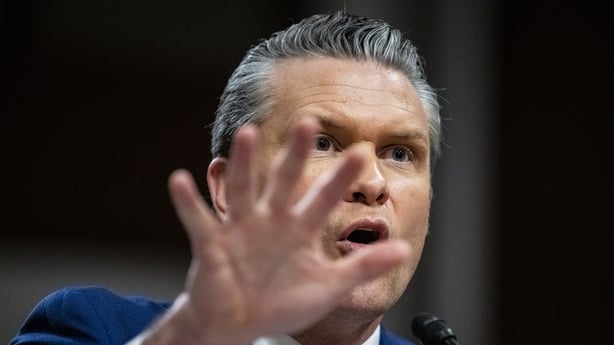
In fact, Mr Hegseth told a congressional committee on Wednesday that the biggest adversary they faced was "the reckless, feckless and defeatist words of congressional Democrats and some Republicans".
During six hours of questioning, he denied that the US had waded into another Middle Eastern quagmire and pushed Congress to approve the $1.5 trillion budget for military spending.
Meanwhile, the Pentagon's top finance official told lawmakers the war had so far cost at least $25 billion.
US officials later told CBS News, though, that the true cost of the war was closer to $50 billion, if you count the ammunition that needs to be replaced and repairs needed for US military assets across the region.
This week, a CNN investigation showed damage caused by Iranian strikes to 16 US military bases in the Middle East.
Mr Trump remained equally defiant, saying on Thursday that the US had already won but he would like to win "by a bigger margin". He said he wanted guarantees that Iran would never have a nuclear weapon.
"The blockade is genius," he previously told reporters in the Oval Office during a meeting with the crew of the Artemis II moon mission.
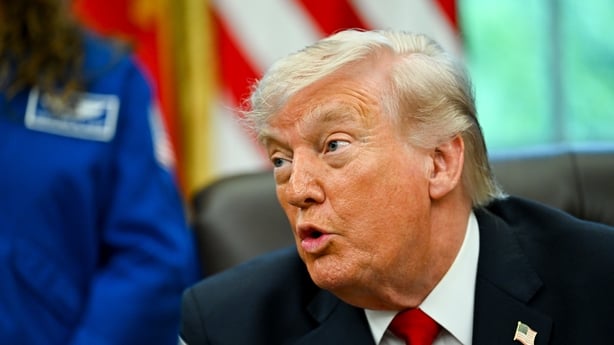
"Militarily, we wiped them out," he said.
"Now, they have to cry uncle… just say, we give up, we give up."
But Mr Trump did hint at the inconvenience and frustration he felt from sending US envoys to talks in Pakistan with little to show for it.
"We’re not flying anymore with 18-hour flights every time we want to see a piece of paper," he told reporters.
He said communication would be conducted by phone for now.
"I always like face to face," he said.
"But when you have to fly 18 hours every time you want to have a meeting … and you know they’re going to give you a piece of paper that you don’t like even before you leave, it’s ridiculous."
Mr Trump said he believed Iran would be forced to negotiate on US terms because the Iranian economy was in such dire straits.
"Their economy is really in trouble, it’s a dead economy," he said.
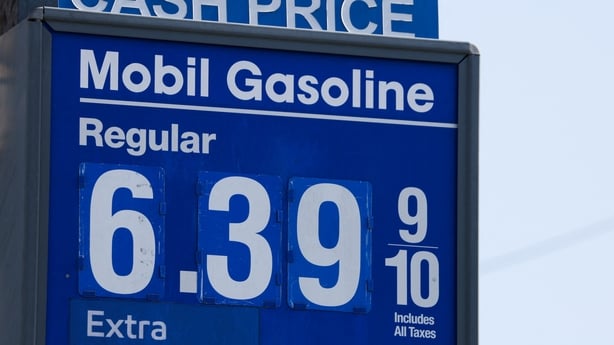
But the US is also feeling the economic pain of the ongoing closure of the Strait of Hormuz with gas prices stubbornly above $4 a gallon, inflation rising and consumer confidence falling.
And while US leaders stick firm to their insistence that Iran will have to blink first, Iran shows no signs of doing so, threatening "sustained, wide-ranging, and painful retaliation", if US attacks resume on the country.
Meanwhile, as both countries continue to claim victory over the other, Iran appears to have moved the battleground to the American population.
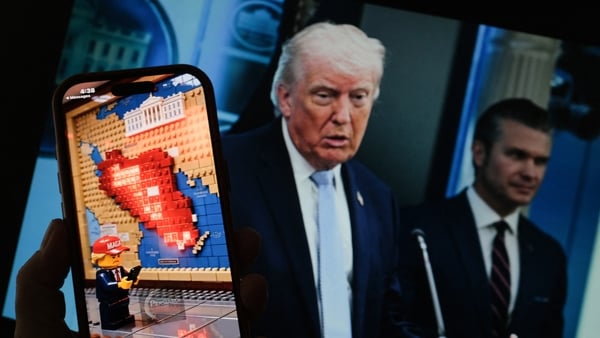
As previously reported, Iran has been engaged in a global propaganda campaign using AI-generated Lego movie-style videos to taunt the US military and poke fun at US leaders - casting Secretary Hegseth as a drunk and Mr Trump as beholden to the wishes of Israeli Prime Minister Benjamin Netanyahu.
The US State Department dismissed the videos as "lies".
But this week marked a significant pivot in Iran's messaging, according to Trita Parsi of the Quincy Institute, a Washington DC-based think tank.
"Instead of taunting the US military, it reflects a new chapter in which Tehran will seek peace by reaching out directly to the American people, bypassing the US government," he wrote, commenting on the latest video to be released, which extolled the American Dream and the rights enshrined in the US Constitution.
"It's a mirror image of the US strategy of the past decades," he added, referring to the American "hearts and minds" campaigns to cultivate the sympathy of local populations.
The extent to which its working on American hearts and minds is hard to quantify.
But we do know that the war is less and less popular at home.
In fact, two polls published this week showed President Trump’s approval ratings sinking to a record low.
But among Republicans alone, it's a very different picture.
According to polling carried out by the Pew Research Centre, 79% of Republican voters said they approved of how Mr Trump was handling the conflict.
This goes some way to explain why, in his public posture at least, the US president shows none of the humiliation the German Chancellor suggests he is suffering.
"No more Mr Nice Guy," Mr Trump posted on social media above an AI-generated picture of himself in a suit and sunglasses, holding an automatic rifle and warning Iran to strike a nuclear deal or else.
Nevertheless, Mr Trump is likely to seek a face-saving exit from this conflict, analysts said.
"I think the unstated objective at this point, frankly, is to get out of the war… in some way that saves as much face as possible," said Kelly Grieco, military analyst with the Stimson Center at a panel organised by the Council of Foreign Relations.
"They are not going to say that publicly," she added, "but I actually think that is the number one goal at this point in this war."
But while the Iranian leadership - now likely more hardline than the previous one - is projecting confidence, its domestic troubles have not gone away either, according to Richard Nephew, research fellow at Columbia University and former deputy special envoy for Iran during the Biden administration.
Writing in Foreign Affairs, he said: "No matter what happens in the weeks and months to come, Tehran will struggle to provide water, electricity, and gas to its people."
"It will remain wildly corrupt and poorly managed," he added.
"In fact, its problems might all get worse after the fighting ends".
Economic collapse drove protesters onto the street before the war in January.
That unrest was brutally suppressed by the authorities leaving thousands dead, according to human rights groups estimates.
While the threat of a renewed bombing campaign by the US and Israeli gifts the Iranian leadership a unifying message and prompts a certain rallying around the flag, the absence of it will likely see the old cracks emerge.
The challenge for Washington is ending this war without further strengthening the regime.
Remember, one of the first acts of this war was for the US president to call on the Iranian people to rise up against their rulers.
The administration quietly dropped such rallying cries, focused instead on striking a deal to end Iran’s nuclear capabilities and get the Strait of Hormuz open.
"But it should set a high bar for significant sanctions relief and ensure that the IRGC-led regime is not the primary beneficiary of any deal," argued Mr Nephew.
"Only then will the Iranian people have a chance to finally control their own destiny."
For now, that seems a long way off.
In the meantime, neither side wants to be seen to be compromising with their arch nemesis.
The Iranian leadership knows that a projection of strength is the only way to stay in power in an authoritarian regime like theirs.
As for Mr Trump, even if he were to feel any of the humiliation Mr Merz described, he’s unlikely to ever show it.