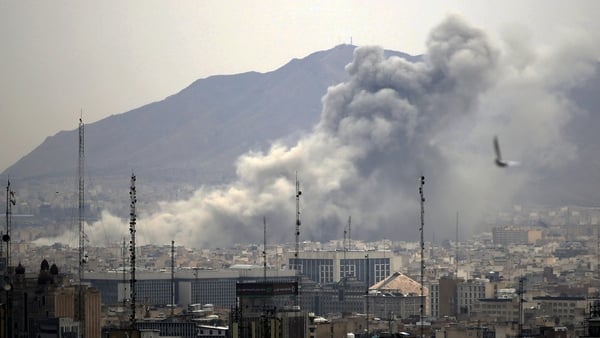

Global oil and gas shipping rates have soared, with supertanker costs in the Middle East reaching all-time highs, as the US-Iran conflict intensified after Tehran targeted ships passing through the Strait of Hormuz.
Here are three ways that the conflict in the Middle East could affect Irish consumers:
1) Oil prices
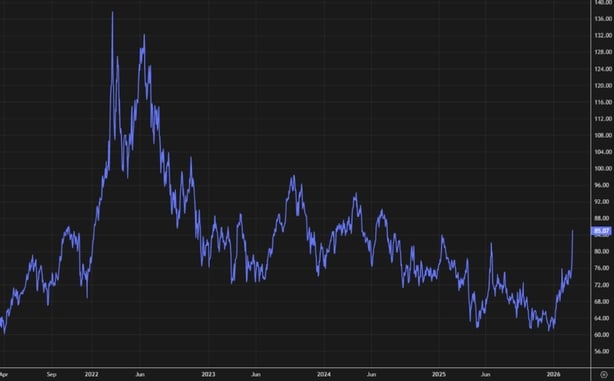
Oil prices have surged on world markets since the conflict in the Middle East started on Saturday.
Prices have shot up from $72 (€62) per barrel to $84 (€72) since the attacks began.
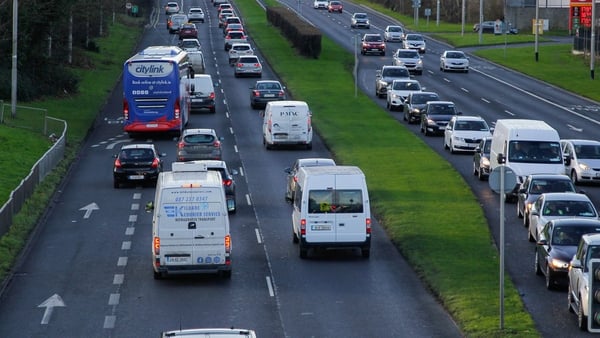
If these prices remain elevated this week and next, expect to see costs for petrol and diesel increase.
While there has been a rise in oil prices, it is still far below the surge after Russia invaded Ukraine in February 2022, when prices almost reached $128 (€110).
It's worth bearing in mind that the bulk of the cost paid at the pumps is made up of tax.
It’s not surprising that the Opposition parties have called for the carbon tax on fossil fuels to be scrapped.
However, the Government argues revenue from that charge goes towards retrofitting and energy supports.
2) Gas prices
While oil prices are up, the surge in gas has been even more dramatic. Before the conflict, prices on Friday were just above €30 per megawatt hour, but they are now trading at €60 per megawatt hour.
Like oil prices, it is far below the peak when Russia invaded Ukraine, but higher prices could feed through to consumers if they were to persist.
Irish energy providers generally book supplies as specific prices in advance, which is called hedging.
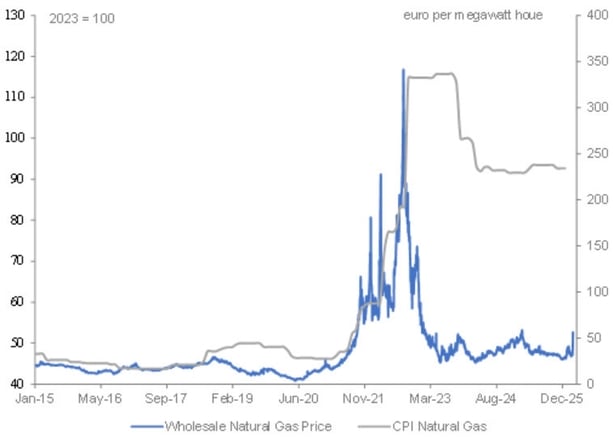
It is clear gas companies locked in prices at relatively elevated levels and consumers are paying high prices as a result. They did so in an effort to protect customers from further fluctuations.
Bank of Ireland chief economist Conall MacCoille said: "Irish retail prices for natural gas surged following Russia's invasion of Ukraine, but haven’t fallen back in line with European wholesale prices".
Ireland now imports the vast bulk of its supplies, as the Corrib gas field off the coast of Co Mayo is nearly depleted.
Gas comes through two interconnectors with Britain and our supplies originate from the UK, Norway and Central Europe. It means Ireland is at the end of a large European gas network and that distance adds to costs too.
But gas also provides a huge proportion of Irish electricity. In 2024 almost one third of Ireland's electricity was produced by gas, according to the Sustainable Energy Authority of Ireland. Again, electricity producers book supplies in advance, so a short-term jump in prices is unlikely to affect the cost of power.
But if prices remain elevated for a prolonged period that would add to prices.
3) Inflation
Higher energy prices tend to seep into the cost of almost everything - transport, distribution, electricity, the cost of food and pressure for higher wages.
For that reason, the chief economist of the European Central Bank Philip Lane warned that elevated energy prices could add to the rise in the cost of living.
If the rate of inflation began to surge, the ECB would have to react by increasing interest rates to try to slow down the increase in prices.
For the moment, the rate of inflation among countries using the euro is 1.9%, which is below the ECB’s target of 2%.
It would need to rise above 2% before an increase in rates would be required.
Read more:
Taoiseach warns against price gouging over Iran conflict
Will Middle East conflict see a rise in Irish petrol prices?
Oil, gas shipping costs surge as Iran vows to close Strait of Hormuz