
It was hard to overstate the high-stakes billing Thursday's EU leaders summit had earned.
This, said critics, was Europe’s moment to assert its muscle and relevance in the face of US President Donald Trump’s hostility and the long-term baleful threat posed by Russia.
For Ukraine, the stakes were nothing short of survival. The Trump administration is putting heavy pressure on President Volodymyr Zelensky to accept a peace plan, even by Christmas, with the threat of complete US disengagement hanging over the Ukrainian people.
"If the US pulls out its intelligence, that's it for Ukraine," said a senior EU source close to discussions.
"They are caught between having the imperative of America still supporting them, and doing a deal. It's an awful dilemma."
The US-Russia deal itself originally envisaged frozen Russian assets being turned into a signing bonus of €265bn for the US (€88bn for American firms and €175bn for joint US-Russia investment funds).
"If Europe doesn't use the immobilised Russian sovereign assets, Donald Trump will," warned Jim O’Brien, distinguished visiting fellow with the European Council on Foreign Relations (ECFR).
"The US-Russian plan already puts the Russian assets in play, under US and Russian direction. The only thing in question is whether Europe will be at the table."
Would EU leaders rise to the occasion?
Some €210bn in Russian central bank assets were immobilised just days after the invasion in February 2022. Around €185bn of those assets have been held in a Belgian securities depository, Euroclear.
While confiscating the assets has long been a taboo, by the summer there was talk of using them to underwrite a long-term loan to meet Ukraine’s financial and military needs. The loan would only be repaid to Euroclear once Russia started making war reparations.
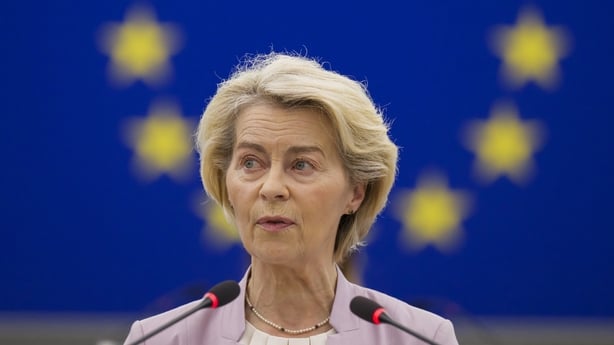
Commission President Ursula von der Leyen floated the idea of a so-called Reparations Loan in her State of the Union speech in September, and it was further boosted by an unexpected op-ed in the Financial Times by German Chancellor Friedrich Merz.
A majority of EU member states, including Ireland, were in favour. Hungary and Slovakia, both friendly to Moscow, were not.
Belgium had long argued that using the Russian assets parked in Euroclear to fund Ukraine would open the country to hostile legal action by Russia which, if successful, could land a liability worth tens of billions of euro.
At a summit in October, EU leaders pledged to meet Ukraine’s funding needs no matter what, and invited the Commission to come up with ideas. On 17 November, the Commission circulated three options: joint EU debt raised in the capital markets backed by unspent budget funds; direct bilateral loans by member states; and the Russian assets plan.
On 3 December, the Commission produced legal texts, now only on the joint debt and Russian assets plan.
In meetings between member states and the Commission, it became clear the joint debt option was not a runner: for the Commission to use EU budget funds to raise a huge loan would require a change to the budget legislation. Since the money was not for a member state but a third country, there would have to be unanimity. Hungary would veto it.
However, Belgium continued to argue for joint debt. Officials said that it offered clarity and predictability, would be cheaper, quicker and more transparent.
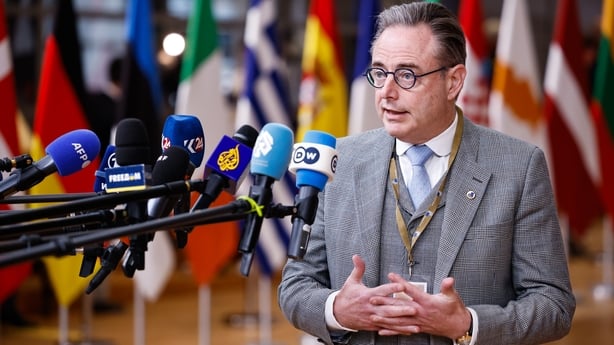
At a summit in Copenhagen in late September, and again in Brussels in October, Belgian Prime Minister Bart de Wever said he would only countenance touching the Russian assets if the risk was carried by all member states and that any other country quietly holding immobilised assets would also have to move.
"If not," Mr De Wever said, "I will do everything in my power at the European level, also at the national level, politically and legally, to stop this decision."
Talks between the Commission and Belgium intensified. Commission officials were concerned that guarantees demanded of other member states looked too open-ended. If a Belgian company in Moscow had its assets seized in retaliation, would all other member states have to foot the bill?
Legal experts debated the case above and beyond the corridors of Brussels.
While outright confiscation of assets was seen as legally dubious, and while using them to underwrite a loan to Ukraine could jeopardise the eurozone as a place to deposit sovereign wealth, the majority opinion has been that Russia - which daily breaches every concept of international law since it invaded Ukraine - would have a hard time getting an appropriate international tribunal to find in its favour, and then enforce the result on Belgium.
Even if Russia brought a case under the UN Convention on the immunity of state property, it would have to go to the International Court of Justice (ICJ), a court whose jurisdiction Russia does not recognise.
Furthermore, Russia going to the ICJ would expose it to an even higher claim by Ukraine. "Even if it could plead the case that Belgium was somehow liable for €185bn, Russia would be liable for €500bn or €600bn for damages caused to Ukraine," said one lawyer.
In a White Paper circulated in early December, Covington & Burling, an international law firm, concluded: "Because there is no international court or tribunal with general jurisdiction over violations of international law, many such violations simply cannot be challenged before an international adjudicative body.
"Russia has taken advantage of this fact for years to avoid accountability for its unlawful occupation of Crimea since 2014, its covert invasion of Ukraine’s Donbas region starting around the same time, and its full-scale invasion of Ukraine beginning in February 2022."
Yet, Belgian officials complained that their concerns were not being taken seriously. Mr De Wever used the analogy of buying a plane ticket: yes, the risk of the plane crashing was small, but if it did the consequences were catastrophic.
"Stealing the frozen assets of another country - its sovereign wealth funds - has never been done before. This is money belonging to the Central Bank of Russia. Even during the Second World War, German funds were not confiscated, only frozen," he said.
As Thursday’s summit approached, Belgian officials intensified their contacts with the European Commission. While diplomats acknowledged that the EU was taking Belgium’s concerns more seriously, their demands remained intact.
On 15 December, Russia's central bank filed a lawsuit in Moscow seeking €190bn in damages from Euroclear. Even if the lawsuit was not actionable in the EU, the central bank said it would seek to apply jurisdiction in a "friendly" country.
This prompted Belgium to toughen its demands. EU leaders would have to agree to full mutualisation of the risk, and full coverage from all possible types of litigation. Russian retaliation was no longer a risk but a "fact". Officials noted that the damages claim of €190bn was ten billion higher than Euroclear’s actual balance sheet.
As talks continued, EU ambassadors met almost daily to discuss the Reparations Loan.
Since the primary safeguard was that no legal action could dislodge the Russian assets so long as they were subject to EU sanctions, member states agreed to close a key loophole: the Hungarian veto.
Since EU sanctions must be rolled over by unanimity every six months, a veto by Hungary’s Viktor Orban would derail the Reparations Loan. To close that risk off, member states used emergency legislation - Article 122 of the Lisbon Treaty - to ensure that the Russian assets remained subject to sanctions law - i.e. remained frozen - until Russia began to make war reparations.
Belgium supported the move. However, De Wever also wanted Article 122 to be invoked for the other option: joint debt raised on the back of unspent EU funds. This option, remember, had been put back on the shelf because it relied on unanimity. Why not use Article 122 to sidestep a Hungarian veto in that context?
Belgium had support from an unlikely quarter: the ECB President Christine Lagarde.
One EU diplomat said that at a dinner of finance ministers on 12 December, Lagarde had remarked that "if you can use Article 122 for the sanctions law, surely you can use it for issuing debt against the EU budget headroom?"
The idea was put to the legal services of both the European Commission and in the Council of the European Union (which represents member states). The verdict came back that it was a non-runner: such a move would require a change to EU budget law, since the money would be going to a third country. The European Parliament, which is a co-legislator on the budget, would also have to get involved.
As the summit approached, Belgian officials acknowledged that progress had been made. The main problem remained: if the risk of a successful litigation payout for Russia was unlimited, then there could not be a cap on the kinds of guarantees other member states were prepared to sign up to.
Italy, Bulgaria and Malta began to express reservations about the Reparations Loan. Officials said if Belgium was on board, those countries would drop their concerns.
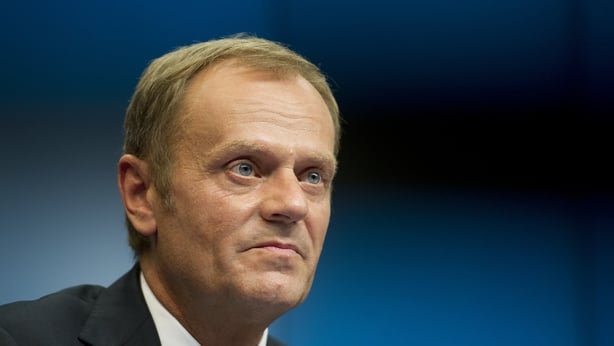
As leaders arrived on Thursday for the summit, Polish Prime Minister Donald Tusk captured the sense of reckoning. "It is money today, or blood tomorrow. I am not talking about Ukraine. I am talking about Europe."
The Guardian, quoting European security sources, reported that Belgian politicians and senior finance executives had been subject to a campaign of intimidation orchestrated by Russian military intelligence.
Officials were contemplating a drastic step. Using the so-called Qualified Majority Vote at the summit to get around Belgium’s objections.
This would be a serious breach of the sacrosanct rule of the European Council: EU leaders would not railroad a fellow prime minister on an issue of grave national importance. Denmark’s Prime Minister Mette Frederiksen said she was prepared for that outcome.
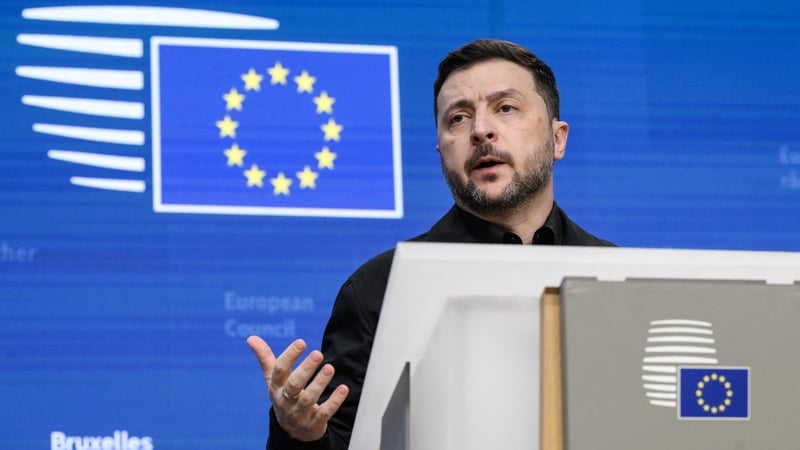
To avoid that scenario, the objective then was to provide the guarantees Belgium was demanding. President Zelensky arrived and held a brief bilateral meeting with Bart de Wever. He warned afterwards that Ukrainian drone production would slump if a loan was not forthcoming.
As leaders went into session, the plan by António Costa, the President of the European Council, was to get them to focus on the other big items on the agenda - the Middle East, the EU budget, security and defence, enlargement - while technical teams worked on the Reparations Loan in the background.
After lunch Donald Tusk briefed reporters that the Russian assets-based Reparations Loan was the only show in town.
However, the revised text which emerged as a result of the technical discussions was only given to leaders before they sat for dinner, meaning they had only a short time to study it.
Senior sources say the new text was startling: the guarantees for Belgium appeared to be unlimited, and Belgian companies whose assets might be seized in Russia would be compensated. To leaders who had ordered their own companies to withdraw from Russia after the invasion, and which had lost millions, this was a non-starter.
By that stage in the evening, it was clear the Reparations Loan was too complex, and too unacceptable for Belgium. Costa then suggested going back to the option that had hitherto been thought unworkable: joint EU debt. Whereas the Reparations Loan has taken 15 hours to work up, the joint debt plan was pretty much ready to go.
At 3am, the deal was done.
Instead of reaching for Article 122, the joint debt plan, worth €90bn over two years, would rely on another mechanism - enhanced cooperation - to get around the unanimity problem. Hungary, Slovakia and the Czech Republic did not object to the plan, so long as they were not liable for the debt being repaid.
The Russian assets would remain frozen and could be used in the future by the EU to repay the money it had borrowed on the markets if Russia did not make war reparations.
President Costa and Commission President Ursula von der Leyen hailed the result as Europe remaining united and delivering. President Zelensky said on X that the deal "truly strengthens our resilience. It is important that Russian assets remain immobilised and that Ukraine has received a financial security guarantee for the coming years. Thank you for the result and for unity. Together, we are defending the future of our continent".
"I think it will be in the aftermath of the war that people will realise the enormity, the impact of death and destruction," he said. The loan - considerably smaller than the €750bn the EU borrowed for the Covid recovery fund - was the price Europe had to pay for Russia’s war on the continent.
The Kremlin was quick to gloat.
Kirill Dmitriev, President Vladimir Putin's special envoy posted: "Major BLOW to EU warmongers led by failed Ursula - voices of reason in the EU BLOCKED the ILLEGAL use of Russian reserves to fund Ukraine."
However, the EU loan will be one less problem for the Ukrainian leadership to worry about as talks with US and EU officials resume. There is growing clamour for the war to end, such is the horrific death toll. EU officials remain uncertain whether Vladimir Putin shares these concerns in private, whatever about his combative rhetoric in public.