
Labour TD Alan Kelly has a certain skill in cutting to the chase.
And it was this skill that was to the forefront during the latest episode of the RTÉ drama currently dominating the airwaves, as the crisis surrounding Ireland's national broadcaster lunged into a third week.
Last Tuesday, the TD for Tipperary and his colleagues at the Oireachtas Public Accounts Committee (PAC) took their seats to hear yet another version of the events that have jumped from the accountancy spreadsheets to the front pages.
After previously hearing from board members, they now had the opportunity to listen to the evidence of presenter Ryan Tubridy and his agent Noel Kelly, who had volunteered to attend both the PAC and the separate Oireachtas Committee on Media.
A lengthy file of evidence from the witnesses, eventually sent to PAC members shortly before the meeting began; emotive opening statements complete with table fist banging; and evidence contradicting previous hearings enveloped the room, all handed over by people who hoped it may provide some much-needed clarity.
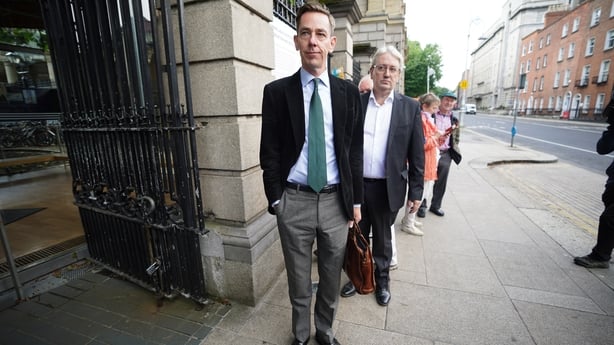
Then Alan Kelly responded, explaining he was "more confused than ever".
You can't really blame him, or anyone else for that matter.
Since the RTÉ financial controversy first emerged, the narrative has morphed from an issue focused solely on Mr Tubridy's payments to questions, and ultimately departures, of senior executives.
It has included near bumper-to-bumper references to sponsored free cars to certain presenters coming in the same breath as concerns over dwindling resources for others working in the organisation.
And further revelations have emerged over redundancy payments to the broadcaster's former chief financial officer, all while Mr Tubridy has directly contradicted the evidence of the board of RTÉ, where he wishes to return to the airwaves.
Three weeks into the controversy, there are still as many questions that remain to be answered as those that have been resolved, leading to an at times frustratingly confusing mess the taxpayer may ultimately be tasked with cleaning up.
But while the issue remains complex, there are at least five key areas that may yet lead to the answers, reforms and closure so many are continuing to rightly demand.
Multiple investigations
The well-worn phrase that there are only two certainties in life, death and taxes, doesn't quite apply to Ireland.
Inevitably, there are inquiries, investigations and reviews too.
The crisis at RTÉ is no different, with no less than six separate mechanisms now in train to uncover exactly what happened, why and crucially, how it will not be repeated.
Two have been instigated directly by Minister for Media Catherine Martin.
They include the appointment this week of Mazars to undertake a forensic accountancy review of RTÉ's barter accounts and other off-balance sheet accounts under section 109 of the Broadcasting Act, which, in a rare moment for this saga, refers to an easy-to-understand section of the Act, which states: "Section 109 of the Broadcasting Act enables the minister to appoint a person to examine the books or other financial records of RTÉ.
"They can look back over any financial year or any other time period. The legislation states that the person appointed must be fully assisted by the organisation."
Minister Martin has also launched a separate external investigation of the broadcaster, via two new expert advisory groups, including the appointment of Stephen Smith who is heading up one review on governance and Liam Kelly who is leading a similar review on fees paid to contractors, potentially including high-profile presenters.
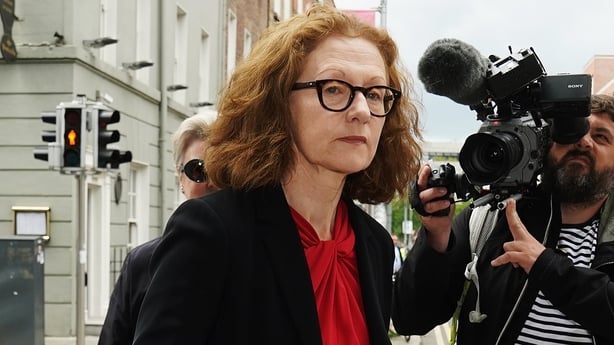
Support services for both reviews are currently out to tender, with work expected to begin by mid-August.
A fourth examination is the Grant Thornton review of payments to Mr Tubridy from 2012 to 2019.
This review, which is separate to the initial 2020-2023 review that highlighted the existence of barter accounts three weeks ago, was initially limited to 2017-2019, before being extended.
While it is not a review or examination as such, RTÉ's new Director General Kevin Bakhurst has also confirmed a register of interests will be established for RTÉ employees, in addition to reform of some of the highest presenter salaries.
And a sixth mechanism also focused on RTÉ reform has also been added this week, after new information emerged in recent days at the Oireachtas committee hearings about significant voluntary redundancy payments.
Those payments will now be the subject of an external review of the broadcaster's voluntary redundancy scheme.
Breda O'Keeffe
That voluntary redundancy scheme was hardly a captivating concept a few short weeks ago.
But the speed at which the RTÉ finances story is continuing to develop means it is now front and centre of the debate - and, to paraphrase Ryan Tubridy's Oireachtas committee opening statement, with its own poster child too.
On Thursday, PAC was informed that RTÉ's former chief financial officer Breda O'Keeffe had received a voluntary redundancy package in March 2020.
However, at the same committee meeting, it emerged the payment had not been signed off on by every member of the broadcaster's executive board.
And, to make matters even more complex, Ms O’Keeffe's replacement in the same role she received voluntary redundancy from, Richard Collins, said while he was on the executive board when the payment was made, he was not when it was agreed, saying: "I knew nothing about that package, Breda never explained anything about it, the director-general [Dee Forbes] never did."
These facts, among others, are the reason why Kevin Bakhurst has confirmed he wants to see a full review of all of RTÉ's voluntary redundancy payments.
Ms O'Keeffe for her part had initially told PAC in a letter on Wednesday she was declining an invitation to attend as she had nothing more to add, before texting a witness during Thursday's committee to try to clarify matters.
The committee declined to allow her text to be read into the record, saying they want her to attend instead.
In terms of the voluntary redundancy payments review, though, the message has been heard loud and clear.
Ryan Tubridy's Future
Breda O'Keeffe is not, of course, the only person who remains in the spotlight of the financial controversy.
This weekend, Ryan Tubridy's future continues to hang in the balance.
In an impassioned performance at PAC and media committee on Tuesday, Mr Tubridy chose to make it clear that in his view RTÉ is to blame for what has happened and that he has done nothing wrong.
He banged the table with his fist, he reminded people he had a soul, he peppered in references to his charity work and, he explained, he doesn't have a head for finances and knew nothing of the details of what had happened.
Crucially, Mr Tubridy also told committee members, and, don't forget, the watching public, that he could be out of a job by this weekend if the issue is not resolved.
Kevin Bakhurst responded on Thursday by holding his position, saying he will consult with RTÉ employees before any decision is made on Mr Tubridy's future and that, for now, the presenter's most recent invoice has yet to be paid.
During interviews with newspapers which were published yesterday, Mr Bakhurst said he will contact Mr Tubridy within the next week to discuss his future with the organisation.
Mr Bakhurst said he wanted to treat Mr Tubridy fairly but indicated that he would not speak personally to Noel Kelly.
The stand-off may well be resolved amicably but there are no guarantees this will happen.
The licence fee
Speaking of the general public, it will have been lost on exactly no one connected to the RTÉ saga that what has happened could not have come at a worse time for the organisation.
Public service broadcasting funding is always a tricky subject, particularly at a time when a cost of living crisis is gripping households across the country.
But a discussion on the issue becomes even more difficult when the broadcaster seeking extra exchequer help is caught in a financial scandal of its own making.
It is too early as yet to obtain a clear view of the situation based on the number of people renewing their €160 a year licence fee since the RTÉ payments controversy began.
But make no mistake, the renewal and payment levels are being watched closely from Montrose, Government Buildings and opposition parties.
At a media event on Tuesday, Taoiseach Leo Varadkar told RTÉ News that while the broadcaster has not yet sought a "bailout", if one is requested it would inevitably come with "conditions" attached.
It's been a remark hinted at in previous years, but somehow it now seems different.
No such thing as a summer break
For now, the responsibility in acting on the above lies in two locations, Donnybrook and the Dáil, both of which have in the past suffered from a degree of a summer slowdown in the hazy days of July and August.
Not now though, as the inhabitants of both locations know all too well.
For his part, Mr Bakhurst has made it clear he is open to hearing all options that are on the table and in an email to staff on Friday, he also stressed he will be judged on his actions, not just his words.
Similarly, while the Dáil rose for its traditional summer break on Thursday, it would be naive to believe the political furore over what has happened at RTÉ will now disappear into the background.
Politicians, many of whom will have one eye on next year's local and European elections, and the general election within the next year-and-a-half, have made promises to get answers to what happened.
And with six reviews of issues at the broadcaster; an examination of voluntary redundancy payments; the future of a high-profile presenter; and the future of the licence fee itself all on the agenda, the controversy shows no signs of letting up any time soon.