
So here we go again ... probably, but we just don't know when.
Five months after the last Stormont Assembly election delivered an historic result but no devolved government, it has been confirmed that voters in Northern Ireland could be going to back to the polls.
But no date has been set, despite weeks of hardline talk by Secretary of State for Northern Ireland Chris Heaton-Harris that he would trigger an election if power-sharing was not restored by a minute past midnight this morning.
Speaking to the Northern Ireland Affairs Committee at Westminster on 18 October, he said on the record that the election would be "before Christmas".
That could still happen, but as of today the Northern Secretary has blinked in the stand-off with the DUP, which insists it will not go back into power-sharing until its concerns about the Northern Ireland Protocol are resolved.
He used the threat of a pre-Christmas poll to put pressure on the DUP to change its stance, but instead it has remained firm, and it is he who has shifted. For now, at least.
It was clear from early morning that something was up.
Given his no-nonsense remarks in recent weeks, the media and Stormont's parties expected an early morning statement confirming an election and setting a date, with Thursday 15 December the most likely.
Instead, shortly after 11am Mr Heaton-Harris took to Twitter to record his deep disappointment that the Stormont Executive had not been reformed and promising "an update" later.
I believe strongly that people in Northern Ireland deserve locally-elected decision-makers who are working for them, to address the issues that matter most to people here.
— Chris Heaton-Harris MP (@chhcalling) October 28, 2022
(1/4)
Then calls to the Northern Ireland Office seeking confirmation of a press conference went unanswered.
As journalists began to gather outside the NIO's headquartes in Belfast city centre in expectation of a statement, speculation grew that something was up, otherwise why would the Northern Secretary have gone quiet?
Suspicions grew when Northern Ireland's Chief Electoral Officer Virgina McVeigh entered the building for a meeting.
Ms McVeigh wrote to potential polling stations earlier this month flagging up the possibility of a 15 December poll, so why would Mr Heaton-Harris need to see her face to face?
Unless to ask about the feasibility of other dates?
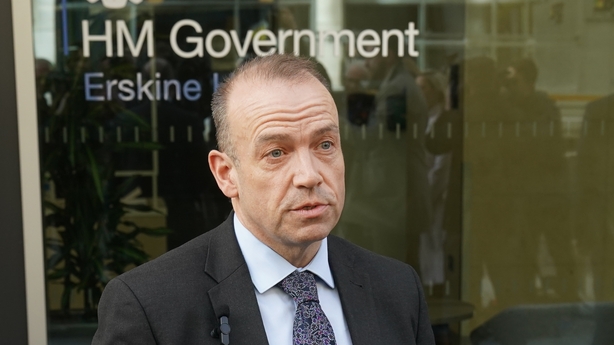
Those suspicions were justified when he finally spoke to the media at 3.35pm this afternoon, with the Northern Secretary restating his commitment to call an election, but not setting a date.
Read more: Fresh Stormont election to be called, with no date yet set
Protocol stalemate
Just as former British prime minister Liz Truss said she had "listened to the people" when binning some of her doomed economic policies, Mr Heaton-Harris said "I hear it" when the Stormont parties said they did not want an election.
But he has been hearing that for weeks. All of the local parties have been saying publicly and privately that an election will not break the protocol stalemate.
They are well aware there may not be much festive cheer when they knock on doors asking for votes during a cost-of-living crisis.
Perhaps that part was of the calculation by Mr Hearon-Harris, to make the local political parties feel the pain.
"An election will cost an estimated £6.5 million pounds"
The fact is that this latest Stormont crisis was caused by just one of them, the DUP, by its refusal to go back into the power-sharing institutions until the Northern Ireland Protocol issue is resolved to its satisfaction.
An election will cost an estimated £6.5m but all of those who will contest it are agreed on one thing: it is highly unlikely to do any good and will not break the political deadlock.
If anything, the situation could potentially become more entrenched if the two largest parties, Sinn Féin and the DUP, hold what they have or increase their share of seats.
The DUP goes into this election with 25 of the 90 seats at Stormont, a result it says was validation of its hardline stance on the protocol and manifesto pledge not to go back into power-sharing until the dispute is resolved in a way it finds acceptable.
If the party retains those seats or adds to them in the face of strong criticism of its stance by the other parties and the Irish and British governments, it will be even less likely to go back into the Stormont Executive
Sinn Féin goes in with 27 seats, emerging from the May election as the largest party with the right to appoint a nationalist head of government for the first time in Northern Ireland's 101-year history.
It will hope its support base will be motivated by the refusal of the DUP to go into power-sharing with a nationalist First Minister.
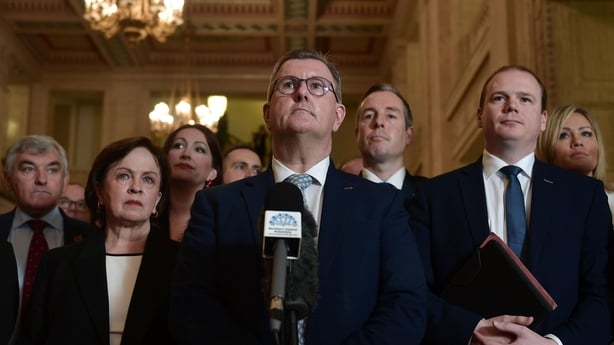
The Alliance Party will find itself squeezed by both of the two biggest parties as it seeks to repeat its strong performance in May when it won 17 seats, just over double the number in the previous Assembly poll.
The once mighty Ulster Unionists and the SDLP, the architects of the Good Friday Agreement, will be under huge pressure on all fronts, with Sinn Féin, the DUP and Alliance all targeting them.
Their task will be to convince their support bases, and new voters, that their voices remain relevant.
Whatever the outcome, the issue that led to this election, the protocol, will remain unless the UK and EU manage to come to a negotiated settlement that the DUP approves, and there currently seems as much likelihood of that as Kilkenny footballers lifting the Sam Maguire.
Northern Ireland Protocol Bill
The only other possible avenue is the Northern Ireland Protocol Bill, the legislation to override much of the post Brexit settlement introduced by former British Prime Minister Liz Truss.
That legislation is currently going through the House of Lords where it is encountering huge resistance and a long list of amendments that will seriously hollow it out.
The DUP is not likely to view the amended version as an acceptable basis for ending its boycott of power-sharing.
That means all the DUP eggs will be in the British government's basket as the most realistic vehicle for a solution will be agreement with the EU.
The DUP wants the UK to take a hardline approach, ending the remit of all European laws in Northern Ireland as well as all checks on goods arriving from Britain.
Potential trade war
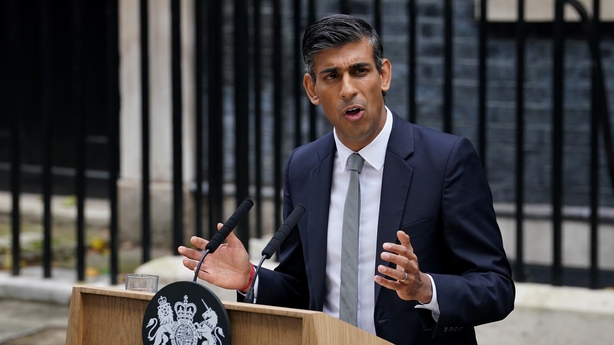
But new British Prime Minister Rishi Sunak, a former banker, has made it clear that tackling the economic crisis is his key priority.
He is a man who takes note of the financial markets that quickly discredited and undermined the government of his predecessor Liz Truss.
Economic stability and rebuilding the trust of the financial markets is essential if he is to survive and lead the Conservative Party into the next British general election.
That could mean a big problem for the DUP and its supporters.
Triggering a potential trade war with the EU and endangering trade with the US at a time when the British economy is in dire straits and in need of as many friends as possible does not sound like a realistic option.
So, what has changed? Why did Mr Heaton-Harris perform what is widely regarded as a U-turn?
Perhaps Mr Sunak pulled rank and instructed his Northern Ireland Secretary of State to buy more time.
Perhaps the British Government believes it can possibly avoid an election altogether by making sufficient progress with the EU in the weeks ahead to persuade the DUP to take the jump back into power-sharing.
Or perhaps Mr Heaton-Harris will still proceed with his original schedule.
An election could still be held on 15 December providing he makes the decision by Monday week, 8 November.
Under the current law, an Assembly election can be pushed back as late as 19 January.
Those words "under the current law" are crucial as Westminster could move the goalposts to avoid an election it has been warned could be counter productive.
The only thing certain is that the Northern Secretary has surprised everyone, the Irish Government included, by not announcing a date today.
He will no doubt be well aware that history demonstrates that collapsing the Stormont institutions is much easier than reviving them.
It looks like it could be a case of here we go again ... but it just might not.