
The Covid-19 crisis has exacerbated problems in the planning system which both developers and homeless charities fear will deepen the housing crisis.
Environmental groups say the extra 23 days given by the Government to object as a recognition of present difficulties is not enough.
However construction industry experts say the system was already too prone to delay and point to the amount of existing High Court challenges to permissions granted by An Bord Pleanála.
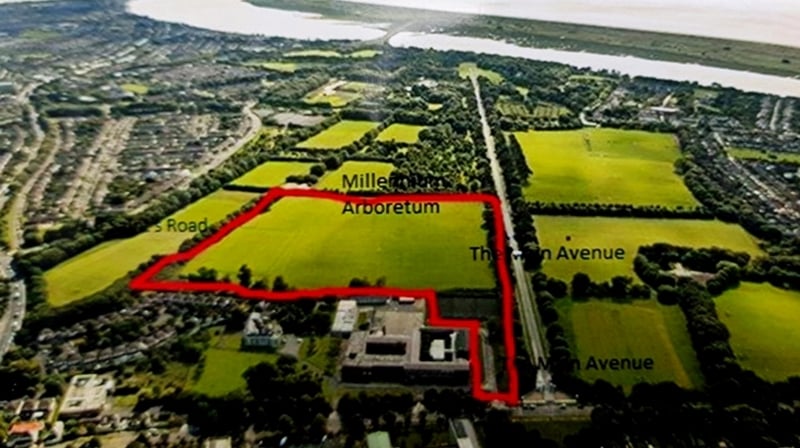
One example is the plan for 650 apartments on playing pitches site beside St Anne's Park in Raheny, Dublin that has been given permission by An Bord Pleanála twice and is now going for a second High Court challenge.
The Covid-19 crisis has also brought the courts almost to a halt with cases being adjourned and only urgent matters being heard so there is a potential for a backlog in the legal system. This is all on top of the halt to the actual construction of new homes.
The Government - under intense pressure to deal with the housing crisis - had tried to speed up the planning process by bringing in the Strategic Housing Development legislation so that projects involving more than 100 homes or 200 student places could bypass local authorities and go straight to An Bord Pleanála.
However residents banded together to fight these schemes in the courts and there are up to 15 cases of Judicial Review pending.
Residents' groups can be successful - planning permission for 145 housing units in Goatstown, Dublin, was recently overturned after a High Court challenge by a local resident who argued the case in court himself.
We need your consent to load this rte-player contentWe use rte-player to manage extra content that can set cookies on your device and collect data about your activity. Please review their details and accept them to load the content.Manage Preferences
Developers say part of the problem is legislation covering legal costs - Section 50b of the Planning and Development Act 2000 which was introduced in 2011 means that objectors who go to court do not have to pay the other side's cost if they lose.
This was the result of the Aarhus Convention which mandated that European citizens should have cost effective access to justice on environmental matters.
However planning officials believe it has led to a situation where objectors can go all the way to the Supreme Court for free as lawyers can work pro bono.
Residents' groups deny they are "nimbyists" - they say they do not want to be lumbered with the results of bad planning from a system desperate to provide housing no matter how inappropriate or unsustainable.
Residents in Lucan were promised that Adamstown would be an example of state-of-the-art town planning but areas promised for local employment or community facilities have been given over to housing. This has led to familiar problems of congestion and over concentration of housing.
And it is not just residents' groups - the Department of Education queried the rezoning of industrial lands to provide up to 1,200 units of housing on industrial lands in Santry because of the lack of school places. This plan has been withdrawn.
Dublin City Council itself took An Bord Pleanála to the High Court effectively accusing it of riding roughshod over existing planning rules by allowing a Johnny Rohan company to increase building height in a docklands site designated as Strategic Development Zone (SDZ). An Bord Pleanála recently granted permission for this again so another High Court challenge is possible.
An Bord Pleanála is understood to be determined that the planning system will keep operating despite current difficulties and to be concentrating on Strategic Housing Development cases which it acknowledges have seen a "spike" over the past nine months.
The last government had started to look at curbing the amount of legal challenges following Apple's decision to scrap a €850 million data centre in Athenry. The company gave up after the Supreme Court agreed to hear another challenge on top of three years of delay.
An initial draft of the Housing and Planning and Development Bill would require those who lose Judicial Reviews to pay at least a portion of the other side’s costs suggesting €5,000 for individuals and €10,000 for groups. It would also put restrictions on who could object to a planning application.
The draft went out to public consultation and 200 submissions were received before the period expired at the end of January. It will be up to the new government to decide how to proceed with the proposed legislation.