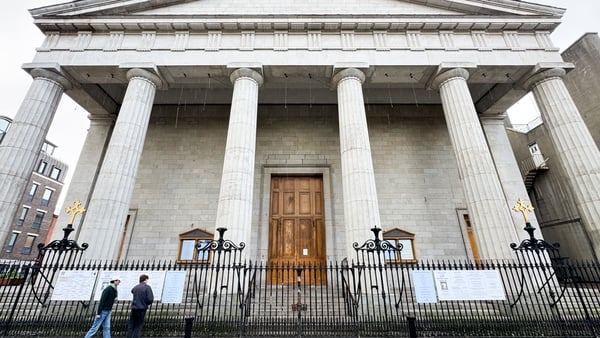
Dublin's Temple Bar was officially created in 1991 with legislation that provided tax breaks for its redevelopment and set up Temple Bar Properties to oversee it.
It was the vision of then taoiseach Charles J Haughey, who had pledged to stop a plan by CIE to demolish much of the area and develop it as a bus station and shopping centre, along with a new road network.
Now celebrating 35 years in business, the Temple Bar area has a reported annual footfall of 24 million people, employs 10,000, and generates around €700 million a year in trade.
Temple Bar is famous as Dublin’s tourist destination, with many coming for bars, restaurants and nightlife.
But the area also has a wealth of cultural venues, with 24 different arts organisations headquartered in the area, including: the Irish Film Institute, The Temple Bar Gallery, Smock Alley Theatre and the children’s arts centre, The Ark.
It has come a long way since the area was known for dereliction and was earmarked for redevelopment.
Martin Harte, CEO of the Temple Bar Company, said CIE had planned a bus station for the area and bought up a lot of properties during the 1960s and 1970s.
While development was awaited, CIE let the properties at very low, short-term rents. This gave rise to a proliferation of alternative clothing and record shops as well as new restaurants.
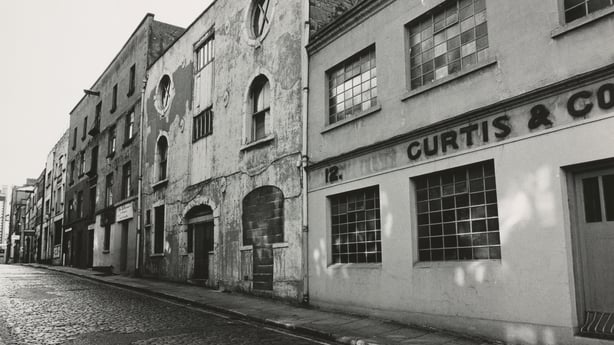
The Project Arts Centre was set up behind the Olympia Theatre in 1975, bringing a radical edge to the arts scene when it took over a former printing works.
The Temple Bar Gallery followed in 1983, with artists taking over a former shirt factory.
A business group formed on Crown Alley, including the Bad Ass Cafe. An Taisce made a submission calling for the preservation of the area’s architectural heritage.
However, Dublin Corporation was still planning a bus station for Temple Bar as it drew up its 1987 draft development plan.
It was Haughey who vowed he "would not let CIE near the place" and in 1991 the Temple Bar Redevelopment and Renewal Act was passed.
RTÉ Archives: TV GAGA explores plans to build a bus station in Temple Bar in 1985
We need your consent to load this rte-player contentWe use rte-player to manage extra content that can set cookies on your device and collect data about your activity. Please review their details and accept them to load the content.Manage Preferences
It made Temple Bar a legal entity and set its border as Dame St to the north, the Quays to the south, Westmoreland St to the East and Fishamble St to the West.
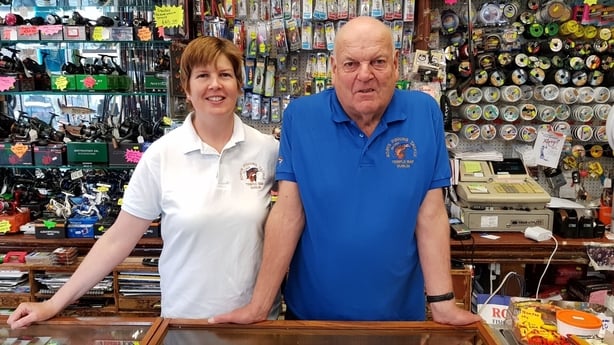
Mary Harkin owns Rory’s Fishing Tackle Shop, in the middle of Temple Bar, which was originally opened by her father in 1959.
She believes that the area has improved, particularly with more people and businesses in it.
"I think with the markets there, there's more people coming in. It's more inviting for people to come in," she said.
"The fact that all the galleries are free, that's just bringing more people, tourists and Irish people, into the area. There's a lot more independent shops, independent bakeries, and coffee shops, so, you know, it's a nice place to wander around."
The area has its own history, with the 19th century Olympia Theatre and the Palace Bar once the most famous literary pub in the city.
Paddy Dunning, director of the Button Factory music venue and the Rock and Roll museum, both of which recently won awards, has been in the area for 40 years.
He first came to Temple Bar as an 18-year-old. He rented a building from CIE to create a rehearsal room for his band.
Mr Dunning says there is a lot more to the area than stag and hen parties. He points out his own ventures, including a Sound Training College, Recording Studios, a Record shop and a web radio station, Rock.
The fact remains that the area is still primarily known as a tourist area and for its pubs. The Temple Bar pub is world famous, as both its exterior and interior are streamed live on the web 24 hours a day.
Owner Tom Cleary says his aim was always to provide an authentic Irish experience. He says that the pub has a special whiskey selection room, casual dining and Irish music playing day and night.
He says he gets letters from people all over the world who enjoyed the experience.
Mr Cleary says the huge growth in tourism has come on the back of Ryanair, which opened up the European markets.
The Temple Bar Pub was originally a small local bar called Flannerys of Temple Bar, and its metamorphosis exemplifies the huge change in the area.
And while Temple Bar has its critics, most agree that it is better than having it as a bus station.
Tune into Nationwide tonight on RTÉ One, to see how Temple Bar has changed in the past 35 years.