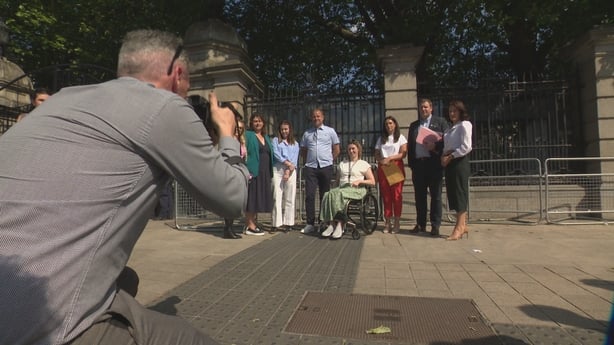
Patients with rare diseases and their families travelled to Leinster House to call for action on access to new medicines.
The group is calling on the Government to introduce a dedicated new line item in the Budget for new drugs, a review of the reimbursement scheme and an expansion of the Early Access Programme.
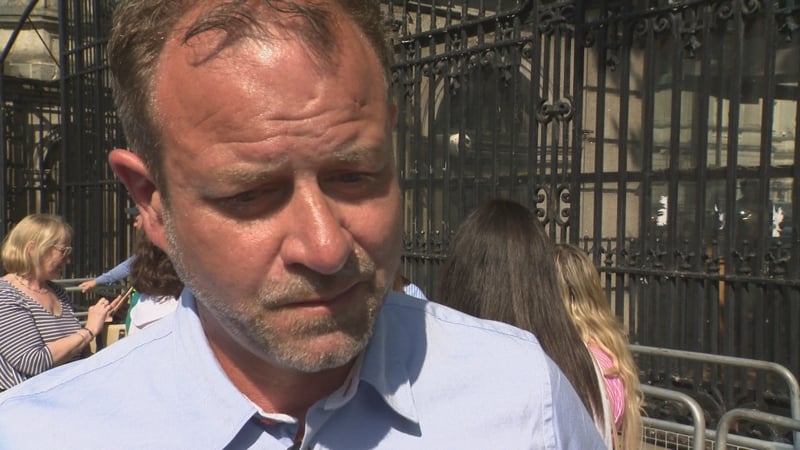
Craig Coady, whose son Paudie has Friedreich's Ataxia, was among those calling for a drug called Skyclarys.
His youngest son Rory, 13, "passed away eight months ago with this horrible disease".
Speaking at the gates of Leinster House, Mr Coady said: "I lost a son. I don’t want to lose my second son."
He said 15-year-old Paudie’s health is declining as his disease progresses.
"Last year, we went on holiday, and he had no wheelchair. This year, he is bringing a wheelchair.
"He has a voice. If he is not going to get this drug, he will no longer have a voice," said Mr Coady.
He said he is worried that Paudie will lose the ability to "ask his daddy for a cup of tea or a glass of water".
"There is a drug there. It is working," he said.
"Down the road, there might be a drug for a cure, and that's what it's about," Mr Coady said.
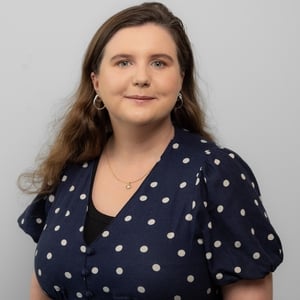
Úna Ennis’ son also has a rare disease called Duchenne Muscular Dystrophy and is seeking access to the Givinostat drug.
She said doctors have said that Archie’s disease will affect his legs, then his heart and lungs, leading to a short life expectancy.
"As parents, you'll look for anything to help your little boy and to look for a treatment," she said.
Ms Ennis said they found "hope" with Givinostat, saying it would "slow down the progression of the disease for my little boy".
"I don't want to sit there and tell my little boy that mammy couldn't get you this medication. No parent should ever have to do that," she said.
She said they cannot face more delays.
"There was a little boy standing here with us last year who is now in a wheelchair and will not be able to access this drug.
"Time is muscle for our little boys. And every day that they don't have this medicine, their muscle is dying," she said.
'Ireland has a broken reimbursement system’
Fianna Fáil TD Pádraig O'Sullivan said it is "inhumane that patients are left to come to the gates of Leinster House pleading for Government to listen".
Mr O'Sullivan said in the cases of Skyclarys and Givinostat, the companies have resubmitted their information to the HSE.
He said he invited patients with rare diseases to meet Fianna Fáil backbenchers and ministers to discuss the issue ahead of a monthly drugs group meeting, where both of these drugs will be discussed.
"Ireland has a broken reimbursement system. It hasn't changed in decades. It's largely modelled on the UK model," he said.
The Fianna Fáil TD said other countries in Europe are "far ahead of us" in terms of drugs reimbursement.
"It's just unconscionable in this day and age that we are producing and manufacturing drugs here and then often they are getting exported right across the world.
"But they are unavailable here to Irish patients," he said.
‘Time is not on my side’
23-year-old Aoife Quinn said she is worried she will "lose her walk" due to Friedreich’s Ataxia.
"Time is not on my side, I need this drug now," she said.
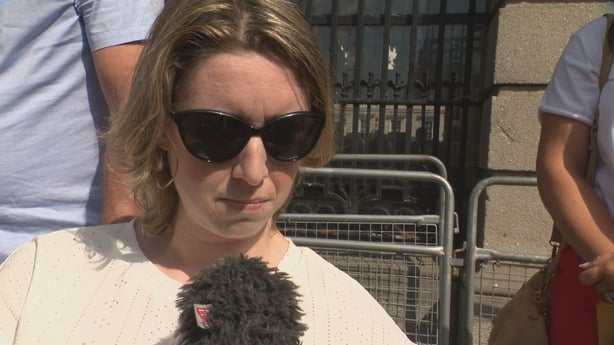
"Every day, I can feel my body weakening. I used to be able to play the piano, I can't really do that anymore," she said.
"It’s our lives and our futures at stake," she said.
Helen Kearney, 36, also has the condition and is now a wheelchair user.
"It's made my life so different to what I would have thought or dreamed of for myself.
"You're not able to do basic things like buttering your toast," she said.
"Nobody would want to see me using a knife," Ms Quinn said.
"I have watched myself deteriorate. I know what’s ahead of me," she said.
A spokesperson for the Department of Health said it is "committed to furthering the Programme for Government’s work in access to new and innovative medicines".
"The Government has made significant investments in new medicines. Budgets 2021-2025 allocated €158 million for new drugs, and Budget 2026 allocated an additional €30 million in new drugs funding.
"Since 2021, this has facilitated the introduction of 270 new medicines, 74 of which are for rare diseases.
"This level of investment is unprecedented in supporting patients through the availability of innovative medicines," they said.
The HSE said decisions on which medicines are reimbursed by the taxpayer are made on "objective, scientific and economic grounds".
The HSE said in its decisions it considers the health needs of the public, the cost-effectiveness of meeting health needs, the availability of items, the proposed costs and benefits, the clinical need for a medicine, the level of clinical supervision required, a drug’s performance in trials and the resources available.
The HSE said the applications for both drugs remain under consideration.
Biogen said a revised proposal for Skyclarys has been submitted to the HSE.
In a statement, the company said it recognises that delivering sustainable access to rare disease medicines depends on "constructive collaboration" with health authorities.
"Our collaborative approach has supported national availability of omaveloxolone in ten countries, including nine in Europe: Germany, Slovenia, Luxembourg, Austria, Switzerland, Poland, Slovakia, Italy and Spain.
"In Ireland, Biogen is actively engaged with the Health Service Executive to help make this medicine available to people living with Friedreich's ataxia," it added.