
I recall covering the rise of heroin use in Ireland in the mid 80s.
It was particularly prevalent in Dublin and to some degree in Cork and elsewhere also.
Much of the focus was on inner city Dublin and the links to socio-economic conditions.
Then, the first case of AIDS was confirmed here and cases began emerging among intravenous heroin drug users.
At one point, in the mid 80s, around 30% of IV drug users were HIV positive and this launched the health authorities to eventually act.
It took many years plus a battle to deal with the stigma in society of this drug misuse, but more drug treatment services came on stream and needle-exchange facilities followed, not always without some societal resistance.
Drug misuse is around us all, legal and illegal, but if people rarely encounter it, or are unaffected by it, it continues at pace.
The question is - has this type of drug use become normalised in society?
The latest figures show how cocaine is now the most common drug for which people seek help.
What is very different now to the 80s, 90s and early 20s, is that social media allows people to link up with drug dealers in a way that did not exist before.
The modern payment systems using phones and cards mean people can send 'cash' in seconds to individuals they do not know and the deal is done.
This is the new era of cocaine buy and sell.
Cocaine is a colourless substance obtained from the leaves of certain types of coca plant.
There are basically two chemical forms of it:
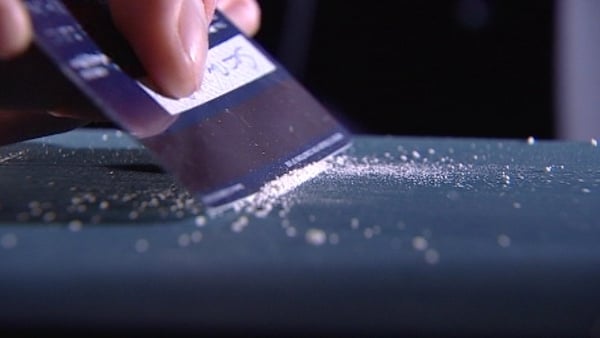
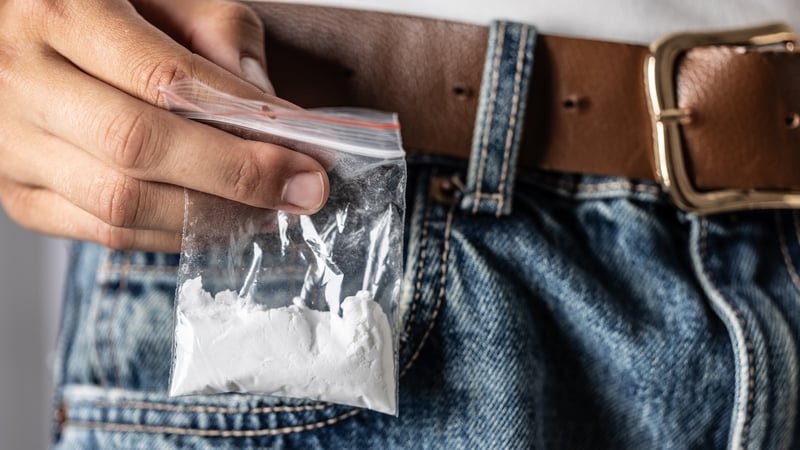
Cocaine is a strong but short-acting stimulant drug or 'upper', which comes in a white powder.
It can be used by dividing it into lines and snorting it up the nose, with a tooter/snorter, or straw.
Cocaine can also be smoked, or made into a solution to inject.
Crack cocaine is a smokeable form of cocaine, made by chemically altering cocaine powder, to form crystals or rocks.
"Cocaine does not discriminate once it takes a hold."
This can be smoked, or dissolved in an acidic liquid and injected.
The number of deaths with cocaine implications has been increasing.
Figures show there were 107 such deaths in 2021.
The Health Research Board report this week revealed that a record 15,422 cases were treated for problem drug use here last year.
Cocaine accounted for more than four in ten cases.
The late actor Robin Williams once remarked that cocaine is God's way of telling you, you are making too much money.
But it's not quite true. Yes, people with disposable cash may be more easily able to buy the drug, but those with no money and an addiction will do what it takes to get it too.
In that way, cocaine does not discriminate once it takes a hold.
There is also concern over the rise in new synthetic drugs as well as a twelve-fold spike in treatment for the pain-killer, ketamine.
My newsroom colleague, RTÉ reporter Cian McCormack reported on Morning Ireland this week, how cocaine and other drugs can be procured as quickly in rural Ireland as ordering a takeaway or pizza.
On a visit, he spoke to patients in the Cuan Mhuire treatment centre in Athy, where 90% of the people it treats are dealing with cocaine addiction.
We need your consent to load this rte-player contentWe use rte-player to manage extra content that can set cookies on your device and collect data about your activity. Please review their details and accept them to load the content.Manage Preferences
One 27-year-old man from Clare explained how he has taken every drug, except heroin. It took over his life, he lost everything - his family, friends and he was afraid of his own shadow.
The treatment centre, with group counselling sessions and occupational therapy, gave him his confidence back.
Now he says his family is proud of him.
Recovery is not easy and the temptations remain in society, after people leave treatment, so it takes a lot of courage to avoid a return to old habits.
High demand for inpatient treatment
The demand for inpatient treatment is high in Ireland, among the mix of limited private and HSE funded public treatment centres.
A full in-patient programme will usually last around 12 weeks and it is a significant commitment, where patients are challenged by expert counsellors and family and friends, in a controlled safe, environment, to face the reality of their addiction.
Studies show that around 30% of people successfully complete drug treatment, but the number that remain drug free, or reduce their substance use afterwards varies a lot.
How well people engage with the aftercare programme, when they leave inpatient treatment, is a important factor for long-term recovery, along with having good support from family and friends.
Another patient, Ciarán who is close to leaving his treatment centre, told RTÉ Radio this week that when he leaves, the World Cup will be underway and the pints will be flying.
So going back into society, out of the bubble of treatment and the friendship and support of fellow addicts in treatment centres provide, is a big challenge - a step into the unknown.
People who recognise they need help for addiction and seek help, deserve respect and support.
In relation to cocaine, the number of women seeking treatment for cocaine use has risen nearly seven-fold since 2017.
Women particularly affected by crack cocaine
Four in ten people seeking treatment for crack cocaine are women. Women are being particularly affected by this trend and more needs to be understood as to why this is.
Population surveys, frontline services, and drug seizure data all confirm that cocaine use has increased significantly in the wider population, which has directly contributed to the rise in people entering treatment services.
There is also a trend of new emerging drugs - rapid growth in the use of psychoactive substances, ketamine and nitrous oxide, alongside the rise of vaping as a method of using drugs.
This trend is seen especially among young people.
Synthetic products raise a particular concern as they are very unpredictable.
Many national and local drug task forces have looked at this problem over the years.
They point to the normalisation of cannabis and cocaine use as well as early alcohol misuse.
Drug misuse affects families, can lead people into drug debt and the danger of entering the criminal justice system.
Several reports point to the need to have more drug treatment services linked to community settings and to provide more support for families affected, to make help more accessible and affordable.
This is a growing problem for Ireland as the latest figures show, and it means the demand for drug treatment services will rise significantly in the years ahead, unless measures are taken to reverse these worrying trends.