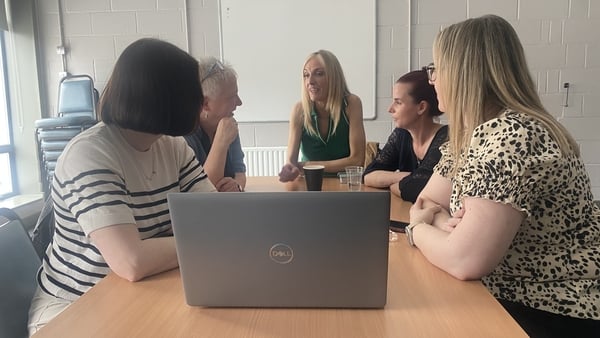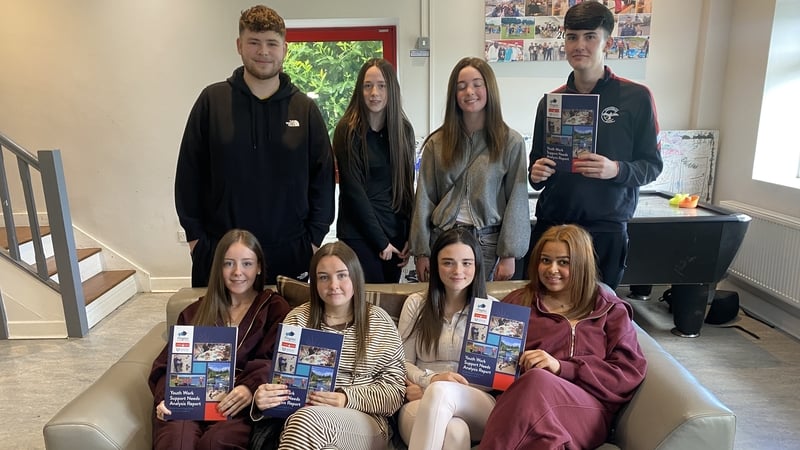

Youth services in Finglas say they have reached capacity at their facilities which support young people in the area.
Crosscare's Finglas Youth Service and Finglas Youth Resource Centre say they are unable to adequately support children and teenagers who want to engage in their services, due to inadequate levels of staff and funding.
Around 450 young people attend the youth services in Finglas, which provide education and mental health supports and steer children away from drug use.
An analysis report titled "Youth Work Support Needs" commissioned by Crosscare's Finglas Youth Service, Finglas Youth Resource Centre, and Dublin City Council, has captured the lived experiences of young people in the area and those who support them.
Primary data collection involved direct engagement with the young people attending youth services, youth work staff, local community services and service providers.
Participation in education, substance misuse and mental health and wellbeing were three areas of concern that emerged during the research.
The report says the issues are inter-related, resulting in significant negative impacts on outcomes for young people, their families and their wider community.
Schools have been described as stretched, with limited after-school supports and increasing difficulty keeping young people engaged. Some young people are struggling with attendance, while others are feeling overwhelmed by academic pressure.
Substance abuse and mental health issues among concerns
Substance misuse is another serious concern.
Drug use is described as highly visible in the community and increasingly normalised, with reports that children as young as 10 years old being exposed.
"This is not just affecting individuals, but entire families, with intergenerational addiction highlighted as an ongoing issue," according to Crosscare.
Mental health pressures are also significant. Young people spoke about anxiety, isolation and difficulty coping, with long waiting lists making it harder to access formal supports when they need them.
There were concerns raised about the physical and social environment, as well as issues facing older teens and young adults aged 16-24 years.
There is a lack of recreational opportunities and physical spaces for young adults to socialise in the area which means that vulnerable young people can be drawn into substance misuse according to the report.
The population of Finglas, which covers a large geographical area, has grown by 6% since 2011 and is set to become larger according to the report.
A significant number of housing developments are either in the planning stage, construction phase or nearing completion in the Finglas area.
These, and a number of other smaller planned developments, represent a significant increase to the future population. In addition, Finglas and Ballymun have the highest number of Social Housing Units in the State.
All of this will contribute to increased demand for local services, including youth services.
The overall population is estimated to be 38,017 people, 30% of whom are under the age of 24 years.
The Child and Family Support Network of Finglas has the highest proportion of 13 to 17-year-olds within Dublin City North.
Dublin and Northeast HSE 2024 show that Community Health Networks (CHNs) rank Finglas in the three CHNs with the greatest proportion of people who are "very" or "extremely disadvantaged", with Finglas at 19.8%.
'We don't have capacity to keep it going'
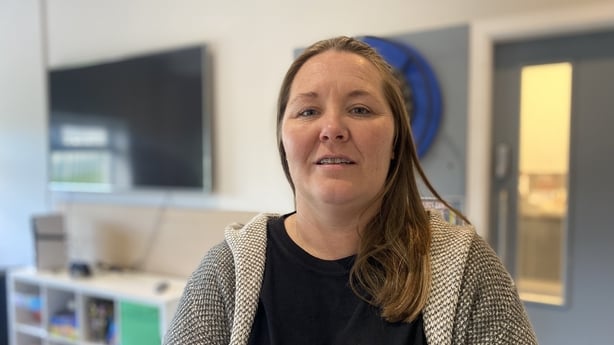
Ciara Murphy who is manager of Crosscare's The Den in Finglas, said waiting lists are so long enter the services, there is a recognition that the existing services (in west and south Finglas and a smaller one in the east) are at capacity.
According to Ms Murphy, the issues outlined in the report around mental health, education and drug-related matters are being identified by youth support workers.
"The support that the young people need, we just don't have the capacity to like keep it going and I suppose the report proves that we need more to be able to look after all the young people in Finglas."
Rachel Kelly is project leader of the Finglas Youth Resource Centre and has worked in the area for 16-years.
She points to the intergenerational trauma that is evident through young people get involved in crime and in drug taking.
Some young people have unfortunately died as a result of substance misuse and others have seen their parents die.
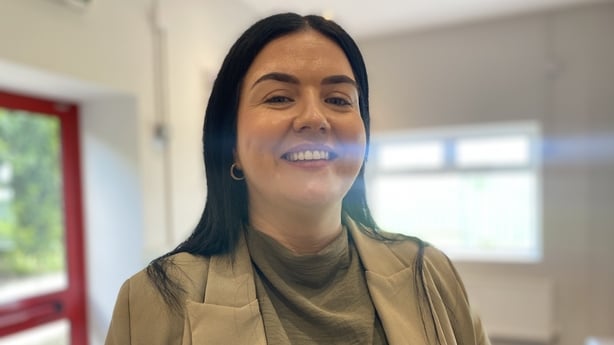
"I suppose that intergenerational kind of piece is crucial because from a young age, young people are seeing open drug dealing on the streets," she said.
"They're growing up and they're idolising it ... so it looks very appealing. They don't see the long-term effects, they see the short-term effects and it looks cool."
Without a positive influence or means to explore that trauma, Ms Kelly says there is an increased likelihood of getting involved in crime and in drug taking.
"One of the big things that comes out of the report is around mental health and wellbeing. If young people don't have the right resources in their area to talk about the intergenerational trauma that they're facing, the cycle is just going to continue.
When RTÉ News visited The Den, it was extremely busy with teenagers and young adults paying pool downstairs.
A number of them sat together catching up, while upstairs a teenager in a David Bowie t-shirt played an electric guitar in the music room, as others were gaming in a neighbouring room.
Some have been attending The Den and the Finglas Youth Resource Centre for over 10 years.
Shauna Dunne started attending The Den when she was around 12 years old along with her group of friends.
"It was just a great experience and as we got older, we had a smaller group and we were given lots of opportunities through that group. We studied for our (driver) theory test and it has been a big benefit for everyone".
The now 20-year-old has completed courses and certificates including a barber course and an acrylic nail course. She recognises the importance of the facility for the area.
"When I actually first came here we did different programmes on drug and alcohol and we got to learn about stuff like that as well. It's good that you're getting kept off the streets and you're also learning new things and it's not school because you're not forced to do anything and you can do what you want".
Youth services providing opportunities
Lauren Donnelly was facilitated to do group counselling through The Den which built up her confidence immensely.
"I just feel like I talk more to people around the community, if someone's like 'Oh what is the Den', you're able to talk to them about it."
Asked what the best thing about the youth service is, she pointed out that it offered huge opportunity.
"Like, most of my (school) friends wouldn't go here and I'd be like, I'll be doing this with The Den this week, and they'd be like, aw I wish I was able to do that. We did a nail course recently and it was good".
Katelyn O'Reilly also joined the counselling group with Lauren and she has remained at The Den since.
"We've done art pieces on the walls, that's real fun because it's painting and stuff, and we get to do overnight trips. We went camping last summer and that was so good, that was my favourite one, because we got to stay in tents and all."
Patrick Reilly, who is now volunteering at the centre, is an example of the how those who have attended the services are seeking to give back through youth work.
He started attending the centre at the age of 10 with a group of young Travellers after they heard about the facility.
"It's given me something to do over the past few years, it doesn't stop in the summer, it's all year around," he said.
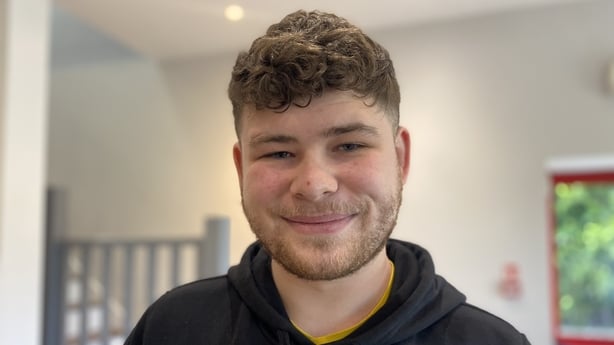
"The people of Finglas get to go down and they might get an opportunity to do things they wouldn't, if they weren't a part of it."
Patrick understands the demand for places, noting that there are 38,000 people in Finglas at the moment and the services "can only hold so many".
"I think we need to open up a few more, get more funding to get more people in, it'll be a great opportunity for as many as we can get in, but at the moment, we can't."
The 22-year-old loves Finglas because it is his hometown, but he acknowledges that "it does get a bad rap".
"The youth centres give the children and young people a chance to get out and avoid everything, it gives them a safe place, I'd say."
Patrick's aim is to get qualified and return to Finglas to work at a youth centre.
"I'll come back and help out," he said.
The report has called for increased investment, more accessible youth spaces and stronger coordination between services to respond to the scale of need.
Without these changes, it warns that the gap between support and demand will continue to widen as the area grows, increasing the need for intervention and critical support for the children and young people of Finglas.
We need your consent to load this rte-player contentWe use rte-player to manage extra content that can set cookies on your device and collect data about your activity. Please review their details and accept them to load the content.Manage Preferences