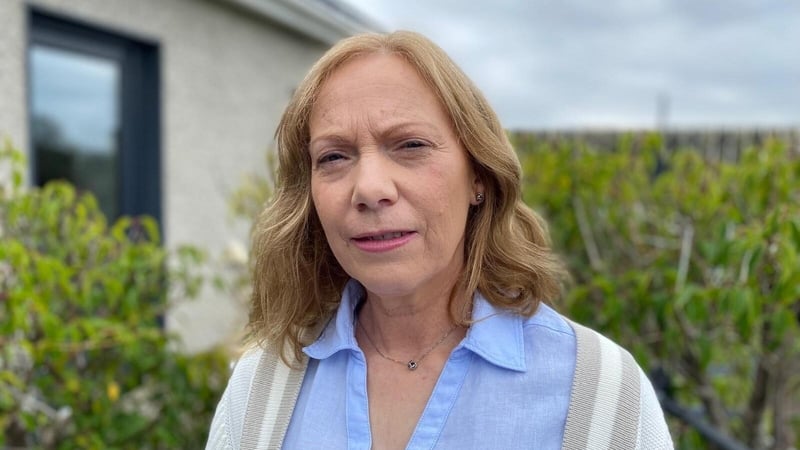

A Kildare woman has said a new bill before the Dáil that aims to ensure better toilet access for people with chronic illnesses could dramatically improve daily life for thousands of people in Ireland.
Maria Crowe has campaigned for legislation that would require shops and businesses to allow people with certain medical conditions to use staff toilets if no public toilets are available.
The proposed legislation, the Equal Status (Access to Toilet Facilities) Bill 2026, would place so-called "No Wait Cards" on a statutory footing.
It was introduced to the Dáil as a Private Member's bill earlier this year by Labour TD for Kildare South Mark Wall, and is awaiting a second reading.
Ms Crowe suffers from painful bladder syndrome, a condition that can cause severe pain and the need to urinate frequently and urgently.
She said being refused access to staff toilets affects her dignity.
Listen: Should we have a 'No Wait Card' for toilets?
We need your consent to load this rte-player contentWe use rte-player to manage extra content that can set cookies on your device and collect data about your activity. Please review their details and accept them to load the content.Manage Preferences
Speaking to RTÉ's Drivetime, she described one situation when she was shopping in a retail park and needed urgent toilet access during a flare-up of her condition.
She was told by a staff member to go to a McDonald's which was a five minute drive away.
"I was trying to explain to her, listen I don't have a five minutes drive. I'm in immense pain," she said.
"They just wouldn't let me use the toilet. So unfortunately, like I had to go outside into the retail car park and open the two doors of my car and just pee there. And that's the situation that I find myself in."
Ms Crowe set up a social media page to connect with others who have conditions that require timely toilet access.
She said many people have told her they are unable to leave the house when experiencing a flare-up, and plan outings "like a military operation".
"If I'm going somewhere unfamiliar, I have to look up, you know, is there a toilet?
"Is there a garage and I have to ring ahead to make sure, because I've been caught a few times that they have a toilet and then I get there, the toilet's locked," she said.
'Independence, freedom and peace of mind'
Ms Crowe said the introduction of a national "no wait" card on a statutory footing would bring her and thousands of others "independence, freedom and peace of mind".
Ms Crowe brought her campaign to the attention of Deputy Wall.
Deputy Wall has Crohn's disease and said he has a personal understanding of the issue.
He said many businesses closed customer toilets during the Covid-19 pandemic and never reopened them but do have staff toilets that could be used by someone in desperate need.
Organisations such as Crohn’s Ireland and Colitis Ireland already offer "no wait" cards but Mr Wall and Ms Crowe want this to be more widely accessible and issued through GPs or the HSE.
"The problem around the current card that Crohn's and Colitis Ireland have, it has no legal standing and a lot of premises are still denying people who need to use toilet facilities urgently the right to do so," Deputy Wall said.
The bill proposes to address concerns from businesses by exempting them from any liability under Section 3 of the Occupiers’ Liability Act 1995.
Deputy Wall said: "What we're saying here is that the people using these cards have to use facilities, and they're not going to be claiming off businesses because they had to go and use the facilities quickly.
"So what we're asking businesses to do is to recognise that, yes, of course, unfortunately, there is insurance and has been insurance claims, but if we have a card that's accepted and that is only for people who need to use it urgently, then I hope that businesses can buy into that," he added.
"And we can also work with insurance companies to ensure that they can work with businesses to reduce any liability or get rid of any liability that may come as a result of this."
The bill also proposes that the card would only have to be accepted by a business when there are three members of staff present.
"This can be a game changer for so many people in this country," said Mr Wall.
"They can actually start planning their social lives again because so many at the moment are confined to their homes."
Dr Fadi Salameh, Director of Gynaecology at the Rotunda Hospital in Dublin, said he is backing the proposed legislation as it could significantly improve quality of life for people with debilitating conditions.
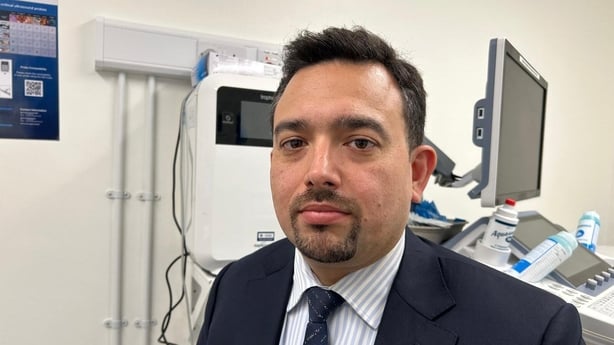
He said he sees patients every day who can be in excruciating physical pain if they must hold urine for even 30 minutes.
He believes there is a poor understanding among the public of how widespread these conditions can be.
"The latest statistics show that almost about 40% of women would have some degree of bladder symptoms. It's a very silent problem that not a lot of people talk about," he said.
"I assume there's a degree of shame around this as well. Not all women would come forward talking about their bladder symptoms. So it's not very well understood by a lot of people, women and men included."
Dr Fadi said the healthcare sector and the HSE itself should do more to change the narrative.
"They need to do awareness campaigns around this," he said.
"Incontinence is not a popular topic to talk about, which it probably should be considering the amount of patients that suffer from this, which is about 40% of women."