
Broken noses and jaws, loss of consciousness and being choked and headbutted are among the severe injuries being suffered by school staff because of violent incidents in schools.
Each year, dozens of violent incidents are leaving staff with such serious injuries that they must be reported to the workplace safety regulator.
Separate figures show that in the past nine years, almost 2,200 members of school staff have taken a leave of absence following an assault at work.
Workplace injuries above a certain threshold of seriousness must be reported to the Health and Safety Authority (HSA), with the cause recorded.
Figures obtained by RTÉ Drivetime from the HSA show in the past 10 years there were 241 reports of school staff being off work for three days or more because of a violent injury inflicted in the school setting.
More than half of these occurred in a primary school setting.
Details on the nature of some of these injuries were provided. They included broken noses and jaws, loss of consciousness, chunks of hair being pulled out, nerve damage from biting, being choked, headbutted and kicked in the face, having clothes pulled off, and one incident involving being stabbed with a table knife.
Meanwhile, separate figures obtained by RTÉ Drivetime from the Department of Education show 2,171 teachers and special needs assistants have availed the Government's Leave of Absence following Assault scheme since it was set up in 2017 up to the end of 2025.
Leave of absence can be granted to a teacher or SNA who is unable to work due to a physical injury following an assault that happened in a school setting.
Majority of assaults happened to SNAs in primary schools
The majority of the assaults happened to SNAs working in primary schools, but these figures do not show the full picture because the data does not include staff employed by Education and Training Boards.
A breakdown of the number of days granted in individual cases was not available, but the figures show more than 45,000 days have been taken through the scheme.
The incidents include injuries sustained as a result of challenging behaviour from children with special educational needs.
School staff, union representatives and disability advocates who spoke to RTÉ Drivetime emphasised it is not the fault of the child with special needs.
They said they believe a child can exhibit challenging behaviours if they are in an education setting in which their needs are not being met.
School staff said experiencing a violent incident can be traumatising. One special needs assistant, who did not want to be named, said she was recently subjected to an eight-to-ten-minute assault in which she was kicked, hit, pushed and slapped.
It resulted in a trip to A&E, two GP visits, several weeks not being able to work, and she said she is still experiencing pain in her arm.
"I am always frightened in these moments. I am always worried who's going to get hurt," she said.
"I should be able to work with children in a protected environment and help them gain their education and their knowledge and attain their social skills."
She added that school staff can find it a difficult topic to discuss.
"I do feel it's a lonely space to be in right now. You're at home and hurt, wondering, do I need more medical care? I'm wondering, will I be safe when I go back to work?"
She said she has been assaulted in up to 30 different ways in the current school year, including punching, books, table and chairs being thrown, and injuries inflicted with school scissors.
She said she believes too many children are not receiving the support that is right for them.
"I believe that if children are not in the right setting, the right environment to support their needs, of course they're going to become upset and dysregulated. And you would be upset too if you were in the wrong place at the wrong time.
"I'm one person and I cannot support all the children that need me in the mainstream classroom when they need to be in a smaller designed classroom for them," she said.
Another SNA, who suffered a bite injury from a child while at work, said she found accessing the assault leave scheme to be a frustrating experience.
"I got my tetanus, I got my course of antibiotics, I had to be out sick for three weeks.
"I had to fight tooth and nail for assault leave.
"It took me three months to get my payment [for medical expenses].
"The incident that happened wasn't an issue. It was the duty of care afterwards was the issue for me," she said.
Fórsa calls for more support in schools
Andy Pike, Head of Education at the union Fórsa which represents SNAs, said there can be lasting psychological effects when staff experience an assault, and he would like there to be more support available in schools.
"They can claim assault leave, which is an amount of paid leave if they've experienced an assault at work. But very often, there aren't many other supports made available to them.
"They can be referred to occupational health for an assessment as to how severe the injury is. But in terms of their own wellbeing, there's not a great deal in some instances that schools do to support SNAs," he said.
The numbers of school staff availing of the assault leave scheme have increased significantly over the years. In 2017 it was 69 teachers, while in 2025 it was 492 teachers.
Mr Pike said the increase could be due to a number of factors - there are more SNAs, so with more working, more run the risk of experiencing assault.
He said that after years of campaigning, school staff may be more willing to apply for assault leave where previously they may have been uncomfortable with it.
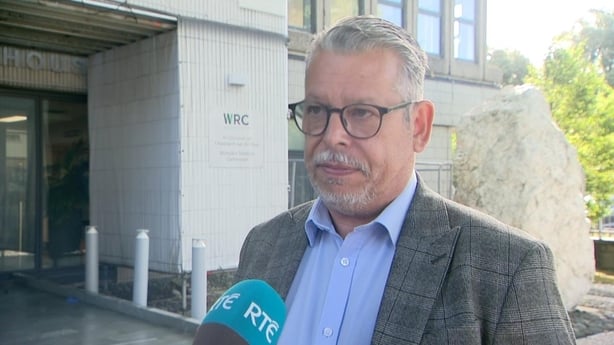
He added another factor could be an increase in challenging behaviours in schools.
Derval McDonagh, CEO of Inclusion Ireland - a charity that advocates for the rights of people with intellectual disabilities - said the education system needs to change to meet the needs of children.
"If children are telling us that they are that distressed, that they're acting in a certain way, and as a result of that, people are getting injured, then there clearly is something wrong with the model.
"And we need to absolutely adapt the environments in schools to suit children better. When we continue to group children together in ways that aren't mindful, in ways that don't support their individual needs, we're going to get issues of concern like this.
"Right now, we're fitting children into systems that were never designed for them. So we need to take a long, deep look at that and rectify that situation with urgency," she said.
The Department of Education said: "An Occupational Health Strategy is in place as a supportive resource for staff and leaders in schools. The aim of the Occupational Health Strategy is to promote the health and wellbeing of employees in the workplace, with a strong focus on prevention."
The statement added that there is an Employee Assistance service available 24 hours a day, 365 days a year.
"Where required, short-term counselling is available to all school staff and their family members."
Read More: Teacher assaulted at works says 'you lose a huge part of yourself'