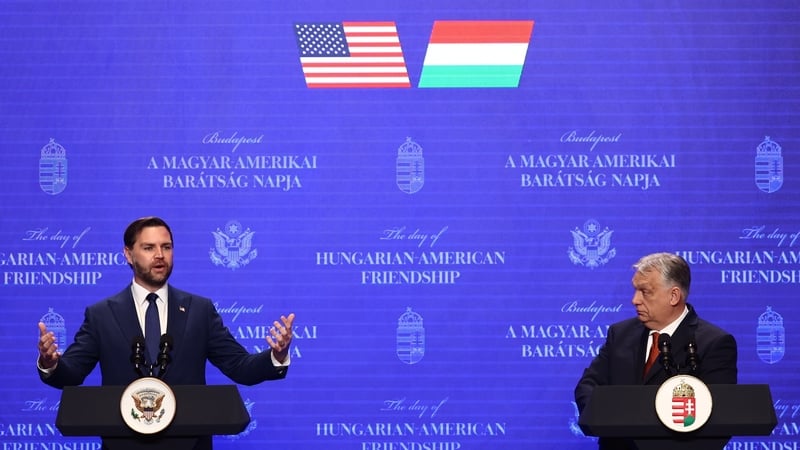

US Vice President JD Vance arrived in Budapest this morning for a two-day visit billed as bolstering US-Hungarian relations.
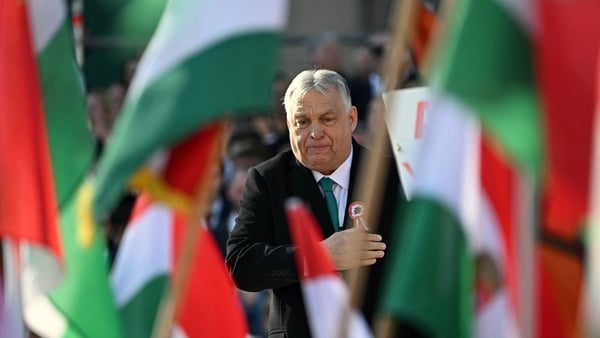
But the real reason for his visit is to boost support for Hungarian Prime Minister Viktor Orbán, whose Fidesz party is trailing the main centre-right opposition by nine percentage points in the polls ahead of Sunday's parliamentary election.
The vote presents the toughest electoral challenge yet to Fidesz rule after four previous election wins and 16 years in government.
A victory for the centre-right Tisza party over Fidesz on Sunday would mean that the Trump administration would lose a key ideological ally in Europe.
Back in 2014, Mr Orbán described his style of government as "illiberal democracy" and much of what Fidesz has enacted over the past 16 years in government is admired by ardent MAGA commentators.
The party is nationalist in outlook, pursues anti-immigration policies, a Christian-conservative agenda on social issues and has exerted greater control over the judiciary and public and private media.
It has also opposed the teachings of progressive universities.
Mr Orbán’s government has maintained close ties with Russia since its full-scale invasion of Ukraine and, like the US president, Mr Orbán has prioritised good personal relations with Mr Putin, meeting the Russian leader on three occasions since 2023.
Last month, Donald Trump endorsed Mr Orbán for re-election in a video message to CPAC Hungary, a Hungarian offshoot of the annual American gathering of right-wing politicians and ideologues, during which he called Mr Orbán "a truly strong and powerful leader".
"The President loves you, and so do I," he told Hungary’s leader.
"You're such an important part of what has made Europe strong and prosperous. You're one of the true statesmen, I would say one of the only true statesmen in Europe, one of the few people who can talk to people from all over the world, can play the role of peacemaker, can play the role of economic statesman."
It is true that Mr Orbán is one of the few European leaders who can pick up the phone and talk to the leaders of the US, China and Russia.
Slovakia’s Prime Minister Robert Fico is perhaps the other.
But the economic praise from the US Vice President for Mr Orbán is misplaced.
Economic growth is weak compared to other Central European economies, while some €18bn in frozen EU cohesion and recovery funding – blocked because of non-compliance with the bloc’s rule-of-law requirements – has slowed investment in public infrastructure projects.
Polling shows Fidesz is currently trailing Tisza, led by Péter Magyar, a 44-year-old lawyer and former Fidesz insider.
His anti-corruption platform has galvanised a previously fatigued electorate, a majority of whom now look likely to give another party a chance to run the country after 16 years of Fidesz rule.
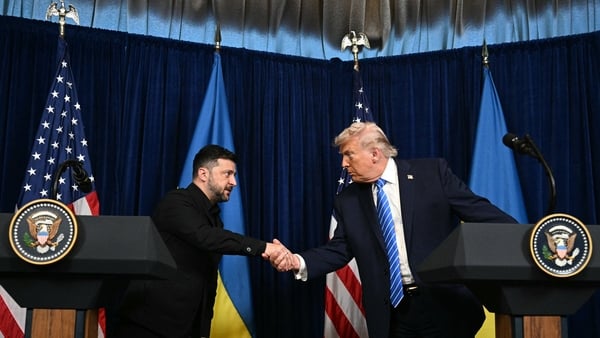
Fidesz has put attacks on Ukraine and its President, Volodymyr Zelensky at the centre of its campaign, claiming that Hungary could get dragged into the war if Mr Magyar’s Tisza party wins the election.
Whether Mr Vance’s visit to the Hungarian capital will tip the scales in favour of Mr Orbán’s Fidesz party is not yet known.
Nine percentage points is a lot to claw back with only four full days of campaigning remaining.
However, the visit does show the extent to which senior members of the Trump administration are willing to go to support European populist parties that align with its interests.
Mr Vance’s criticism of "bureaucrats in Brussels" during this morning’s press conference was similar to his critique of European liberalism at last year’s Munich Security Conference.
But polling suggests Hungarian voters want a change of government, and one of Mr Magyar’s key campaign pledges is to improve relations with the EU.