
The incoming president of the Coroners Society of Ireland has described as "crumbling" the service that provides post-mortem examinations that are requested by coroners to establish cause of death.
Dr Denis McCauley said the current system in place will have to be overhauled if the health service, criminal justice service and coroner service are to continue functioning.
Dr McCauley, who is the coroner for the district of Donegal, has said the coroner-led post-mortem service in several parts of the country remains under severe stress, particularly when it comes to children's services.
As a result, bereaved families can be left waiting for up to a week before they are able to have a funeral for a loved one.
Such post-mortem examinations are required in cases that include deaths which may be suspicious, accidental, or unexpected, as well as in cases of maternal deaths.
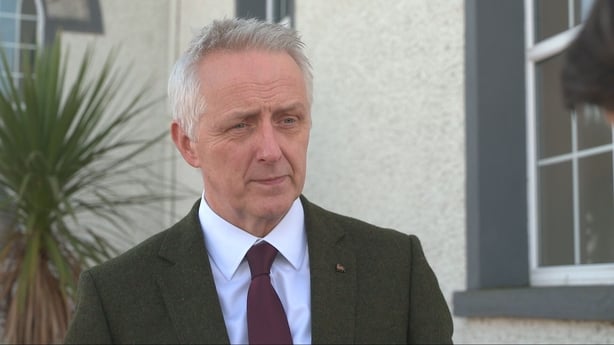
Dr McCauley said: "There is an issue all over the country. It is in Dublin and the southeast in relation to adult services. But basically, the children’s service all over the country is under severe stress.
"For adult services, three of the main teaching hospitals in Dublin have stopped doing post-mortems so all of the work falls on the Dublin city morgue."
He said: "This has been something we have been discussing with the Department of Justice for the last decade, and we have been warning that the service is about to crumble. Indeed, we were expecting the children’s services to crumble first, but it is the adult services in Dublin and in the southeast.
"I would like to compare it to the situation in Donegal. For instance, if somebody dies in Donegal today, they will have a post-mortem performed the next morning and [the person’s body] will be released by lunchtime at the latest. And I think that is culturally acceptable, and I think it is the way that it should be, but I think this is becoming less and less common all over the country," Dr McCauley added.
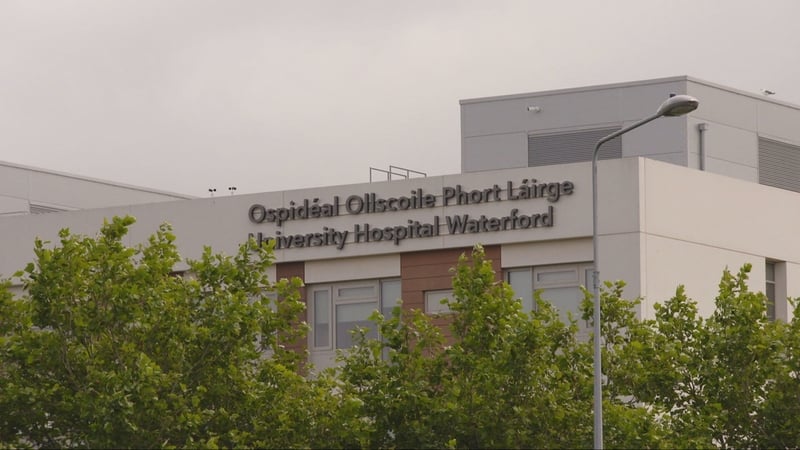
Lack of available coroners at University Hospital Waterford
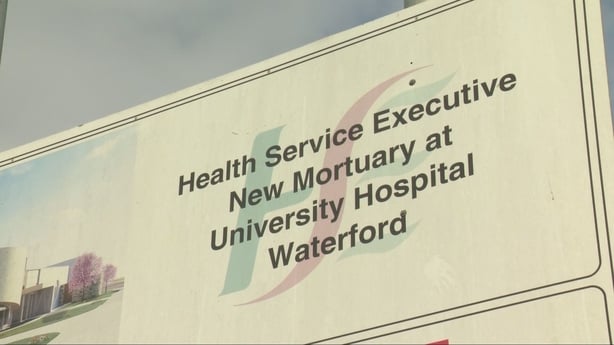
Around 700 post-mortem examinations, requested by coroners in the southeast of the country, are carried out at the morgue at University Hospital Waterford (UHW) each year.
Consultant pathologists at UHW stopped conducting coroner-requested autopsies at the start of the year.
Dr McCauley, who is a retired general practitioner and a former president of the Irish Medical Organisation, said there are three main reasons why pathologists are withdrawing their services.
He said: "There are enough pathologists. They have just decided not to do post-mortems. So, really, we have to ask them to re-engage again. I think the three issues they comment on are one, they are too busy and they have other services [to provide] such as the diagnosis of cancer and so forth.
"Secondly, and it is partly a coroner’s issue as well, that when they come to court, they are there for the day. And the coroner’s court and inquests should be a non-adversarial fact-giving issue, but at times, that is not the case, so the pathologists find it stressful.
"But finally, and I think more importantly, the fee that a histopathologist gets for doing a post-mortem has not changed in 20 years. Indeed, during the financial emergency, it was reduced further, and that has never been replaced."
A statutory instrument in the Coroners Act sets out that the fee payable to a person for performing a post-mortem examination or a special examination, including preparatory work, any tests required and a subsequent report to the coroner shall be €321.40.
Dr McCauley added: "I think the obvious immediate thing that should happen is that the Department of Justice should engage with the medical bodies in relation to reviewing this. I think that there has to be a realisation that without this service, the HSE won’t function properly from the point-of-view of knowing a cause of death."
As a result of the situation in Waterford, the Department of Justice, which is responsible for coroner services, put an interim solution in place.
This solution sees locum pathologists provide a post-mortem examination service at UHW three days per week, reduced from the previous seven-day service.
Most of these locum pathologists fly between the UK and Ireland each week to provide the service in Waterford.
The department said the reduction in the service to three days per week is based on the "volume of post-mortem examinations conducted at UHW" and the "feasibility of pathologists travelling to conduct the work."
A spokesperson also said that the fee that each locum pathologist is paid per post-mortem examination and whether or not their flights, transport and accommodation is paid for separately by the department cannot be disclosed.
They said that the contract with the UK firm providing the service must be treated as "confidential and commercially sensitive."
The spokesperson said the department has entered into an "agreement" with this firm in the UK for an initial six-month period that is reviewable monthly and that can be extended further if required.
Prior to the locum pathologists beginning their work at UHW, Waterford City Coroner John Goff warned of significant delays to funerals and distress for families waiting to bury their loved ones.
It is understood that while the interim solution took time to bed in, delays to funerals in the southeast of the country have shortened and occur less frequently.
Delays to funerals
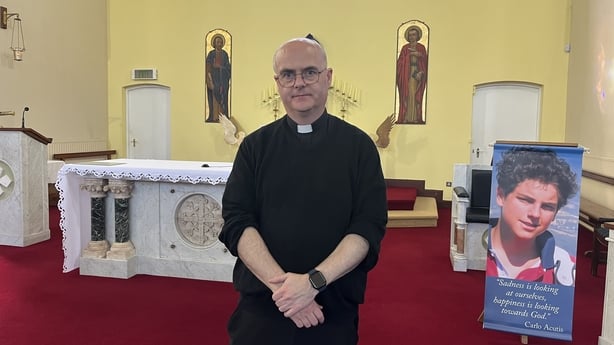
However, Fr Michael Toomey, who is the parish priest for seven churches in the St Carlo Acutis Parish Pastoral Area in south Tipperary and west Waterford, said changes to the service at UHW are still having a knock-on effect.
Fr Toomey said: "I think we need to realise that there will be changes because of what is happening in Waterford with the lack of pathologists there. Normally, I would say a funeral within a couple of days. Now, you are looking at nearly up to a week in cases. So, we are just advising families that it will be a bit longer.
"I know, particularly in the cities, it usually can take up to a week, and I know in the United Kingdom, it is nearly three or four weeks. We are just letting people know, there will be delays to funerals because of pathology problems, particularly if there is a post-mortem and if someone dies suddenly or tragically."
Fr Toomey also said that the issue is changing cultural norms when it comes to burying a loved one and sometimes, the undertakers are wrongly being blamed for delays.
He said: "By tradition, obviously, in Ireland, when funerals happen, particularly in the country, when someone passes away, the funeral and the wake is usually done within two or three days.
"But now, we are extending it to nearly a week at times. So, there is that pressure on families, not understanding, perhaps, why is the delay. I know some families have been kind of angry towards the undertakers for the delay, and it is not their fault.
"For undertakers themselves, they plan ahead. They now have to particularly plan a wake in the funeral home or in the person’s home. Let’s say it is five o’clock in the evening, there have been delays nearly when the body has not been released until four o’clock so that has put a huge pressure on undertakers in being able to prepare the remains of people's loved ones. So, right across the board it is having an effect," Fr Toomey added.
Department of Justice is aware securing post-mortem services is 'challenging'
The Department of Justice has said it is aware that any delay in carrying out post-mortem examinations requested by coroners can be deeply upsetting for bereaved families and loved ones.
In a statement, a spokesperson for the department has said that it is aware that securing the provision of such post-mortem services is "challenging" and it has been engaging with the Department of Health to address the reasons behind these challenges.
The spokesperson said: "There are issues arising with respect to the conduct of post-mortem examinations within the pathology profession generally, including relating to training and recruitment, as well as competing demands on pathologists in areas of diagnostic and research work."
They also said that there are particular difficulties when it comes to securing pathologists to carry out perinatal post-mortem examinations for coroners.
The spokesperson said: "Work is ongoing between this department, the Department of Health and the HSE in relation to this matter. A long-term solution is required to ensure perinatal post-mortem services are put on a sustainable footing."
The spokesperson also went on to say the department remains committed to the reform of the coroner service and the provision of a sustainable post-mortem service for the coroner death investigation function.
They said: "With this in mind, the Department of Justice, Home Affairs and Migration in April 2022 established a 'Standing Committee on the Provision of Coroner Directed post-mortem examination services,’ membership of which consists of representatives from the Department of Health, the Health Service Executive, the Office of the State Pathologist, the Coroners Society of Ireland, the Department of Housing, Local Authorities and Heritage and the Faculty of Pathology, Royal College of Physicians Ireland as well as the Department of Justice, Home Affairs and Migration.
"This Standing Committee is an important forum with appropriate membership to discuss issues in relation to the autopsy service," the spokesperson added.