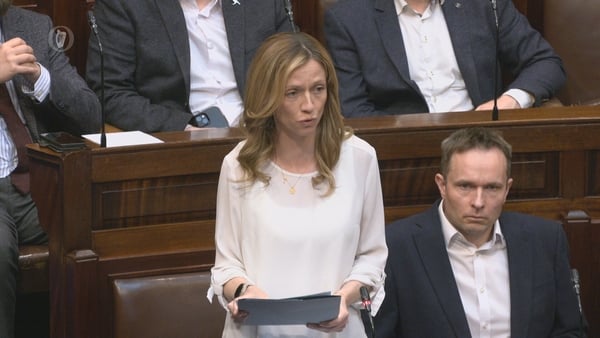

An Oireachtas committee has heard that the Road Safety Authority (RSA) is "broken" and "beyond repair".
The Irish Road Haulage Association (IRHA) told the Joint Committee on Transport that the RSA needs "radical reform".
Its Deputy Vice President, Eugene Drennan told TDs and senators that the current driving and testing system is outdated and not delivering as it should be.
Mr Drennan said a backlog in driving tests has resulted in learner drivers waiting "excessive periods" for a test.
The association said that many of these learner drivers are "effectively forced into non-compliance because of the prolonged, unacceptable waiting times".
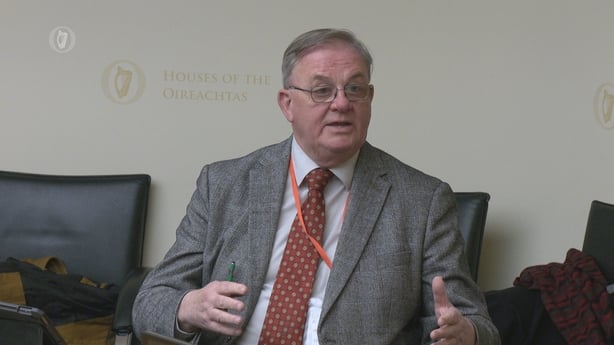
"They must travel to work or school. This is not a failure of learners; it is a failure of system capacity," he said.
The deputy vice president said the RSA has been slow to adopt education methods, such as the use of simulators, remote learning, and delivering driving education in a learner’s first language.
The association also called for a comprehensive review of the Certificate of Professional Competence (CPC) for HGV drivers.
Mr Drennan said the CPC is "not fit for purpose", with the training amounting to "little more than a wasted day, despite the significant time and resources required to complete it".
"Its content, materials, and delivery are outdated and largely irrelevant to the needs of the modern HGV driver," he added.
The existing CPC is "stuck in the same tract for the last 25 years", said Mr Drennan.
He said it is seen as a box-ticking exercise that is disconnected from real-world operational risks.
Board member, Paul Jackman said the CPC is "largely irrelevant" and outdated.
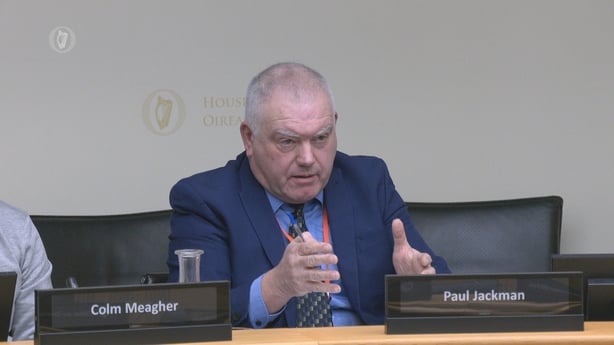
He said the course is still delivered in book format and "just falling behind and behind".
"As someone who used to teach the CPC, I brought in my own material to make it relevant," he said.
Mr Jackman said in Belgium there are 28 certified relevant courses for hauliers to "tap into, done by a certified trainer, as opposed to how the CPC is being delivered".
The IRHA also called for greater transparency in the reporting of collisions as "there is a significant difference between being present in a collision and being the causative factor".
Mr Drennan said the Department of Transport had recommended breaking up the RSA into two separate functions but is now promising to reform it from within.
He said 30 other bodies has recommend for a "fundamental big change of the RSA", labelling this as "waste" of money and effort.
"We have to do better," said Mr Drennan.
He said the association is "highly doubtful that the RSA in its current format and structure can be repaired and relaunched".
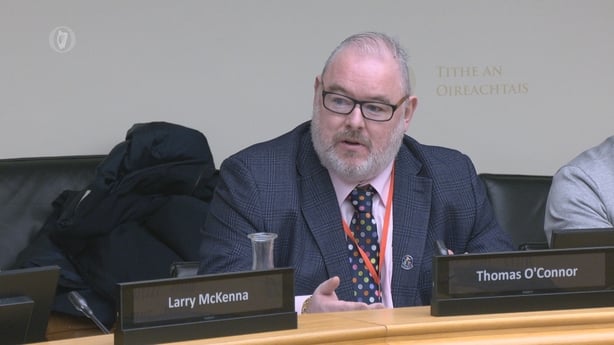
The National Bus and Rail Union (NBRU) told the committee that investment in bus lanes and adequate enforcement to keep them clear is "paramount for safety".
"Every time a bus has to manoeuvre around obstacles, illegally parked cars, or other obstructions, it increases the risk of accidents," NBRU Assistant General Secretary Thomas O’Connor said.
Mr O’Connor also called for mandatory high-vis clothing for all cyclists and users of scooters.
He said a Transport Security Force is "absolutely vital" and will need adequate legislative powers to protect drivers and passengers alike.
Green Party leader Roderic O'Gorman said a clearer timeline for the force is needed.
In response, Mr O'Connor said drivers do not have security screens on Bus Éireann's inter-urban coaches, meaning they "don't have a safe place of work".
"We have had two people whose careers have been ended by violent, physical assault. They haven't got the basic protection of a security screen," he said.
Meanwhile, SIPTU, which represents Dublin Bus, Bus Éireann and Go-Ahead Ireland said the stakes are "uniquely high" for bus drivers transporting large numbers of passengers daily.
Bus Éireann Driver National Negotiating Committee Secretary said one of the most pressing concerns for drivers is the "increase in dangerous driving behaviours among general road users".
Larry McKenna said speeding, distraction, and intoxicated driving "dramatically elevate collision risks for larger vehicles like buses that require longer stopping distances and have limited manoeuvrability".