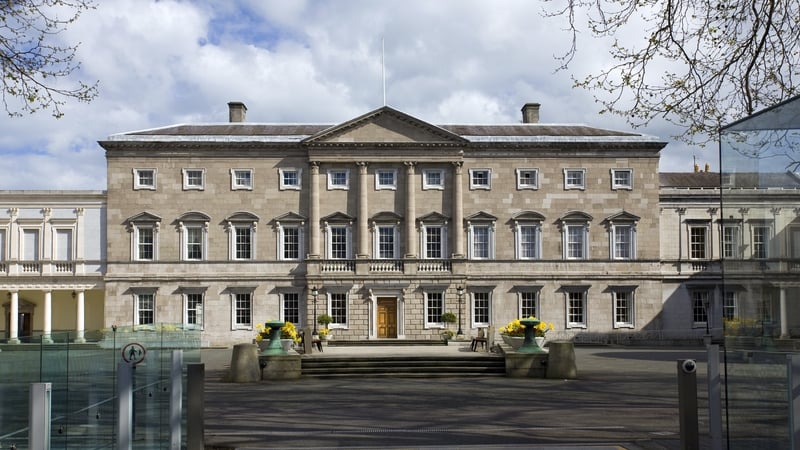

A Sinn Féin Private Members' Bill aimed at disregarding historic convictions for consensual same sex activity has been introduced in the Dáil.
The legislation, tabled by Sinn Féin TD Aengus Ó Snodaigh, seeks to address the legacy of laws that outlawed homosexuality prior to its decriminalisation in 1993.
Minister for Justice Jim O'Callaghan said he was not opposing the bill but indicated the Government is preparing its own legislation - an amendment to the Criminal Law and Civil Law (Miscellaneous Provisions) Bill.
Deputy Ó Snodaigh said that when a redress scheme is finally operational, more people will become aware of those who suffered as they will be able to tell their stories.
He noted that people left Ireland for fear of prosecution, scandal and losing their jobs, and those who stayed facing persecution, prosecution and marginalisation.
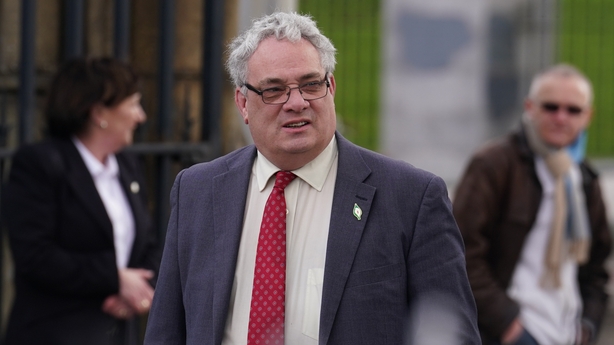
Mr Ó Snodaigh had said his Disregard of Historic Offences for Consensual Sexual Activity Between Men Bill 2025 would establish an application process through the Irish Human Rights and Equality Commission for men to have their historic convictions disregarded.
He also welcomed that the Government will not be opposing his bill.
Mr Ó Snodaigh said: "In the 10 years leading up to decriminalisation in 1993, 309 proceedings were commenced and 64 convictions made, under draconian colonial-era legislation.
"A disregard could provide clarity that there are no grounds for dismissing or prejudicing a person from an office, profession, occupation, employment or any other rights and privileges to which citizens are entitled on the basis of such a conviction."
Updating the chamber on the Government's bill, Mr O'Callaghan said that "the Attorney General's amendment had been drafted" and that work is ongoing "in the Office of the Parliamentary Counsel".
He said the Government’s proposal is "a more robust scheme" than Sinn Féin's.
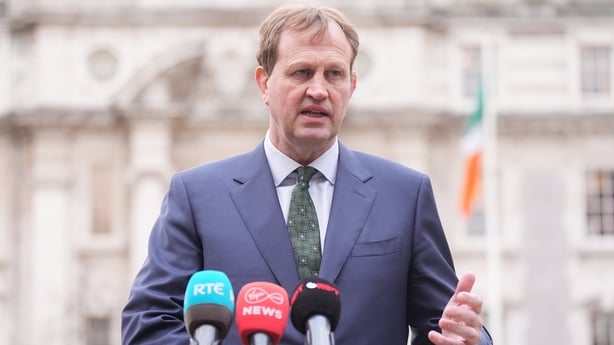
Minister O'Callaghan said he hopes committee stage will take place next month, adding "I am putting pressure on my officials" to ensure that happens.
The minister previously said the move to clear convictions for consensual same sex activity would address a "historical injustice".
He said it is an injustice that "everyone in this house wants to see corrected".
Sinn Féin TD Louise O'Reilly said that "we are not talking about something that is ancient history".
The "stain" of criminalisation "is in our very, very recent past", she added.
Ms O’Reilly said that while it was positive the minister is preparing legislation, "if it is the case that there are blockages" then the tabling of the Sinn Féin motion means "there is a piece of legislation that can be worked on".
Green Party TD Roderic O'Gorman welcomed the "real openness … to a constructive debate" on the bill and potential amendments, but he stressed that progress must be timely.
"This has taken a long time. It has taken too long," he said,
He added that the bill’s progress reflects "the tireless efforts of a number of campaigners over many years".
He acknowledged those who were present in the Dáil gallery for this evening's debate.
'Really important'
A working group brought its own recommendations Mr Ó Snodaigh's legislation to the Dáil on Tuesday.
Kieran Rose from the LGBT Restorative Justice Campaign was on this working group.
He said it important that disregard legislation be "introduced as quickly as possible and passed as soon as possible, ideally before the Dáil rises in July".
"A lot of men who would be alive and who are looking for disregard would be quite elderly," he said.
Mr Rose said he hoped the second stage of Sinn Féin's bill would put "pressure on the Government to speed up their disregard legislation".
"It's really important that disregard doesn't get forgotten in the kind of all of the problems that are facing Ireland as a country currently," Mr Rose said.
"It's a relatively simple piece of legislation and it could and should be done quite quickly," he added.
The working group wants to include "as many victims as possible", including soldiers who were "tried in military courts under specific military legislation".
"We want them eligible for disregard," he said.
It also recommended a publicity campaign once the legislation is brought in.
This, it said, should be shown "throughout Ireland, obviously, but also in those countries where people emigrated to so that they would be aware that they could apply for a disregard".
He also said it was important that the cohort of Irish gay men convicted before 1922 are included because the "British government excluded the 26 counties of the republic from their disregard legislation".
Mr Rose said convicted men would have been eliminated from job applications.
He said it was important that this "dread hanging over people would be removed from the historical record".
The campaigner said it was important they would receive a "sense of ease" and a "sense of justice" finally being done.
He said many "went to their death beds" without any "redress".
Mr Rose said it was important for the State to "recognise the harm we did".
Mr Ó Snodaigh previously said that, in parts of the country, the State "hounded out" men who were gay, who were forced to emigrate and "were tortured day in day out in their workplaces".
Research showed that in Tullow, Co Carlow, there were 12 cases taken in one month in 1970, he added.
Mr Rose said in Tullow "people's names and addresses were printed in the local newspapers".
He said it was "one of the worst cases", with juveniles as young as "15 and 16" brought before the courts.
"They were children and it was a witch hunt," he said.
"There was kind of a purge of gay men and children in Tullow," Mr Rose added.
He said this happened when he was a teenager and is not in the distant past.
Brendan Fay from the Lavender and Green Alliance, which represents LGBT persons within the New York Irish community, told RTÉ News that many of the affected men around the country emigrated.
He said convicted men "forever carried this as part of their story and lives".
"You think you're leaving it behind, but you actually carry," he added.