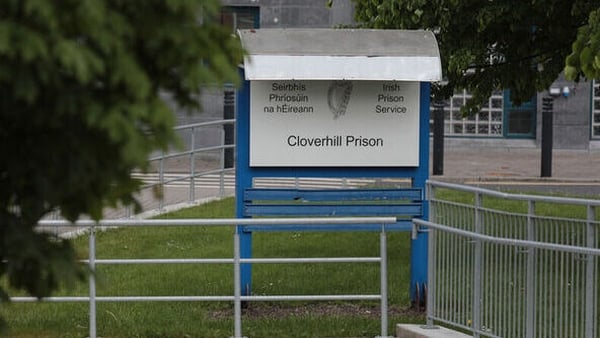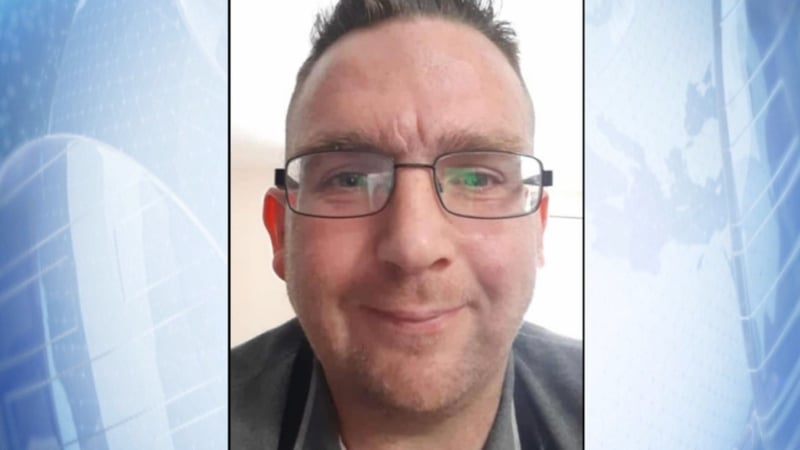

An investigation report into the death of a psychiatric patient detained in Cloverhill Prison has expressed "deep reservations" about how he was restrained and "the extent of the external and internal injuries" he suffered.
The Death in Custody report by the Office of the Inspector of Prisons said the man died after a 12-minute restraint incident that began when nine officers dragged him en route from a video booth back to his cell.
It noted that a file had been prepared for the Director of Public Prosecutions by An Garda Síochána but no charges were brought.
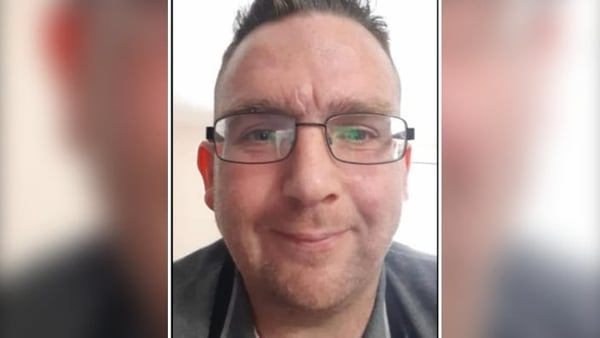
Ivan Rosney, a 36-year-old father-of-four from Ferbane Co Offaly, died on 28 September 2020.
He was remanded to the prison a number of days earlier and had been housed on the D2 medical wing of Cloverhill Prison.
According to the report, Mr Rosney had a history of mental illness, was prescribed anti-psychotic medication and told staff that before his arrest An Garda Síochána had "made attempts to have him admitted to mental health services. He reported that he was turned away".
On the morning of 28 September, he was to be taken to a video link booth to appear before Mullingar District Court.
A prison officer told investigators he refused to leave his cell but was subsequently escorted to a booth, where he refused to enter and grabbed hold of the metal partition bars.
The Office of the Inspector of Prisons detailed the evidence obtained from CCTV cameras.
It said at 10.45am Mr Rosney was physically restrained on the floor and afterwards a spit hood was placed over his head and Velcro straps were used to tie his legs.
"The footage showed [Mr Rosney] on the floor, face-down kicking and he appeared to be firming his limbs and struggling to get free."
According to statements from staff, Mr Rosney "growled" at officers at the bottom of the stairwell.
The report highlighted concerns about what happened next because it happened in a CCTV "blind-spot".
"It could be seen that Mr J was in a prone position as the ascent of the stairs commenced.
"However, any further interactions between Mr J and the [Control and Restraint] team in the stairwell during the following two and half minutes took place in a CCTV 'blind spot'.
"It had taken Mr J 32 seconds to descend the stairs to attend court and 2 minutes 37 seconds to be carried back up the stairs by the C&R team to D2 landing," it said.
The report described the evidence that was obtained from the CCTV of Mr Rosney’s last moments.
"While being lifted up the initial few steps of the stairs one of Mr J’s shoes fell off. The investigation team was only provided with footage of the lower part of the staircase...
"On arrival on the D2 landing, 2:37 minutes from the time the C&R team entered the stairwell, [Mr Rosney] appeared motionless and lifeless.
"[He] was wearing grey tracksuit bottoms which on arrival on D2 landing appeared to be soiled at the front.
"On exiting the stairwell Mr J was placed on the D2 landing floor. Only at this point did prison officers appear from the footage to become concerned about his state of health, gesturing to the nurse on the landing for urgent assistance," it said.
The report said the Office of the Inspector of Prisons "had deep reservations about the manner in which Mr J was restrained and about the extent of the external and internal injuries revealed at post mortem".
The report did contain extracts from this post-mortem report.
Watch: Family of man living with schizophrenia says the system has failed him
However, these were redacted. A cover note explained that the report had been prepared for the coroner and "it would be contrary to the public interest to publish it in this [Death in Custody] report".
The investigation report said "it appears that some prison officers may not have complied fully with correct IPS Control and Restraint procedures, including by failing to seek healthcare advice when [Mr Rosney] showed initial signs of distress such as blood and mucus flow from his nose and mouth".
It said staff should have known, based on where he was housed, that Mr Rosney "may have been suffering from mental illness".
The report noted that Mr Rosney’s father, Des, had "expressed deep concern that the actions of officers in restraining his son had contributed to his son’s death".
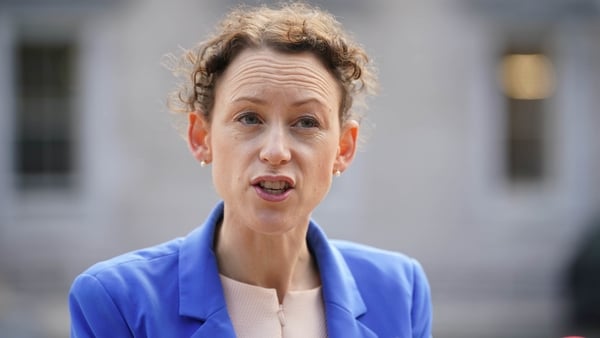
Reacting to the report, Minister for Justice Jim O'Callaghan expressed his deepest sympathy to the Rosney family "on their tragic loss and to the families of all of those who have died in custody".
In a statement, Mr O'Callaghan added he was committed to publishing the 'Death in Custody' report of Mr Rosney this week.
He said. "It is a significant report prepared by the Inspector of Prisons' whose painstaking work I want to acknowledge.
"I also acknowledge the action plan prepared by the Irish Prison Service which takes into account recommendations made by the Inspector of Prisons in his report. This action plan has also been published.
"Under the Coroner’s Act 1962 it is the duty of a coroner to hold an inquest in relation to the death of a person who was, at the time of death, in state custody or detention.
"Today’s publication of the Death in Custody Report of Mr [Rosney] now allows for an inquest to take place which is to be welcomed."
A coroner's inquest has been scheduled for late March.
Saoirse Brady, Executive Director of the Irish Penal Reform Trust criticised the fact that the report was not released until after this week's RTÉ documentary.
"While grieving their loved one, the family have been left in the dark for five and a half years and it appears that the main impetus for its publication is the RTÉ Investigates documentary that drew widespread public attention to the case.
"It should not have required the intervention of a television programme to precipitate its release.
"The report is distressing to read and points to clear systemic failures in both community services and inside the prison walls.
"The fact that despite the referrals from the gardaí to have Mr Rosney admitted to mental health services he was 'repeatedly turned away' yet ended up in prison, is indicative of the failure of the mental health system to provide essential psychiatric care to people in need," she said.
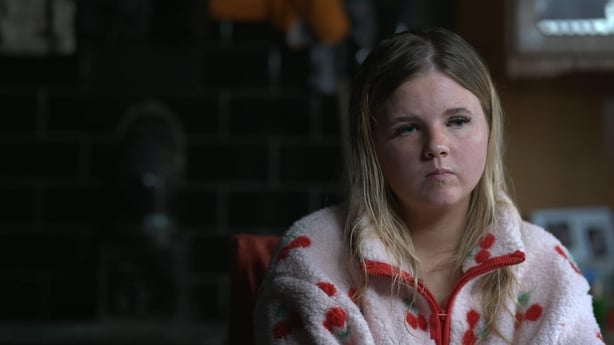
Earlier this week, Mr Rosney’s daughter Courtney Rosney made a public plea for the release of the report and spoke of her efforts to get answers.
"It's a very big thing to be fighting at 23 years of age. I mean my family are behind me but it's just me. So it's a young woman fighting against all these big... the prison services, the HSE, the garda... and they'll kind of just look at me as if you're wasting your time," she said.
In a statement, the Irish Prison Service expressed "its sincere condolences to the family of the deceased".
"The Irish Prison Service has a robust, internal review mechanism which assesses the circumstances of a death in custody, highlights accountability and actions taken in relation to the incident, and outlines lessons learned," it said.
An action which it published in response to the report said it "is satisfied that the current control and restraint programme is sufficient and that officers called upon to perform [Control and Restraint] are trained and aware of the risks associated with C&R," it said.
Mr Rosney died in Cloverhill prison on 28 September 2020 while being restrained by prison officers.
Mr Rosney, who suffered from schizophrenia, was in prison on remand after he was arrested during an episode outside his house while he was in the midst of a mental health crisis.
A statement by Chief Inspector of Prisons Mark Kelly said he "does not comment on the content of anonymised death in custody reports and will not be commenting further on the report on the tragic death of M J in 2020".
"The Chief Inspector of Prisons considers that the content of his report speaks for itself," it said.
A statement issued by the Rosney's family solicitor said they "have had no opportunity to consider the contents of the report released by the Department of Justice as they only received three days notice that the report was to be published.
It said the report had been with the department since October 2024, but "despite numerous requests over the past 16 months, no explanation has ever been given to the Rosney family for the delay... in releasing the report".
"The family are extremely upset that they are only now being given these details in the public arena almost five and a half years after the death of their family member," the statement added.
If you have been affected by the issues raised in this article, visit Helplines – RTÉ or Supporting People Affected By Mental Ill Health.