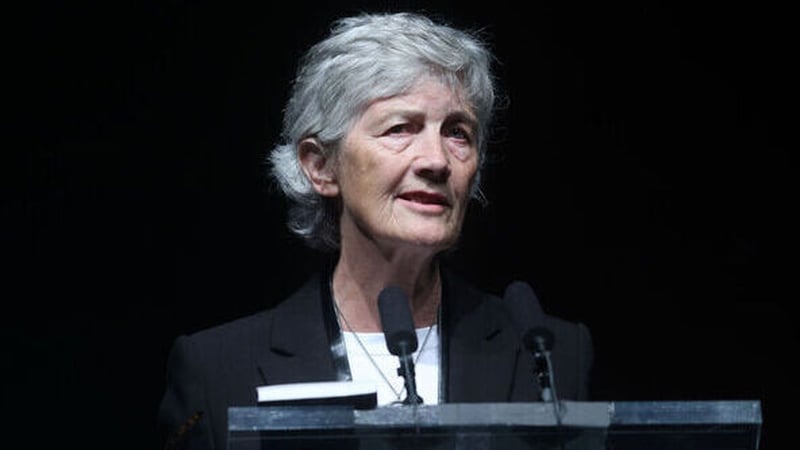

The head of the Electoral Commission, An Coimisiún Toghcháin, has said that tackling election deepfake videos is like "whack-a-mole" because they can pop up all over the internet.
Art O'Leary was addressing the Oireachtas Artificial Intelligence Committee, which held a hearing today on the impact of AI on elections.
Deepfakes involve using AI to produce or edit video and audio to make it appear someone has said or done something that did not occur.
Days before the Presidential election last month, an AI-generated fake version of Catherine Connolly announcing her withdrawal from the race was circulated on social media.
At today's AI Committee hearing, Mr O'Leary was asked by Fianna Fáil TD Naoise Ó Cearúil if having greater powers would have allowed his office to get ahead of that video.
"It's hard to get ahead of it because we don't know where it's coming from, this is whack-a-mole really, they pop up all over the internet," Mr O'Leary said.
"I'm quite happy with the speed of our response here, we caught it within minutes of it appearing online."
"The system worked with Meta. Our relationship with the platforms tends to be reasonably good but there are some actors who are less willing," he added.
Jeremy Godfrey, Executive Chairperson of media regulator Coimisiún na Meán was also at today's hearing and outlined his office's response to the Catherine Connolly deepfake video.
"When this came to our attention, we also were in touch with the platforms," Mr Godfrey said.
"Our role is not to ask for it be taken down but to understood if the platforms acted in an appropriate manner and we are still evaluating that."
"We will be doing our own evaluation of the election and providing that to the European Commission because they are the ones with the enforcement responsibility in this regard," he added.
Cathaoirleach of the Committee Malcolm Byrne said that with the introduction of artificial intelligence, the public's access to accurate and up to date information has never been more possible.
"However, with the use of AI, the possibility of orchestrating false narratives and misinformation has grown," Mr Byrne said.