
An application to get protected EU recognition for Irish grass-fed beef has been delayed after an objection from the British government.
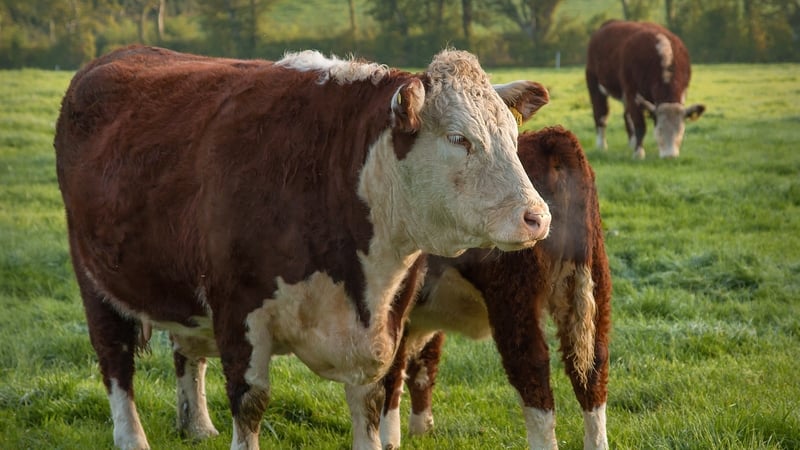
Ireland has been seeking special "Protected Geographical Indication" status for Irish cattle, reared on 90% grass that spends at least 220 days a year on pasture lands.
The Irish application was lodged in late 2020 with the Commission but excluded Northern Ireland.
The Ulster Farmers' Union objected to this omission as the success of the application might prevent them describing their cattle as "Irish grass-fed".
Minister for Agriculture Charlie McConalogue previously told TDs he would support an extension of the application to cover Northern Ireland when they had a system to verify grass-fed status in place.
The EU Commission then informed Mr McConalogue it would be possible to include an application for Northern Ireland during a late EU/third country objection phase of consultation which began last December.
This led to the objection being lodged by the UK which the Irish Government was informed of last month.
The Commission has now asked Ireland and the UK to engage in appropriate consultations and to inform the Commission of the results within three months.
Officials from Bord Bia and the Department of Agriculture have already been working with their Northern counterparts on technical details which it is hoped will lead to an appropriate verification procedure in Northern Ireland, eventually leading to Protected Geographical Indication status for Irish Grass-Fed beef on the entire island of Ireland.
PGI is granted to products from defined geographical areas, with unique attributes.
Bord Bia's application states Irish Grass-fed Beef has low-fat levels overall, has a cherry red meat colour and is "rich, complex, grassy succulent and juicy with a true beefy flavour".
Cattle must be 90% fed on grass, including silage during any time they are housed.
However, they must spend 220 days per year on pasture, and be processed within the defined geographic area also.