


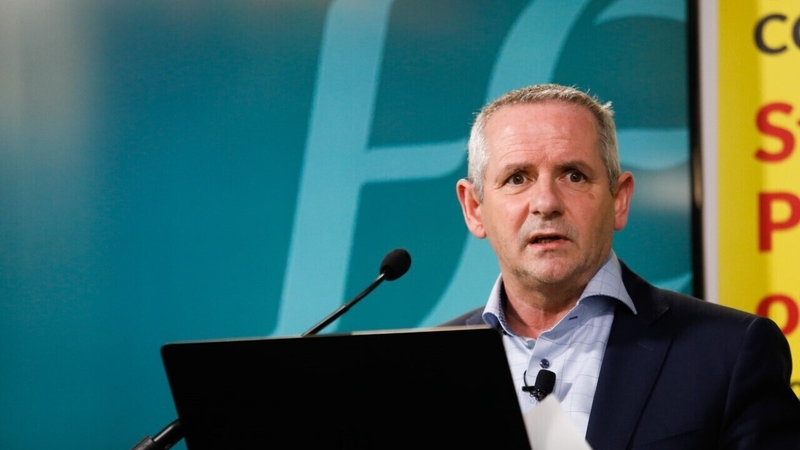
HSE Chief Executive Paul Reid has expressed concern over the level of activity outside schools, saying that inter-household playdates are "a significant issue".
Speaking on RTÉ's Morning Ireland, Mr Reid said that transmission of Covid-19 was not high in schools, but warned that there had been a lot of activity outside of schools.
He said significant testing has been carried out in both primary and post-primary, and on average the positivity rates stand at 2.7% and 1.6% respectively.
"Playdates is very clearly one of the aspects of it coming through or visits between households, that it's a very significant issue," he said.
Despite the Covid-19 situation remaining "volatile", he said the foundation of an immunisation campaign has been put in place to protect people against illness.
HSE Chief Executive Paul Reid says transmission of Covid-19 is not high in schools. However, he warned of a lot of activity outside schools: "Playdates is very clearly one of the aspects of it coming through." pic.twitter.com/ols9nxf8VL
— RTÉ News (@rtenews) March 26, 2021
He said the past few months were the worst quarter of the pandemic, but that the country could head into the next quarter with "a much better light".
Mr Reid said by the end of this weekend, close to 750,000 vaccinations will be completed.
"550,000 will be dose one, so well over 14% of the population," he added.
He said as they build up to the next quarter, in April the focus will remain on the medically vulnerable as they continue the programme to vaccinate those over 70.
"We will also be, in parallel, progressing through the 65-69 years of age," he said.
Mr Reid said that the forecast is for one million vaccines per month from next month, with a wider reach into the community.
He added that people will see the scale-up of the vaccine programme in April through an increase in resourcing, and ramping up the numbers getting inoculated at vaccination centres.
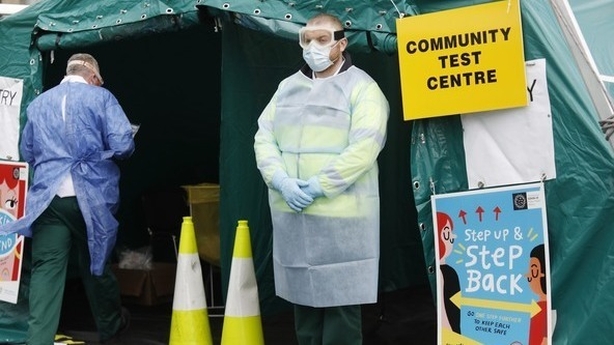
"We have almost 11,000 fully trained as vaccinators," Mr Reid told the programme.
He said GPs will also be working in their vaccination centres at various stages, adding: "That is the model as we move forward."
Regarding contact tracers, he said the HSE carries out retrospective tracing with 80% of cases detected back to the source.
He said for those they have not identified, they will be trying to get further evidence, and they have recruited extra contact tracers for this.
With around 900 contact tracers in total, he said it is not just about putting more people in place as it is the second line of defence.
He said the first line of defence is always for people to adhere to the public health guidelines.
Read more:
Latest Coronavirus stories
5 things we learned form yesterday's Covid briefings
Hotel quarantine now mandatory for 'high risk' arrivals
Meanwhile, the Chair of the National Public Health Emergency Team's Epidemiological Modelling Advisory Group has said the pattern of daily case numbers of Covid-19 continues to be volatile, and people remain at high risk.
Speaking during last night's NPHET briefing on Covid-19, Professor Philip Nolan said the nearly constant number of new virus admissions to hospital is for him the strongest indicator that the country is in a static or disimproving situation.
Between 20 to 25 people have been admitted to hospital with the virus each day since late February.
Prof Nolan warned that Ireland could easily move backwards and undo the progress that has been made.
He said it was crucially important during this volatile stage that people minimise contacts where possible, and follow public health advice.
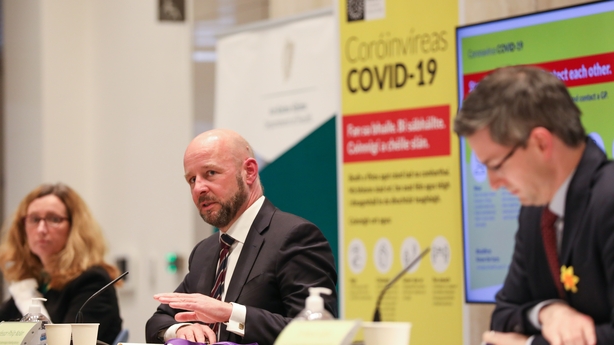
(Pic: RollingNews.ie)
A new Social Activity Measure, compiled by the ESRI for the Government, has revealed that the number of people socially visiting another home or garden or receiving visitors to their own home or garden has more than doubled since the end of January.
Yesterday, the Department of Health was notified of three more Covid-19 related deaths and 606 cases of the virus.
The briefing was also told that the reproduction number of the virus is currently between 1 and 1.3, and that the seven-day average for cases now stood at 564.
Mother's Day, St Patrick’s Day and play dates have been identified as reasons for possible asymptomatic spread of the virus.
