
The lead agency for monitoring and controlling the spread of infectious diseases in Europe was hampered by a catalogue of problems when the coronavirus pandemic struck, according to an investigation by EU Ombudsman Emily O'Reilly.
The European Centre for Disease Prevention and Control struggled in the early weeks of the crisis due to a lack of resources, poor data from member states, and incomplete information from China, where the pandemic originated, according to a report published this morning.
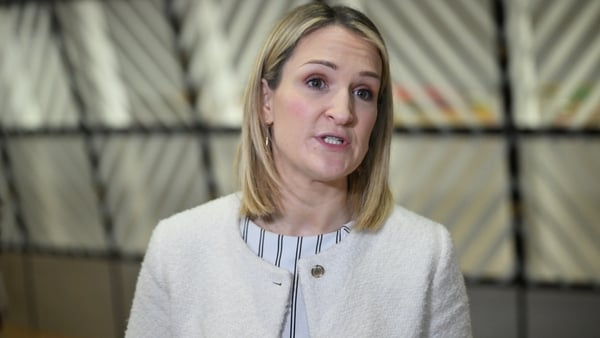
Speaking on RTÉ's Morning Ireland, Ms O'Reilly said the agency met with resistance when it attempted to get "any sort of a grip" on the capacity of member states.
She said proposals by the European Commission to strengthen the ECDC do not actually give it additional powers and it will, again, be reliant on member states for information.
Information is power, she said, and without that information, any agency simply cannot give the sort of timely and full, forensic advice that should be given at times like this.
Ms O'Reilly said statements made at the end of January, saying the EU had the testing capacity to deal with a fresh outbreak, were wrong.
She said it is too late now to do anything in relation to the ECDC and member states need to be as efficient as possible in giving information to it.
She said that member states must now decide whether the ECDC remains toothless, when new regulations for the agency kick in.
Ms O'Reilly found that the ECDC was over-reliant on patchy data coming from the Chinese Centre for Disease Control (CDC), which in January of 2020 was playing down the severity of the virus and the extent of human-to-human transmission.
While the Chinese CDC "was reporting only a handful of cases in mid-January 2020, prominent health experts were making public concerns regarding wide-scale human-to-human transmission by 18 January, with evidence (and prescient advice) by 25 January," the report states.
"Arguably, this should have called into question the data being made available by the Chinese CDC."
By 27 January, the ECDC "was still missing important data, in particular a more detailed epidemiological description of cases, and did not know why such data was not yet available from the WHO and China," the report found.
"In the meantime, the ECDC was relying on information it was able to gather through media reports."
The ECDC itself was overly optimistic about the capacity of Europe's laboratories to test the population, and the ability of national health systems to cope.
The Ombudsman's report recalled that following the confirmation of the first three cases, the ECDC had given a positive assessment of the EU's capacity to deal with the virus.
The report quotes an ECDC assessment on 24 January that "[a]t this stage, it is likely that there will be more imported cases in Europe. Even if there are still many things unknown about 2019-nCoV, European countries have the necessary capacities to prevent and control an outbreak as soon as cases are detected".
However, between the end of January and March, as the virus took hold in Europe, the Stockholm-based agency frequently updated its assessments of the virus.
The ECDC conceded that its initial optimism had not taken account of the latent presence of the coronavirus in the European population.
At the time it stated that: "The assessment [of January and mid February] referred to a specific time where prevention of importation and limiting the further spread of the virus once imported were the main goals of the containment strategy. What [the] ECDC and member states could not predict was that, at that time, the virus was already circulating in the community in several countries."
This in turn was due to the profound lack of testing and contact tracing capacity in Europe, which was then graphically revealed.
"To detect this, member states would have needed huge laboratory capacity to test everyone with Covid-19 compatible symptoms. This was not feasible for any country in the world and in light of this, the WHO gave recommendations on who should be prioritised for testing.
"Unfortunately, there is no way that the diagnostic capacity for a new virus can be scaled up to this level in such a short time frame," the ECDC had said at the time.
Ms O'Reilly concludes that the ECDC was dogged by a lack of resources and staff, by surveillance systems that were at times overwhelmed by the speed of the pandemic, and by the increasingly poor response by member states in providing the ECDC with accurate up-to-the-minute data.
Such data was critical in helping the ECDC model the virus and forecast its epidemiological trajectory. This, the report says, "requires timely, reliable and complete data".
The ECDC was set up in 2004 following the SARS outbreak in 2002. At the time the European Commission had warned that "[a] major outbreak such as an influenza pandemic could have catastrophic consequences".
The agency's role was "to identify, assess and communicate current and emerging threats to human health from communicable diseases", to support preparedness, planning and response, and to provide training and scientific advice to member states and the European Commission.
It would also liaise with international organisations such as the WHO, and to foster the development of sufficient capacity within the EU for the diagnosis, detection, identification and characterisation of infectious agents.
However, public health largely remained a national competence, and when the agency was set up it was designed to have a complementary - rather than a lead - role in confronting serious cross border infectious diseases.
As such, Ms O'Reilly's report notes, the ECDC was deliberately designed to be small, with staffing levels (today some 286 people) which were dwarfed by the US Center for Disease Control with over 10,000 staff, and even Germany's Robert Koch-Institut, which has over 1,000 staff.
The ECDC relies on three surveillance systems, which should provide the agency with the ability to have a bird's eye view of a spreading pandemic.
The European Surveillance System (TESSy) provides the main source of information and is supported by data uploaded by member states.
The Early Warning and Response System (EWRS) is the immediate emergency trigger through which member states and the European Commission warn of public health emergencies within 24 hours.
The ECDC also monitors public health websites around the world on a daily basis. The agency also conducts its own surveys, or is requested to carry out investigations by the Commission and member states.
However, Ms O'Reilly found that the agency struggled to speedily access reliable, complete and comparable data, especially at the beginning of the crisis.
Member states were slow to use the early warning system, despite an alert issued by the European Commission, while reporting by national capitals on clinical symptoms, severity or preconditions was "incomplete".
In February and March the ECDC often found that its own findings, gathered through its monitoring of public health websites, were numerically far ahead of the figures being provided by member states.
For example, data received via TESSy on 13 March showed only 6,199 cases while public health websites had registered 28,358 cases.
By 27 March, member states had logged 79,194 via TESSy, while the public health websites had identified 265,500 cases.
The report found that member states, including those hardest hit by the pandemic, did not respond to the alert system and provided either patchy information, or did not respond to requests at all.
Because of the lack of information coming in, the European Commission asked the ECDC to carry out its own surveys of the impact of the pandemic, often at short notice.
The agency sent 22 questionnaires to EU/EEA countries between 24 January and 24 July 2020, but there was a low response rate.
One questionnaire on laboratory capacities in January and two in March were sent, and 30 EU/EEA countries sent information from 47 laboratories.
However, when the two calls for data were issued in March, only 15 and then nine countries respectively responded to the surveys.
Surveys in March and April, on issues such as Covid-19 surveillance, testing and contact tracing, all saw low response rates. The ECDC confirmed that, during the pandemic, the level of member states' response was lower than usual.