



The trial of Graham Dwyer for the murder of Elaine O'Hara heard this afternoon that Mr Dwyer told a young woman he was in contact with over the internet that he wanted to kill Ms O'Hara if she wanted him to and then come after the young woman.
Darci Day, from the US state of Maine, gave evidence via video link.
She sobbed at the end of her evidence as she said she wanted to tell Ms O'Hara's family she was so sorry and that she was praying for them and for Mr Dwyer and his family.
Warning: This report contains graphic details
Ms Day said she had had some difficulties in her life starting when she was around 12 or 13 and became very depressed and struggled with suicide and self harm.
She started to go online to talk to others who had similar thoughts and fantasies.
She said a lot of what she was saying online was fantasies about herself dying.
In 2010 or 2011 she said had lost her dog and her job. She met a man called Graham Dwyer online and began talking to him through gmail.
She said she unloaded a lot of stuff on him and they discussed him ending her life.
She said they discussed rape and murder fantasies.
She said they texted a few times using her own number but she said he had discussed getting her a separate disposable, pre-paid, cell phone for communication.
She said they sent videos to each other of throat cutting or strangulation.
She said she also remembered diagrams of where all the arteries were "so he wouldn't miss".
She said she knew Mr Dwyer had a wife. She said she knew he liked planes, but thought it was actual planes not model aircraft.
She said he mentioned Ms O'Hara. She said she knew he had an intimate relationship with her and that he told her she was similar to her and was suicidal.
Ms Day began crying as she said Mr Dwyer told her that he used to cut Ms O'Hara in the stomach area. She said he told her it was mutual and sexual.
She said she believed Ms O'Hara had asked him to kill her in the past.
She did not remember much about what he had said to that idea.
She said Graham Dwyer's fantasy was wanting to stab a woman to death during sex.
Asked were there any fantasies featuring Ms O'Hara, Ms Day said Mr Dwyer wanted to go after Ms O'Hara and if she wanted to, he wanted to kill her and then come after her.
She said he did not talk too much about Ms O’Hara.
In relation to herself, she said Mr Dwyer was looking at places in Maine that were like disposal sites.
She said he would have got her to drive somewhere then leave her car and get into his car, drive to a location and then basically he wanted to have sex with her and cut her throat until she lost consciousness.
Under cross examination by defence barrister Remy Farrell for Mr Dwyer, Ms Day agreed she had a number of medical and psychological difficulties.
These included Attention Deficit Disorder, learning disabilities and Post Traumatic Stress Disorder.
She said she was not currently on any medication.
She said her life had changed amazingly. She said she gave her life to Christ and felt peace like she had never felt before.
She said she had gone to counselling but only for a few months and had not mentioned Graham Dwyer to her counsellor.
She agreed that she had not wanted to disclose her medical records. She said she had no record of any of the emails between herself and Mr Dwyer.
She said she got rid of everything when she turned her life around. She said she had tried to move on and she did not want to be reminded of any of it.
Ms Day said she gave gardaí permission to get emails from gmail.
She said when she was talking to Graham Dwyer she really needed someone to talk to.
She said part of her wanted to follow through because she felt she was a burden to her family.
But she said she did not think Mr Dwyer was serious.
If she had had any idea that he was serious she said, she would have done something - she would have reported it.
She agreed Mr Dwyer had used his own name in his communication with her.
She agreed she had Googled details of this case after she was interviewed by an American detective.
She said she remembered the detective telling her that Mr Dwyer had some of her Facebook material saved on his computer and kept it there to go over and over again.
Ms Day said she did not remember the detective telling her that knowing these people they keep these things until they die.
She said she was in shock and was still reeling. She agreed she still had a knife collection. She said she must have sent pictures of it to Mr Dwyer and she agreed she had added to it since.
She agreed that part of the "fantasy" she was exchanging with Mr Dwyer was that he could turn up at any time.
Ms Day became extremely upset during questioning about whether or not she had sent an image of herself to Mr Dwyer which was to be photoshopped to show stab wounds or cuts.
She said she did not want to answer the question and did not want to do this before sobbing.
The court adjourned for a short while. When it resumed she was asked about a video she had recently posted on YouTube in which she mentioned her forthcoming appearance in court.
Ms Day said she did not mention any details in the video. She said she made that video to give people out there hope and courage if they are going through hard times.
She said no matter how hard it may seem that people are not alone.
She said she wanted to say a huge prayer for the family of Ms O'Hara.
She said it was so terrible and she was so sorry and she was praying for them.
She said she was praying for Mr Dwyer and his family. She said she was so sorry about this whole thing.
'Master' & 'slave' contacts saved on phones found in reservoir
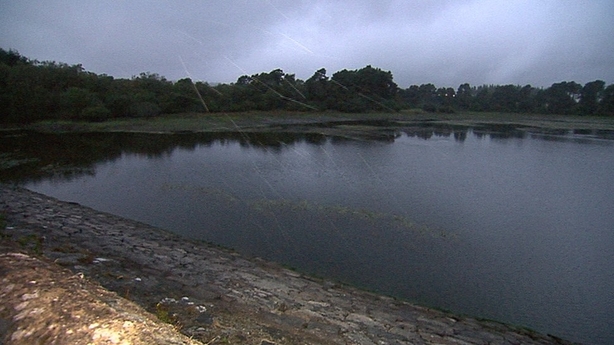
The trial was earlier told that two phones found in the Vartry Reservoir in Co Wicklow, after Ms O'Hara's remains were discovered, had only each other's phone numbers stored in their contacts lists.
Crime and policing analyst Sarah Skedd is giving evidence about her analysis of data connected with the two phones found in the reservoir as well as her analysis of three other phone numbers and handsets.
The first phone found in the reservoir, which the prosecution says is connected with Ms O'Hara, had the other phone's 086 number stored as "mstr" - which the prosecution said was all the consonants from the word master.
The second phone, which the prosecution says is associated with Mr Dwyer, had the first phone's number stored as "slv" - all the consonants from the word slave.
Ms Skedd is giving evidence about her analysis about the level of contact between the phones.
She also analysed the cell sites used by two mobile phones; the second reservoir phone and an 083 number, which the prosecution says are associated with Mr Dwyer and compared them with the movements of his work mobile phone.
Mr Dwyer denies the murder of Ms O'Hara at Killakee Mountain in Rathfarnham on 22 August 2012.
Ms Skedd told the court the two phones found in the Vartry Reservoir were almost entirely used to make contact with each other.
She said in terms of outgoing contact they were exclusively used to make contact with each other.
Ms Skedd said there were almost 1,500 text messages exchanged between the two mobile phones found in the reservoir between December 2011 and 22 of August.
The prosecution says one of these phones was connected to Ms O'Hara, the other to Mr Dwyer.
Ms Skedd said she identified 1,369 text messages, and 11 calls between the two phones, which were unanswered or went to voicemail, between 1 December 2011, the day after the phones were bought and 22 August 2012, the day Ms O'Hara went missing.
She said she was able to identify the content of 268 text messages between the phones between 14 August and 22 August 2012.
She said the content of the other messages was not available.
She said Ms O'Hara's mobile phone was in limited contact with the reservoir phone associated with her.
She said there were five unanswered calls between January and August 2012.
She agreed this would be consistent with someone trying to find a second phone.
Ms Skedd said there was one phone call between Ms O'Hara's phone and the reservoir phone the prosecution says was connected with Mr Dwyer, this was a call to voicemail.
The court has also heard there were more than 2,500 text messages between Ms O'Hara's iPhone and an 083 number alleged to be associated with Mr Dwyer between March 2011 and July 2012.
Ms Skedd said she had found 2,637 text messages, one multi-media message, and one unanswered call between the two phones between 25 March 2011 and 12 July 2012.
She said she was able to identify the content of just over 2,300 of the messages.
Ms Skedd gave evidence about her comparison of the cell sites most frequently used to communicate with the mobile phone network by Mr Dwyer's work mobile phone and an 083 phone number, the prosecution alleges was used by him.
She found that the cell sites most frequently used by the 083 number were sites at ESB Headquarters in Dublin city centre and cell sites at the Rochestown Lodge hotel in south Co Dublin.
These were also the cell sites most commonly used by Mr Dwyer's 087 work phone.
The 083 number used cell sites at ESB headquarters on 325 occasions and cells at the Rochestown Lodge hotel on 136 occasions.
Ms Skedd said she analysed cell sites used by Mr Dwyer's work phone on days when the 083 phone or 086 reservoir phone alleged to be linked to him were active.
She found the cell sites most frequently used by Mr Dwyer's phone were also at ESB headquarters and at the Rochestown Lodge hotel.
She found his phone used cell sites at ESB Headquarters on 647 occasions and at the Rochestown Lodge hotel on 450 occasions.
