


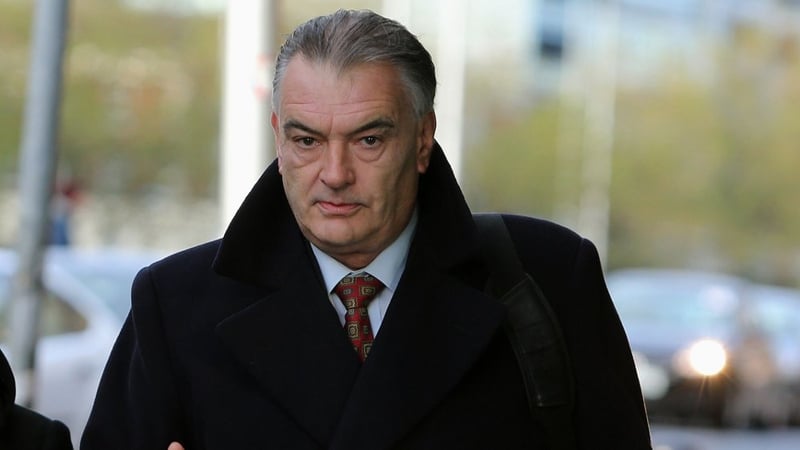
A retired detective superintendent has denied lying to the district court when he looked for a warrant to arrest Ian Bailey a second time over the death of French film maker Sophie Toscan du Plantier.
Ted Murphy is being cross examined in the action by Mr Bailey against gardaí and the State for wrongful arrest.
Mr Murphy confirmed that in order to carry out a second arrest of a person on suspicion of murder, new evidence must emerge and be outlined to a district court.
Nine reasons were outlined to the court in an application to have Mr Bailey arrested for the second time in January 1998.
Lawyers for Mr Bailey said Mr Murphy told the district court judge that Mr Bailey's newspaper articles contained information about the victim's injuries that would only be known by a few people.
However, senior counsel Tom Creed said Mr Bailey had not written any articles after his first arrest so the claim to the district court that this was new information was a lie.
Mr Murphy said it was not a lie and it was part of the new evidence that had come into the incident room.
Mr Creed said: "I challenge you to produce any article written by Ian Bailey after his first arrest."
Mr Murphy said he could not produce the article but he knew he would have had it in case he was questioned about it in the district court.
Mr Creed said most of what gardaí had described as new information had been available by June 1997.
He said it was always the intention of the gardaí to arrest Mr Bailey again.
Mr Murphy denied this and said arrests were taken very seriously and not done lightly.
Mr Creed said tape recordings of garda phone calls show that gardaí were talking about a second arrest from June 1997.
"Well that is the conversation they had but the reality is he was not arrested until the following January.
"I wasn't aware of that conversation, it was presumption on their part that he was going to be arrested."
It was also suggested to Mr Murphy that a tape recording of a conversation between two other gardaí suggested that Mr Murphy was being put under pressure from an assistant commissioner to force the issue of a second arrest.
Mr Murphy said he was under no pressure and no one could ever influence someone's decision to make an arrest.
Gardaí aware 'key witness' had lied to them
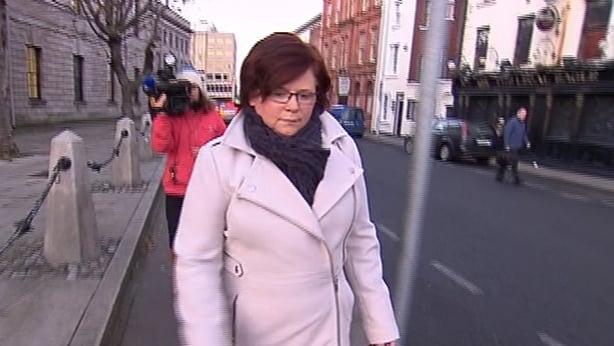
The High Court earlier heard that Marie Farrell was described by gardaí in 1998 as a "key witness" in the investigation into the murder of Ms Toscan du Plantier even though gardaí knew by then she had lied to them.
The description was contained in an application to the district court in January 1998 for a warrant to arrest Mr Bailey for a second time.
Among the reasons for the arrest was the alleged intimidation of Ms Farrell.
She told the court this was a false allegation.
Counsel for Mr Bailey said gardaí knew she had lied to them about who she was with on the date of the murder and that her evidence was no longer useful.
Yet she was described to a district court judge as a key witness who had spotted Mr Bailey at Cealfada Bridge.
Mr Murphy said Ms Farrell was still an important witness.
He said gardaí knew she had lied about who she was with on 23 December 1996 when she had claimed to have seen Mr Bailey close to the murder scene.
But he said it was still hoped that she might overcome her personal difficulties and give them the name of the person she was with so her evidence could be corroborated.
"There was always a possibility that she could have come forward with the name. That was always the focus." he said.
He also said there were many other grounds put forward to the district court for the warrant for the second arrest.
The action by Mr Bailey against An Garda Síochána and the State for wrongful arrest has entered its eleventh week of evidence.
Journalist Ann Cahill, who was a freelance reporter in Cork in the 1980s, this afternoon told the court she did not know who told her in advance about the arrest of Mr Bailey.
Ms Cahill, who is now based in Brussels, said it could have been the gardaí but she did not know at this stage.
She said she found it very difficult to get information from the gardaí and would have relied on a whole range of sources.
It was put to her by counsel for Mr Bailey that the only people who knew an arrest was going to take place were the gardaí and the information must have come from them.
Ms Cahill replied: "I don't know. I'm sorry".
She said she did not remember contacting a photographer and telling him which garda station to go to.
