


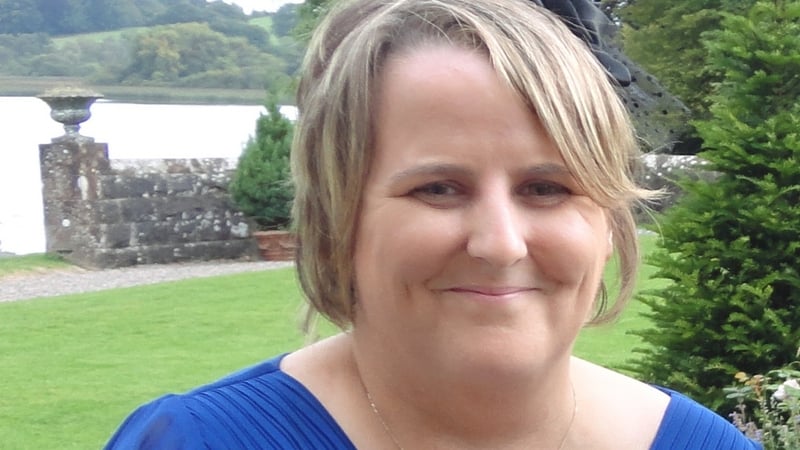
Elaine O'Hara's father has told the Central Criminal Court that his daughter told him in 2008 that she was seeing a married architect from Foxrock who would tie her up.
(Warning: This story contains information that may upset some readers)
The court heard he told gardaí Ms O'Hara said she had asked the man to kill her but he would not.
Graham Dwyer, 42 from Kerrymount Close in Foxrock, has pleaded not guilty to murdering Ms O'Hara in August 2012.
Her remains were found in the Dublin mountains just over a year later.
Frank O'Hara told the court he would speak to his eldest daughter every day, sometimes twice a day, and would see her three or four times a week.
He told the court she had had some difficulties beginning in her teenage years.
Mr O'Hara said there had been some bullying in school and a close friend of hers was killed in a road accident.
He said she became very withdrawn and into herself. He said she had tried to cut her wrists when she was 16 and was under psychiatric care.
Mr O'Hara said Elaine was on so much medication that she would sometimes fall asleep. He said this had affected her in her teenage and early adult years.
She had never experienced those years they way other kids had, he said.
Mr O'Hara said she had taken overdoses of pills on two other occasions.
He said in the last five years of her life, doctors were trying to reduce her medication and he thought she had improved quite a bit. She also suffered from asthma, diabetes and was dyslexic.
He said despite her illnesses she had an incredible work ethic. She worked as a childcare assistant in a school in Ballybrack in south Co Dublin.
She also worked in a newsagents and was studying at night to be a Montessori teacher.
Father emotional describing argument
Mr O'Hara became emotional as he described an argument he had had with his daughter in early 2008.
He said she told him she was seeing someone. She said he was a professional, but she was very reticent to give information.
Mr O'Hara said he asked her if he was married and she said he was. She told him he was an architect.
He broke down as he said she told him he tied her up and they had not had sex.
Mr O'Hara said he was shocked. He said she had told him it was over at some stage, but they never discussed it again.
Under cross-examination by lawyers for Mr Dwyer, he agreed that he told gardaí that Elaine would sometimes say things to shock him to end an argument or disagreement.
Mr O'Hara said he was unsure if she was using this to shock him or if it had happened.
He agreed that he had told gardaí she also told him that she had asked the man to kill her but he would not go that far.
Mr O'Hara said over the years, she said she had a play in her mind. He said it may have been unsavoury. She never disclosed it.
He suggested she write it down and give it to her psychiatrist. He said she was always worrying about this play. It upset her, he said.
Surprise at hospital check-in
He said he was surprised when she checked herself back into hospital in July 2012, as he thought she had been doing well.
But she told him "you do not know what I've done" and said something about a noose on a bookcase in her apartment.
He last saw her on 22 August 2012 when they went with his young granddaughter to visit her mother's grave.
The court heard Elaine's mother had died in 2002 and she had been affected by her death.
Elaine had just been discharged from St Edmondsbury Hospital in Lucan. Her father said she was in extremely good form.
He said she was due to volunteer at a festival and had arranged to meet her father's partner early the next morning.
Mr O'Hara said he remembered seeing her at the front door saying she had to get some rest, as she had to be up early the next morning.
He said she did not turn up to meet his partner.
When she had still not made contact that night, he said he texted her sarcastically to ask her: "Are you alive?"
The next morning, he reported her missing to gardaí after finding out that she had not turned up at the festival and had not been in contact with her sister or the hospital.
Mr O'Hara said he did not notice any unusual wounds or marks on her body, and she never said anything to him about this.
But he said she always wore long sleeves and long trousers to cover any self-harm marks she may have had.
'Elaine O' Hara often expressed concerns about finances'
The court also heard from a colleague of Ms O' Hara's who said Elaine was quite open about her mental health problems but would keep parts of her life very private.
Jane Cahill who worked with Ms O' Hara in Ken's newsagents in Blackrock Shopping Centre in Dublin said there had once been a conversation about how Elaine would access sites for people interested in bondage.
But she said they thought she was just joking.
She said Ms O' Hara would often be concerned about her finances.
Emma Robertson said they would take everything she said with a pinch of salt as you would not know what was true and what was not.
She said she had spoken of a relationship with a married man.
The court was told Elaine O' Hara was given a substantial amount of medication by her local pharmacy in Stepaside between June 2010 and August 2012.
Skull and arms not recovered
Deputy State Pathologist Dr Michael Curtis told the court that the cause of Ms O'Hara's death could not be determined.
Dr Curtis told the court that 60-65% of her remains were discovered in the Dublin mountains. He said they were spread out over several metres.
Some parts of her skeleton were not recovered, including her skull, her left shoulder blade and her arms. All her ribs were eventually recovered.
Dr Curtis said there was no evidence of any trauma to the bones caused before death.
He agreed that if death had occurred by stabbing that this could have occurred without injury to the bones.
Dr Curtis agreed with lawyers for the defence that in many cases where death is caused by self-harm, there is no evidence of bony injury.
He said where someone is killed by stabbing the knife could go between the ribs. He said this was less common, but by no means rare.
Dr Curtis said that if someone was stabbed in the abdomen, it would almost certainly cause no bony injury.
He said her cause of death was undetermined.
The court also heard that Ms O'Hara went to her local pharmacy on the day she disappeared.
She filled a prescription for ten medications for asthma, diabetes, depression, vertigo, cholesterol, stomach problems and "nerves".
Pharmacist Soha Yazbeck said she was also given inhalers for asthma.
